Baoneng units face joint enforcement as debt pile hits 44.8 billion yuan
A Shenzhen court has ordered Baoneng's investment, auto and Wuhu industrial park arms to pay 158 million yuan, exposing a debt pile of 44.8 billion yuan.
Shenzhen’s intermediate people’s court has ordered four companies in the Baoneng group to pay about 158 million yuan (about $22 million) in a single enforcement case, pulling the conglomerate’s investment arm, its automaking unit and a local industrial park into the same courtroom.
The case, filed as (2026) Yue 03 Zhi 2228, names Shenzhen Baoneng Investment Group, Baoneng Auto Group, Wuhu Baoneng Electronic Information Industrial Park Investment and Chuangbang Group as co-defendants, according to court records compiled by Tianyancha, a corporate records database. The joint order exposes how the group’s debts are intertwined across its parent company, its car business and the local government-backed projects it once used to win land.
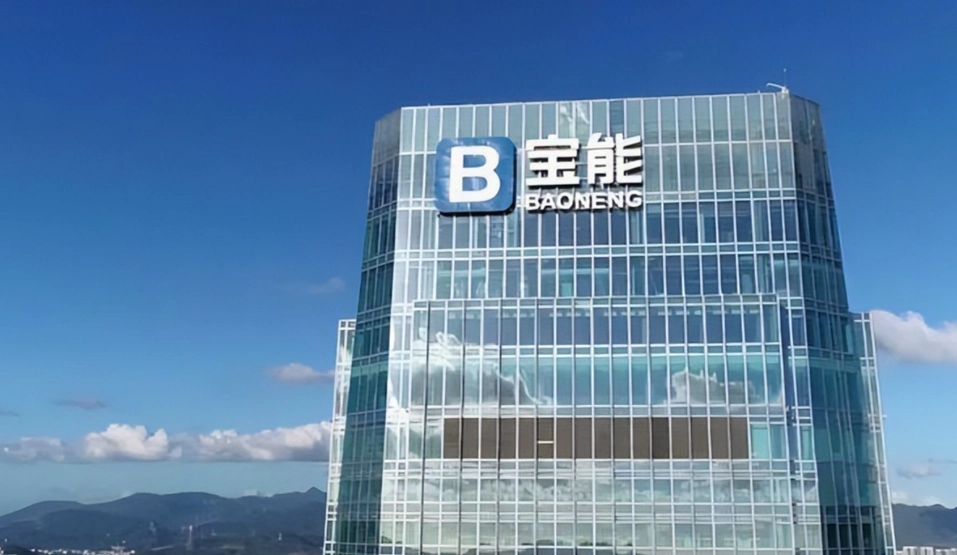
Building cars to win land
At its peak, Baoneng’s expansion into autos followed a model described as “industry in exchange for cities” — using car plants to secure land. Backed by its control of Qoros Auto, Baoneng Auto pushed into Xi’an, Guangzhou, Kunming, Wuhu and other cities, where local governments offered land, credit support and industrial-park infrastructure to attract new-energy vehicle production.
But carmaking is heavy industry that demands tens of billions of yuan in sustained cash flow and years of research and development. Baoneng sank money raised from financial institutions and local platforms into factories and park land, while Qoros lost ground on weak products and a collapsed dealer network. The funding loop broke.
Cross-guarantees and a 44.8 billion yuan bill
Tianyancha records show a web of parent-subsidiary guarantees and tightly bundled assets across the group. The same database lists 52 enforcement cases against Shenzhen Baoneng Investment Group, the group’s core holding company, with total amounts reaching 44.8 billion yuan (about $6.3 billion). Thirty-seven of those cases were filed in 2026 alone.
Those new filings, and the scale of the sums involved, suggest creditors have run out of patience.
From paper claims to seized assets
In good times, large private conglomerates used a standard template to raise bank syndicate loans or trust financing: the investment parent provided joint liability guarantees, the auto unit made project commitments, and the local park entity mortgaged land-use rights and property. Once payments were missed, that layered network turned into a chain of liability.
The inclusion of the Wuhu park entity in the latest case sends a strong signal: creditors are no longer content to pursue paper claims against the investment group, whose shares are largely frozen and whose executives face consumption restrictions. They are moving to seize, value and enforce the group’s underlying physical assets. Wuhu, once planned as a key parts and electronics base, is now a focus for creditors seeking any remaining recovery from land, unfinished production lines and park facilities.
Collateral losing value
The collateral itself is deteriorating. The multibillion-yuan auto parks sat idle for years, cannot easily be converted to production lines for mainstream EV brands, and face complicated land-use rules and high disposal taxes that make them likely to fail at auction. Baoneng Auto has already halted production, faced unpaid-wage protests and seen local governments reclaim idle industrial land.
With the carmaking dream gone, what remains is concrete that generates no cash and a heavy depreciation burden.
The end of the leverage era
The 158 million yuan joint enforcement case is a warning to those who believed capital alone could build industry. As leverage recedes, the industrial parks and investment platforms once presented as grand auto blueprints cannot rescue themselves from a 44.8 billion yuan enforcement bill. They are heading, ruling by ruling, toward breakup and court-ordered liquidation.