BBK's Xiaotiancai appoints Wang Yuechao as legal representative
Xiaotiancai and parent BBK Education named Wang Yuechao legal representative, replacing Liu Tao as regulatory scrutiny of its closed social network grows.
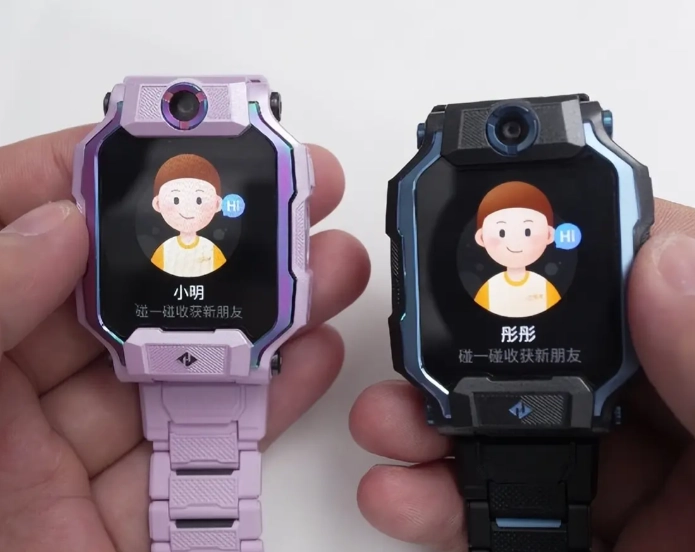
Guangdong Xiaotiancai Technology Co., Ltd., the dominant maker of children's smartwatches in China, has appointed Wang Yuechao as its legal representative and manager, replacing Liu Tao, corporate records show.
The change was mirrored at its wholly owned parent, Dongguan BBK Education Technology Co., Ltd., where Wang also took over from Liu as manager and legal representative. The matching moves at both levels point to a governance reset rather than routine registration upkeep, as tougher child-protection rules and a shrinking pool of young customers test the business.
Filings on the Tianyancha app show Xiaotiancai was set up in March 2010 with registered capital of 100 million yuan (about $14 million). Its approved business covers the manufacture and sale of wearable smart devices and mobile terminals, and it is 100% owned by Dongguan BBK Education Technology.
A handover at both levels of the BBK Education Electronics system
Liu stepped down as executive director, manager and legal representative of Xiaotiancai. Wang takes the manager and legal representative roles and joins the board as a director.
Liu was the executive who drove Xiaotiancai's shift from basic positioning phones to connected social devices, and long served as the legal anchor and strategic head of the business. Wang now holds operating and legal authority at both the parent and the subsidiary.
That consolidates decision-making at a company that ships more than 10 million units a year and holds close to 30% of China's children's smartwatch market, handing a new leadership team the task of fighting for share in a market that is no longer growing.
The closed social network that became a liability
Much of the attention around the reshuffle stems from the feature that built Xiaotiancai's premium: a closed social network that now faces complaints from parents and questions over compliance.
Its tap-to-add friends function, Weiliao messaging and Friend Circle feed have knitted together a network of classmates across the country. The system authenticates devices at a technical level and only lets users of the same brand connect, shutting out Huawei, Xiaomi, Qihoo 360 and other rivals.
The design was first pitched as a way to keep strangers away from young children. In practice, it creates exclusion inside classrooms, where a pupil without a Xiaotiancai watch can be left unable to add friends. Parents then feel pushed to pay 1,000 to 2,000 yuan for hardware rather than choose cheaper brands.
In recent years, gamified points tasks, paid virtual items and occasional inappropriate content have triggered complaints. Anger at being drawn into the network has moved from private grumbling to public criticism, and lawyers have begun asking whether the design abuses market dominance to squeeze out competitors.
Fewer children, and phone makers moving downmarket
Deeper strategic anxiety comes from two directions: a falling number of births and smartphone giants pushing into the category.
Children's watches are aimed squarely at pupils aged 5 to 12. With births on a narrowing trend, growth from selling new devices alone has hit a ceiling.
Huawei, meanwhile, is using cross-device coordination in its HarmonyOS ecosystem, offline positioning and lower supply chain costs to push further into children's safety wearables. Entry-level Apple and Android phones are also getting cheaper and adding parental controls, and some fifth and sixth graders now skip the watch entirely for a standard handset.
If Xiaotiancai keeps to a fully closed hardware and software system, it will struggle to hold off ecosystems that link multiple devices. Its child-oriented design and addiction risk may also push older pupils away faster.
Regulation forces a compliance rebuild
Stricter enforcement of rules including the regulations on protecting minors online is also forcing management to rebuild its compliance defenses.
A children's watch is no longer a simple hardware toy. Its built-in app store, Weiliao messaging and forums make it, in effect, a small internet information service provider. Anti-addiction curfews, privacy reviews of third-party children's apps and blocking algorithm recommendations of harmful content each map to a red line set by local regulators.
Having the new legal representative take on compliance responsibility at both parent and subsidiary lets the company clarify internal accountability and rebuild its control systems as oversight of children's digital products becomes routine.
The handover is the start, not the answer
The 100 million yuan of registered capital and the two-tier leadership change recorded on Tianyancha mark a strategic shift for a quiet champion of Chinese consumer electronics after its rapid-growth years. The BBK group has given Xiaotiancai a new governance structure through a smooth generational handover.
But the trust it has spent by relying on brand-exclusive social features, and the compliance problems that come with it, are now under public scrutiny.
In a mature market with shrinking hardware demand and tighter protection for minors, the question is whether Wang's team can open up a closed system and rebuild a healthy ecosystem built on product strength. That is the test parents and the market will set for the new leadership.