China Rare Earth Halts Stock for Liangshan Mine Asset Deal
China Rare Earth suspended trading and plans to buy China Rare Earth Liangshan, adding a major light-rare-earth mine to its listed platform.
China Rare Earth will suspend trading from Nov. 2, 2026 as it plans to buy equity in China Rare Earth Liangshan via a share issuance, a deal set to become a major asset restructuring.
The transaction marks a key step by state-owned China Rare Earth Group to inject one of China’s largest light rare earth mines into its listed flagship. It also addresses a long-standing competition issue and broadens the company beyond its southern medium-heavy rare earth base.
China Rare Earth said it had been notified by its actual controller, China Rare Earth Group, that it plans to issue shares to acquire equity in China Rare Earth (Liangshan) Rare Earth Co., Ltd. and raise supporting funds.
The deal is expected to constitute a major asset restructuring and a related-party transaction. Trading will be halted from market open on November 2, 2026, and the company expects to disclose a detailed plan within 10 trading days.
The move is more than a capacity expansion. Since China Rare Earth Group’s establishment at the end of 2021, it has promised to resolve horizontal competition and integrate scattered assets under one listed platform.
From Guanlu and Minmetals Rare Earth to China Rare Earth
Tianyancha, a corporate records database, shows that China Rare Earth Group Resources Technology Co., Ltd. was incorporated on June 17, 1998. Its legal representative is Guo Liangjin, registered capital is about 1.061 billion yuan (about $149 million), and it is registered in Zhanggong District, Ganzhou, Jiangxi Province.
Its former names include Shanxi Guanlu Co., Ltd. and Minmetals Rare Earth Co., Ltd. It was renamed China Rare Earth in 2022.
The name changes trace the industry’s path from fragmented competition to central enterprise consolidation. Despite its national name, the listed company’s main assets have long centered on ionic-clay medium-heavy rare earth separation and smelting in Ganzhou and related mining quotas.
That has left a structural gap between its resource self-sufficiency and its position as China Rare Earth Group’s main listed platform.
A commitment to resolve horizontal competition
A core driver of the deal is the group’s deadline-linked commitment to resolve competition between its subsidiaries.
China Rare Earth Group was formed through a strategic restructuring involving Chinalco, China Minmetals and Ganzhou Rare Earth Group. It inherited mining rights and smelting assets spread across different entities.
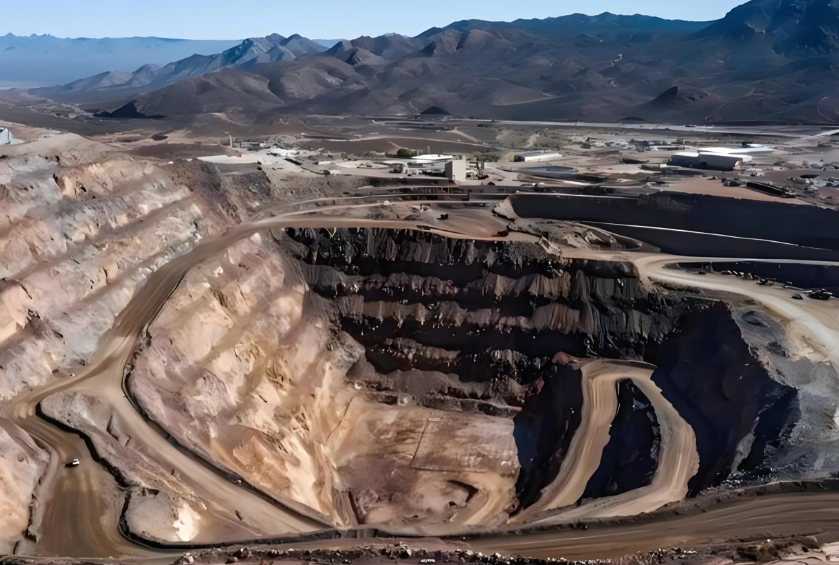
China Rare Earth Liangshan holds core development rights and large mining quotas for the Maoniuping rare earth mine in Mianning, Liangshan, Sichuan. The mine is China’s second-largest light rare earth deposit after Bayan Obo in Baotou and contains high-quality bastnaesite.
The asset has long been held and developed mainly at group level. Because the listed company is also engaged in rare earth mining, beneficiation, smelting and processing, the two businesses overlap.
Injecting China Rare Earth Liangshan into the listed company would fulfill a capital-market commitment and securitize one of the group’s most profitable and resource-rich upstream assets.
Bridging the north-south rare earth divide
China’s rare earth industry has historically been split by geography and product type. Baogang and Northern Rare Earth dominate light rare earths in the north, while southern companies focus on medium-heavy rare earths.
Medium-heavy rare earth production faces strict environmental controls and quotas. Meanwhile, light rare earths — especially neodymium and praseodymium used in high-performance neodymium-iron-boron magnets — account for more than 80% of consumption in electric-vehicle drive motors, wind turbines and industrial robot servo motors, according to the article.
China Rare Earth’s listed platform has had limited control over light rare earth ore, relying heavily on external quota purchases and facing pressure from upstream and downstream price mismatches.
The Liangshan acquisition would give it direct control over one of China’s most important high-grade light rare earth mining businesses outside Northern Rare Earth. The company would then span both northern light rare earth resources and southern medium-heavy rare earth chains, helping cushion smelting margins against raw-material volatility.
Shares, cash and balance-sheet calculations
The proposed structure — share issuance plus supporting fundraising — is designed to limit calls on the listed company’s existing cash.
New shares would align China Rare Earth Group and other minority sellers with the listed company’s market value. The supporting funds could help finance deep and peripheral exploration, green and smart-mine upgrades, and larger downstream processing projects.
The companies say the structure could also improve the balance sheet and use the listed central enterprise platform’s valuation to amplify state strategic capital.
Valuation and environmental tests ahead
Pricing at a low point in the cycle
A major challenge is valuing a large strategic resource asset while rare earth prices remain near the bottom of the cycle. After the surge of previous years, prices for key products such as praseodymium-neodymium oxide corrected sharply and have stayed low for an extended period.
Assessors must value Maoniuping’s mining rights and discounted future cash flows despite the downturn. A valuation that is too high would require too many new shares and dilute existing shareholders’ earnings per share. A valuation that is too low could raise state-asset preservation concerns and complicate talks with minority shareholders.
Environmental compliance and costs
The Liangshan mine also presents high-altitude, complex geology and strict environmental requirements. The Maoniuping area lies in an important ecological barrier zone in the upper Yangtze River basin.
Legacy waste-rock piles, tailings-dam safety monitoring and soil-and-water conservation require continuing, stringent compliance. Once inside a public company, environmental performance and production ramp-ups will face closer scrutiny, while safety and environmental spending will test management’s ability to control costs.
A strategic test for the listed platform
Tianyancha records — including its 1.061 billion yuan registered capital, Ganzhou headquarters and successive name changes — reflect the repeated restructuring of a strategic-resource platform.
China Rare Earth Group’s trading halt opens the way for the listed company to manage both light and medium-heavy rare earth assets and gives Beijing a stronger capital platform for unified resource regulation.
But with commodity prices volatile and green-mining requirements tightening, the final plan must show investors that the multibillion-yuan asset injection can deliver both strategic value and profit.