Great Wall Motor October sales fall 16% as exports top half
Great Wall Motor's October sales fell 15.87% to 120,374 vehicles as a domestic price war bit, while exports passed half of volume for the first time.
Great Wall Motor sold 120,374 vehicles in October, down 15.87% from a year earlier, with overseas shipments passing the halfway mark for the first time.
The Baoding-based automaker is under pressure at home, where a price war has spread into lower-tier cities and rural markets and plug-in hybrid and battery-electric rivals are eating into its core fuel-vehicle base. Exports are now carrying the group.
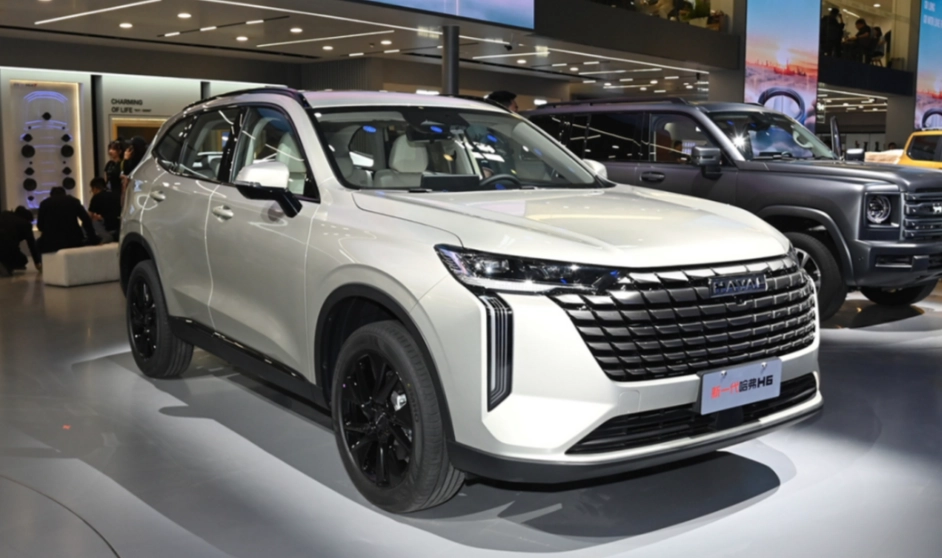
October overseas sales reached 62,862 units, more than 52% of the monthly total, the company said in its production and sales report. New energy vehicle sales were 49,499, above 40% of the month's volume.
For January to October, sales slipped 2.42% to 1,040,676 vehicles.
Corporate records database Tianyancha lists Great Wall Motor Co Ltd as incorporated on June 12, 2001, with registered capital of 8.56 billion yuan (about $1.2 billion). Its legal representative is Wei Jianheng, its registered address is on Chaoyang South Street in Baoding's Lianchi district, Hebei province, and it was formerly known as Baoding Great Wall Motor Co Ltd.
Domestic base under siege
The near-16% October decline lays bare the squeeze on Great Wall's home business. Haval, long its cash engine, and off-road standard-bearer Tank are meeting tight competition in the 100,000 to 250,000 yuan mainstream band from BYD's DM-i plug-in hybrid range, Geely Galaxy and extended-range models from newer rivals.
Advantages built on mechanical engineering, rugged styling and chassis tuning have lost some pull with young first-time buyers, as competitors combine advanced driver assistance, large-model cockpits and aggressive pricing.
Exports as the profit shelter
Great Wall has pushed Tank, GWM Poer pickups and Ora electric cars into Russia, Latin America, the Middle East, Australia and Southeast Asia. Those markets still support premium pricing for off-roaders, high-clearance diesel and petrol pickups and quality hybrid models.
Selling abroad lets the company avoid domestic subsidy battles over purchase incentives and earn higher per-vehicle net profit than at home. Crossing 52% overseas share marks a shift from a China-dependent automaker toward a global group fed by profits from several regions.
Two risks
First, trade barriers. European anti-subsidy tariffs and higher local-assembly thresholds in the Middle East and Latin America are narrowing the window for direct vehicle exports. Without overseas plants and local supply chains that meet compliance rules quickly, the high-margin export dividend could be cut sharply by a sudden policy shift.
Second, technology recognition at home. NEV volume of nearly 50,000 a month looks strong, but sales of Hi4 plug-in hybrids and Ora battery-electric cars are spread thinly across the mainstream market, with few hit models.
As automakers race to roll out end-to-end, mapless advanced driver assistance across cities, Wey and Haval must turn smart features into hard selling points while keeping their rugged safety image. That is the precondition for retaking domestic ground.
Wei Jianheng's export push has bought Great Wall a profit buffer. The test for investors is whether the company can hold its high-margin overseas base and win the smart-EV fight at home at the same time.