Ant Group sets up 100 million yuan venture to manage shopping malls
Ant Group's Shanghai Yunxin unit takes 47.7% of a 100 million yuan (about $14 million) mall-management partnership, a light-asset bet on offline retail traffic.
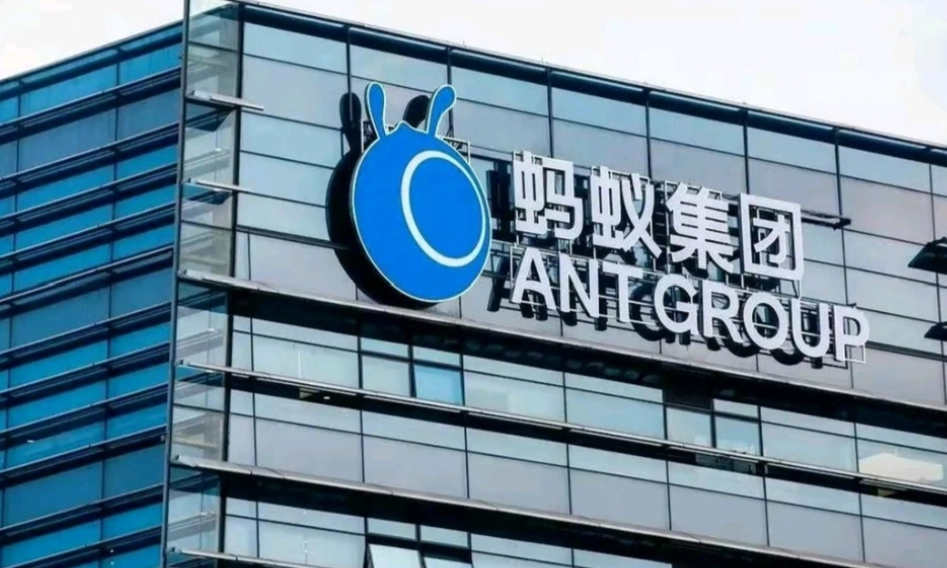
Ant Group has registered a 100 million yuan (about $14 million) partnership in Shanghai to manage shopping malls, a rare move by the fintech giant into offline commercial property operations.
Corporate records show the vehicle, Shanghai Ruifengheng Business Management Partnership (LP), was set up with Ant's main domestic investment arm in the junior seat. The structure points to a push into physical retail sites as growth in online payments slows, and gives Ant a legal firewall against the heavier risks of running malls.
The partnership's business scope covers management services for commercial complexes, corporate management and consulting, and social and economic consulting, according to Tianyancha, a Chinese corporate records database.
Zhuhai Ruifeng holds 52.3%, Shanghai Yunxin 47.7%
Zhuhai Ruifeng Investment has subscribed 52.3 million yuan for a 52.3% stake and serves as managing partner, the filing shows. Shanghai Yunxin Venture Capital has subscribed 47.7 million yuan for 47.7%.
Shanghai Yunxin is wholly owned by Ant Group Co. Ltd. and has been the group's main vehicle for domestic bets on hard technology, new consumer businesses and digital supply chains. Past deals have mostly been direct investments or controlling stakes.
Here it takes the limited-partner role. Under Chinese partnership law, the managing partner runs day-to-day operations and signs contracts, while a limited partner has no executive authority and is liable only up to its contribution. That leaves Zhuhai Ruifeng, whose legal representative Zhai Zhiwei has a background in commercial real estate and industrial investment, in operational control.
The arrangement shields Ant from the debt and joint-liability risks that come with leasing disputes and heavy-asset mall operations, while keeping the group free to scale up or walk away later.
Offline traffic as online growth stalls
The bigger driver is the search for physical, high-frequency consumer touchpoints. Alipay, China's dominant payments app, is nearing the ceiling for daily users and transaction volumes on mobile.
Shopping malls, which bundle dining, retail, children's entertainment and services, remain the main venue for large-ticket spending and real money flows. Managing them would let Ant export its digital tools — smart-district membership systems, aggregated payment collection, digital yuan pilots, AI-based shopper profiling — as part of a broader mall management package.
Deeper involvement would also give Ant prime offline space to test its AI life-services assistant, Alipay's NFC tap feature and its offline credit offerings.
A light-asset play on distressed property
Chinese commercial property is in the middle of a painful restructuring. Developers that relied on debt-funded construction are struggling, and many malls in major cities face rising vacancy, outdated tenant mixes and weak operations. The industry is shifting toward light-asset management, where operators compete on leasing and asset performance rather than ownership.
The pairing of a partner with local project resources and asset-management experience with a technology company holding digital tools and capital fits that logic. The partnership could act as a special purpose vehicle for selected mall projects, taking over or managing underperforming assets, then upgrading them with Ant's systems and tenant-sourcing reach.
Once occupancy and cash flow recover, returns could come through long-lease profit sharing or securitisation, such as publicly listed REITs.
Two tests ahead
Running physical space
Mall management is labour-intensive work: engineering and property checks, fire-safety supervision, layout planning and negotiations with tenants across multiple categories. Internet companies that tried to disrupt the sector through online tools have often come unstuck over rent arrears, tenant exits, shared utility bills and local property relationships.
Shanghai Ruifengheng holds the right licence, but converting digital leverage into higher occupancy and footfall under its managing partner's control is the harder test.
Control versus returns
Shanghai Yunxin is putting up nearly half the money without holding executive power, leaving it with limited say over investment decisions, exit timing and the introduction of outside partners.
If the partnership runs into bad assets in later托管 or expansion deals, the fund will have to balance capital safety and compliance audits against the industrial returns Ant expects — a narrow path set by the partnership agreement's fine print.
The 100 million yuan registration and its shareholding split trace a broader shift by China's technology giants from chasing traffic toward deeper industrial work. Ant has entered mall management as a restrained second shareholder, betting that capital and digital capability can add value to bricks-and-mortar retail. Whether the platform can turn that into a reliable profit model in a crowded retail market and an oversupplied property sector is the question the real world will now test.