JAC Motors cuts Hefei unit's registered capital 64% to fund EV push
JAC Motors cut the registered capital of its Hefei truck subsidiary by 64%, pulling 216 million yuan back to fund premium electric vehicles built with Huawei.
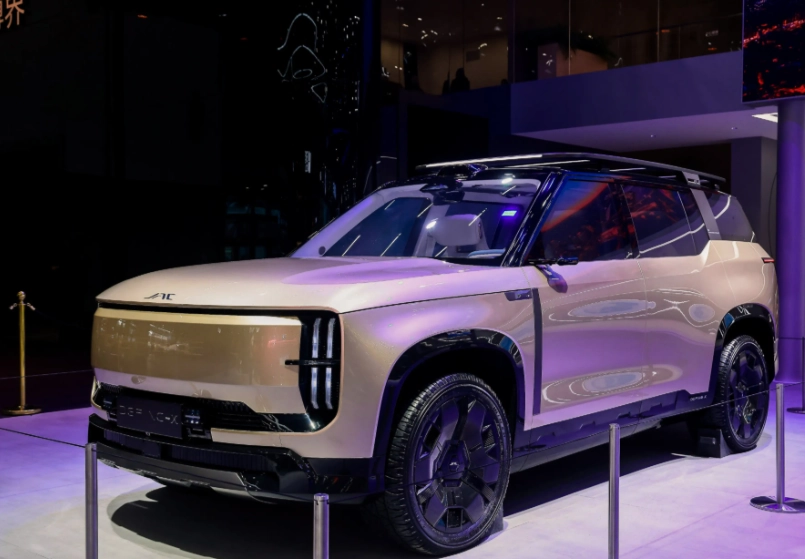
JAC Motors has cut the registered capital of a legacy Hefei subsidiary by 64%, pulling about 216 million yuan (about $30 million) back into the listed parent to help fund its premium electric-vehicle push.
The reduction at Hefei JAC Motors Co., Ltd. moves money out of a low-margin commercial-vehicle business that no longer drives growth. It comes as scrutiny of the Maextro V800 intensifies and regulators launch an industry-wide survey of non-metallic materials.
Filing shows capital cut to 121 million yuan
Records on Tianyancha, a corporate registry database, show the unit's registered capital fell to about 121 million yuan (about $17 million) from about 337 million yuan (about $47 million), a 64% drop.
Hefei JAC Motors was set up in July 1996 and is wholly owned by Anhui Jianghuai Automobile Group Co., Ltd. (JAC Motors), the A-share listed parent. Its legal representative is Zhao Ninggang.
Its business scope is limited to making and selling its own cargo trucks, agricultural vehicles and related parts — traditional lines far from the group's electric passenger-car ambitions.
Zhao also serves as JAC Motors' board secretary, general manager of its securities and investment center, and party secretary of Jiangqi Co., Ltd. A group capital-markets executive running the unit signals its role as an internal vehicle for asset allocation and compliance, not front-line expansion.
Legacy lines sidelined
The subsidiary dates from the years when chassis modification, agricultural vehicles and medium and light trucks built JAC's base. That market has largely gone.
Agricultural vehicles have all but disappeared as consumption and commercial logistics upgraded, and conventional trucks have moved to platform-based, electrified designs. JAC's core commercial-vehicle operations now run through light commercial vehicle plants, its heavy truck arm and an overseas pickup export network.
Low-end kit assembly and agricultural-vehicle licences left inside the old shell no longer add meaningful earnings. Keeping hundreds of millions of yuan of capital in a slow-turnover, low-margin entity weighs on the listed company's return on equity and adds management costs, the company's logic runs.
Cash demands of the premium pivot
The deeper driver is JAC's need for cash as it moves upmarket. Multi-billion-yuan spending on a high-standard smart electric passenger-car plant, plus the line reconfiguration, new precision tooling and full-chain R&D coordination required for the Maextro brand it builds with Huawei, keep pressure on free cash flow.
Stricter component validation, replacement tooling for high-strength metal parts and tougher fatigue bench testing all require real money.
Cutting capital from the old unit shrinks the group's legacy asset base and frees capital and credit lines for its smart connected vehicle core. JAC is concentrating its financial resources on volume production and quality control for its strategic new models.
The Tianyancha record of the 64% reduction shows what the shift costs. In a market with limited resources, businesses that cannot generate high added value must make way for the new strategy.
JAC still has to show whether concentrated resources can win back premium buyers' trust in its manufacturing, even as it absorbs a shrinking legacy business and faces tougher quality tests on its高端 models.