Tesla registers Xiong'an sales unit with $1 million capital
Tesla has registered a wholly owned sales and service company in Xiong'an, betting on relocated state-firm staff and the new area's smart-city test beds.
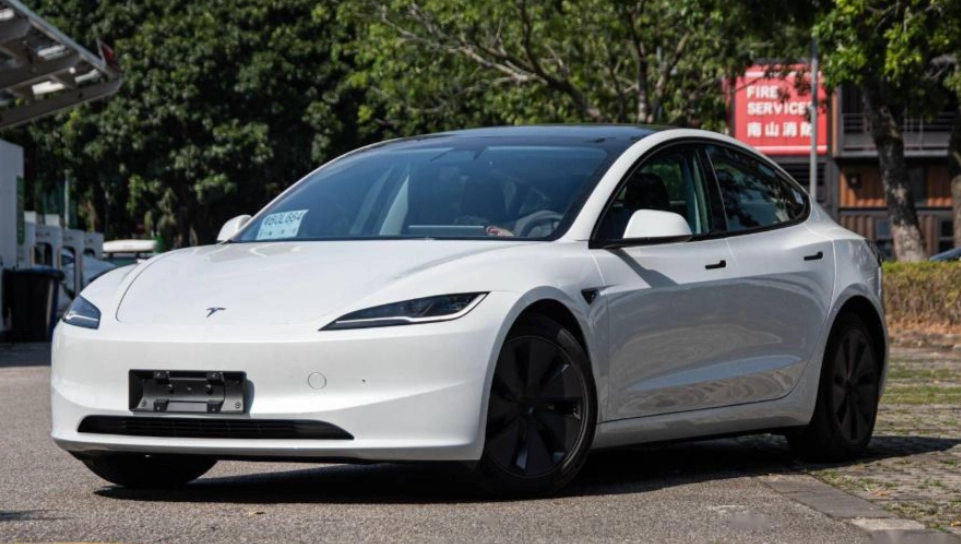
Tesla has registered a wholly owned sales and service company in Xiong'an New Area with $1 million in capital, led by Greater China chief Wang Hao, as it deepens its China network and prepares Full Self-Driving (FSD) for local rollout.
Xiong'an, a new city built about 100 kilometers south of Beijing, is meant to be a national showcase for digital-twin city management and connected-road infrastructure. For Tesla, a registered local entity means invoicing, tax settlement and after-sales responsibility on the ground — and a standing corporate vehicle for future compliance testing.
A standard direct-sales template
The entity, Tesla Automotive Sales Service (Xiong'an) Co. Ltd., was set up in recent days, according to corporate records database Tianyancha. Its legal representative is Wang Hao, Tesla's global vice president and president of Greater China. Tesla Motors Hong Kong Ltd. holds 100% of the equity.
Its business scope covers vehicle sales, complete new energy vehicle sales, auto parts wholesale and after-sales vehicle repair.
The structure follows Tesla's China playbook. Dozens of its regional sales and service entities on the mainland are headed by Wang Hao as legal representative, part of a model that keeps dealers and regional agents out and gives headquarters direct control over store siting, pricing, pre-delivery inspection, charging network planning and service standards. The $1 million capital is a standard size for foreign direct investment of this kind.
Tesla already operates dozens of such entities on the mainland. The Xiong'an registration moves the company beyond temporary displays and into a permanent base able to issue invoices, carry after-sales liability and hold long-term assets.
Relocation demand and a smarter grid
The first driver is people. As Beijing sheds non-capital functions, central government-owned enterprises, universities and research institutes have been moving staff into Xiong'an. Hundreds of thousands of white-collar and research workers with big-city habits and high spending power are arriving — the core audience for the Model 3, Model Y and higher-end Model S and Model X.
Buyers there previously relied on service outlets in Beijing or Baoding, which meant long delivery waits and slow accident repairs. A local entity lets Tesla open a store in a core commercial district, apply for local new energy vehicle purchase subsidies and complete vehicle registration and tax settlement locally.
The second driver is the city's infrastructure. Xiong'an was planned with fibre networks, roadside sensing units and a digital traffic brain built into utility tunnels and main roads, making it one of China's most advanced areas for vehicle-road-cloud coordination. Tesla's autonomous driving approach relies on end-to-end vision rather than local roadside V2X systems.
But FSD needs high-level compliance road testing and demonstration in a flagship smart city before it can be fully deployed in China, where mapping and data-scrubbing rules are strict. A local entity can hold the qualifications for future driverless and fleet operations, and gives Tesla's Megapack commercial storage business and solar-storage-charging stations a route into Xiong'an's low-carbon grid plans.
Data and competition
The obstacles are real. Government offices and state-owned enterprise research centers remain sensitive about data security. Tesla has passed China's four auto data processing safety tests and stores Chinese data locally, but foreign smart electric vehicles have faced a difficult stretch of public opinion and site management in sensitive areas. Selling into a market dominated by government and research employers will test Tesla's China public relations and compliance teams.
Local rivals are already entrenched. Huawei HIMA, NIO, Li Auto and Zeekr have moved deep into Xiong'an through local supply chains and government procurement channels, competing on service speed, battery-swap coverage and cold-weather performance in northern winters. Tesla's Model 3 and Model Y have gone years without a radical model change, and $1 million plus a company-owned storefront may not be enough to hold the premium end of a crowded market.
The registration shows where a global electric vehicle pioneer intends to put down roots in China's newest national-level new area. Whether that base produces a more locally adapted model will be tested in the market.