Geely's Farizon lifts registered capital 150% to 1.21 billion yuan
Farizon, Geely's commercial vehicle unit, raised registered capital by 150% to 1.21 billion yuan (about $170 million) in four injections in under a month ahead of an IPO.
Farizon Commercial Vehicle Technology Co Ltd, Geely's commercial vehicle arm, has lifted its registered capital 150% to about 1.21 billion yuan (about $170 million) in under a month, corporate filings show.
The increase comes as the company positions itself for a separate listing and funds the heavy-asset buildout of battery-swapping and methanol refuelling networks. Four registration changes were logged in less than a month, taking capital from about 490 million yuan (about $69 million) — a net addition of roughly 730 million yuan (about $103 million).
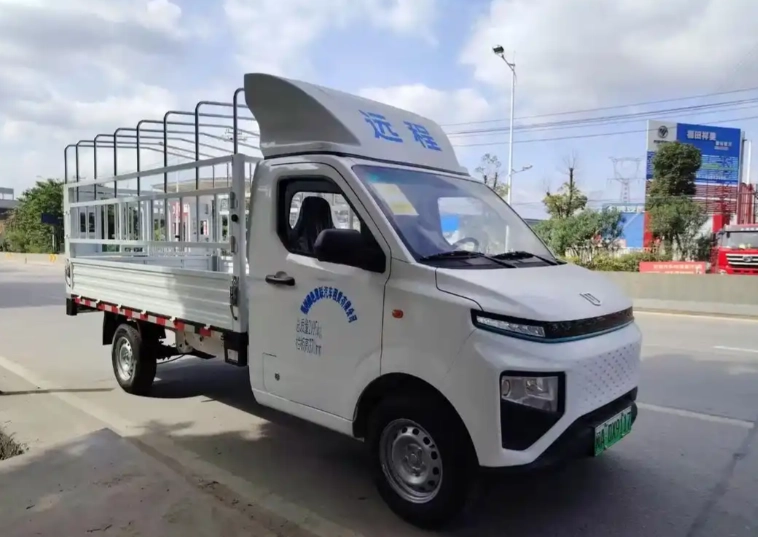
Filings on Tianyancha, a corporate records database, show the company was incorporated in July 2021 with Dai Qing as legal representative. Its business scope runs from management consulting to battery manufacturing and sales, complete new energy vehicles and battery-swapping equipment.
Its shareholders are Zhejiang Farizon New Energy Commercial Vehicle Group Co Ltd, Li Shufu in a personal capacity, and Hangzhou Jiyuan No.1 Enterprise Management Partnership (LP).
Staged payments point to a listing track
Earlier funding rounds brought in CITIC Securities and battery maker Gotion High-Tech, among other industry and brokerage-backed investors. Rather than completing all registrations at once, the piecemeal increases typically mirror investment tranches paid in at separate closings.
Gotion's involvement addresses battery supply security and cost. Capital from brokerage-linked investors points to governance clean-up ahead of a listing. Li Shufu's personal stake, alongside the employee holding platform, keeps Geely's control intact even as the share base dilutes.
The commercial vehicle economics
Commercial vehicle buyers — logistics firms, truck drivers and fleet owners — treat vehicles as productivity tools, not lifestyle purchases. With diesel prices high and freight rates weak, electric light and heavy trucks that cut per-kilometre fuel costs are seeing genuine replacement demand.
Selling the vehicle alone does not compete with diesel. Farizon's model bundles the truck with batteries, chargers, swapping stations and leasing. That requires fronting large battery assets and building swapping and methanol stations along national trunk routes.
Registered capital above 1.2 billion yuan improves the company's debt ratio and credit rating. That underpins its case for syndicated green loans of several billion yuan from commercial banks, and lowers the interest cost of carrying those assets.
Geely pulls its assets into one entity
Geely's Taizhou Declaration set a pivot back to the core auto business and a clean-up of multi-brand assets. Divesting non-core units and strengthening businesses that generate their own cash became the priority.
Farizon New Energy Commercial Vehicle was the first in China to reach 10,000 monthly sales across its full new energy lineup, and leads in both light commercial vehicles and heavy trucks. It is Geely's most obvious listing candidate after Zeekr and Lotus.
Consolidating core R&D assets, key battery supply chain entities and sales platforms under one legal person is a compliance step before an application. It clarifies related-party transactions and overlaps between businesses. The four filings are the visible trace of outside money landing and shareholders settling governance terms.
Two risks ahead
Farizon is the industry's most committed backer of methanol range-extender electric trucks. The technology performs well in cold weather and cuts emissions, but China's methanol production, transport and refuelling network is far thinner than diesel or the power grid. Without local governments and energy majors co-funding methanol stations, its reach in long-haul bulk freight stays limited.
The second risk is the price war in urban delivery. Manufacturers are pushing vehicles onto fleets and owner-operators with low or zero down payments to defend market share. Used new energy commercial vehicles are flooding in, and new-vehicle gross margins are compressing.
Farizon must show that software, its transport platform and battery lifecycle services generate real, sustainable profit while absorbing large research and infrastructure depreciation. Otherwise the enlarged share base could work against it if capital market liquidity tightens.
The filings record a leader in Chinese new energy commercial vehicles moving fast before the capital markets open. Li Shufu has supplied the war chest and pushed the whole ecosystem into the spotlight. Whether the enlarged entity can hold its lead under the iron rules of heavy-asset refuelling and relentless cost pressure is the question it must now answer to investors.