LG Display raises Guangzhou OLED venture capital to 16.6 billion yuan
LG Display and a Guangzhou state partner injected 1 billion yuan into their OLED venture, lifting registered capital to 16.6 billion yuan (about $2.3 billion) to fund upgrades.
LG Display has raised the registered capital of its Guangzhou OLED joint venture by 1 billion yuan (about $140 million), to 16.6 billion yuan (about $2.3 billion), strengthening the only 8.5-generation large-size OLED plant the Korean panel maker runs outside its home country.
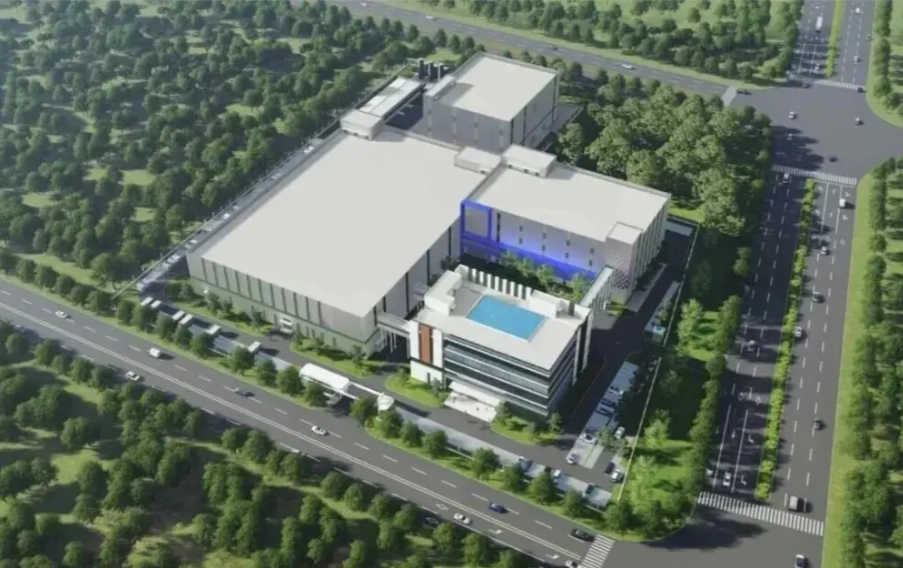
The capital increase comes as Chinese panel makers BOE Technology and TCL China Star Optoelectronics Technology (TCL CSOT) cement their dominance in LCDs and push into large-size OLED, forcing global suppliers to rethink where their production sits.
According to corporate records database Tianyancha, the joint venture — LG Display Optoelectronics Technology (China) Co Ltd — was set up in July 2018 and is led by legal representative Yoo Seok Park. Its registered capital rose from 15.6 billion yuan to 16.6 billion yuan, a net addition of 1 billion yuan.
LG Display holds 70% of the entity, with local state-owned Guangzhou Hi-Tech District Technology Holding Group holding the remaining 30%.
| Item | Detail |
|---|---|
| Company | LG Display Optoelectronics Technology (China) Co Ltd |
| Established | July 2018 |
| Legal representative | Yoo Seok Park |
| Registered capital | Raised to 16.6 billion yuan from 15.6 billion yuan (net increase 1 billion yuan) |
| Business scope | Manufacture and sale of display devices, sale of electronic products |
| Shareholder | Stake |
|---|---|
| LG Display | 70% |
| Guangzhou Hi-Tech District Technology Holding Group | 30% |
A model split between foreign technology and local capital
The 70/30 structure pairs LG Display's process know-how — from organic light-emitting material formulations and high-precision vacuum deposition to thin-film encapsulation and oxide TFT backplane drivers — with a local state platform.
Guangzhou Hi-Tech District Technology Holding Group is the main state-owned vehicle in the Guangzhou Development District for attracting strategic emerging industries. It has long provided land, factory construction, local grid access and government liaison for international semiconductor and high-end display projects.
The plant in Huangpu is LG Display's only overseas 8.5-generation (8.5G) large-size OLED production line in mass production. Both shareholders contributed in proportion, signalling their intent to protect an asset that accounts for a large share of the world's high-end large-screen television and automotive display panels.
Capital spending on upgrades and automotive shift
The immediate driver is the cash needed for technical upgrades, yield improvements and a shift toward higher-margin automotive products.
Large-screen television demand has been soft, but high-end gaming monitors and smart-cockpit OLED screens are growing fast. The Guangzhou 8.5G line was built mainly to cut 55-inch, 65-inch and even 77-inch panels for home televisions.
Automakers and premium hardware makers now want high refresh rates, curved flexible formats and long-life tandem architectures. Meeting that demand requires heavy retrofits: new high-precision exposure equipment, upgraded array cleaning tools and modified deposition chambers for the organic emitting layers.
Each piece of semiconductor-grade equipment carries a large cash cost. Raising registered capital to 16.6 billion yuan strengthens the plant's base for securing large, low-cost syndicated credit locally, so upgrades do not stall when the cycle turns.
Anchoring valuation amid sale talk
A deeper motive is to anchor valuation and defend negotiating ground while the industry buzzes with M&A speculation and assets are being revalued.
LG Display has put its Guangzhou 8.5G LCD plant up for sale, drawing keen interest from Chinese panel giants. That has focused attention on the ownership and independence of the large-size OLED assets in the same industrial park.
Seoul classifies OLED as a national core technology and restricts the transfer of core intellectual property and control to uncontrolled overseas parties. The joint capital injection is a clear governance signal: the large-size OLED line remains locked inside the LG Display–local state partnership.
The move also improves the plant's debt-to-asset ratio and lifts net assets, building a capital buffer and a fair-value reference for any future capacity split, renewed foundry agreement or independent supply chain operation.
A hedge against trade barriers
The step also reflects how global manufacturers remain tied to China's high-end manufacturing clusters even as trade friction reshapes supply chains.
Some lower-value assembly has moved to Southeast Asia and India. But large-size OLED depends on ultra-clean rooms, specialty electronic chemicals, ultrapure water and a stable grid — a hybrid of heavy chemicals and semiconductors. Away from South China's mature electronics supply base, yields and per-unit costs would suffer badly.
Pushing up the registered capital of the core joint venture endorses Guangzhou's business environment and stable supply chain, and keeps the profit centre sheltered through a difficult trade cycle.
What comes next
The 166 billion yuan figure recorded by Tianyancha — 16.6 billion yuan — and the cross-border ownership trail show a global display pioneer deepening its bet on a key Chinese industrial base. The extra 1 billion yuan gives the line fresh funding for upgrades and sets a higher legal and financial value on the plant.
But BOE Technology and TCL CSOT are closing in on printed OLED and medium-to-large OLED. Whether this joint venture can use the extra capital to defend its pricing power in high-end panels is the question it must now answer before the rest of the semiconductor display industry.