Songmont denies Japanese-brand claims, cites 265 China trademarks
Songmont denied claims it is a Japanese brand, citing 265 trademarks and its founders' Shanxi roots, as Chinese shoppers scrutinise 'fake Japanese' branding.
Songmont, the Chinese handbag label whose thousand-yuan bags have built a following among urban professionals, has denied claims that it is a Japanese brand, saying it has notarized evidence against online posts and will take legal action.
The dispute shows how quickly an "Eastern aesthetic" premium strategy can collide with Chinese shoppers' suspicion of brands that borrow foreign identities — and how costly that suspicion is to undo.
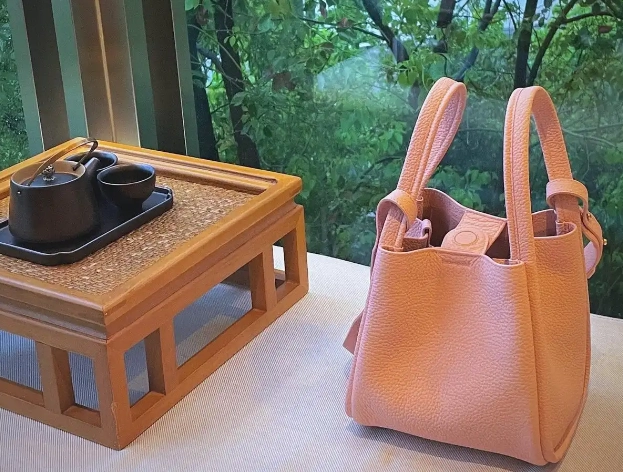
In a statement, Songmont said it was founded in 2013 by Fu Song and Wang Jie, both natives of Shanxi province. The character "song" in its name is made up of the characters for "mountain" and "pine", the company said, calling itself a purely Chinese original brand since its inception.
The brand said it had completed notarized preservation of evidence covering malicious mockery, out-of-context excerpts and misleading edited videos on online platforms, and would pursue litigation and platform complaints.
Corporate records support the founders' ownership. Songmont (Beijing) Culture Communication Co Ltd was set up in 2018 with registered capital of 5 million yuan (about $700,000), according to Tianyancha, a corporate records database. Its business scope covers bag sales and professional design. Fu holds 90% and Wang 10%.
Trademark filings are held through a related entity, Shanghai Shishang Songfeng Brand Management Co Ltd, which counts 265 trademark records. Several "Songmont" marks cover Class 18 for leather goods, Class 35 for advertising and sales, and Class 41 for education and entertainment.
Fu leads product and craft development, while co-founder Wang, a veteran designer, oversees visual direction, according to the statement and corporate records.
Why shoppers cried foul
Part of the reaction stems from a decade of "faux-Japanese" marketing by domestic brands chasing higher margins: Japanese kana on packaging, four-character names styled after Japanese phrases, invented Kyoto or Tokyo pedigrees.
As regulators and public opinion pressed companies such as Genki Forest and Miniso to drop their Japanese framing, Chinese consumers became quick to bristle at names carrying similar aesthetic cues. To a non-specialist eye, the four characters of Songmont's Chinese name read easily as Japanese rock-garden style — even though the brand traces the name to Shuowen Jiezi, an ancient Chinese dictionary, which defines the character as "a mountain, great and high."
The misunderstanding, amplified by algorithmic feeds and clipped re-edits, turned a subtle act of cultural translation into an accusation of false packaging.
A crowded price band
The bags sell for around 1,000 yuan and up, a segment long dominated by overseas labels such as Coach and Michael Kors. Songmont carved out a niche among affluent white-collar workers in first-tier cities, reaching annual sales in the hundreds of millions of yuan, and has held exhibitions at Paris Fashion Week for several years running while opening its own overseas storefront.
That success invites scrutiny. When a local newcomer takes share from established light-luxury names at 1,000 yuan or several thousand yuan per bag, every gap in its story gets examined under a magnifying glass. Shanghai police previously said they took criminal measures against people who organized the spread of false negative claims about the brand on social platforms.
The tests ahead
Songmont's 265 trademarks and notarized evidence settle the legal question. They do not settle the harder one: public perception.
- The cost of explaining. A brand that must issue lawyers' statements and notarized documents to explain where its name comes from is paying for an early gap between its narrative and what mainstream shoppers understood. Turning an aesthetic that works inside design circles into a consensus the public does not need proven is a step toward becoming a national brand.
- Quality at the 1,000-yuan mark. Eastern aesthetics and cultural storytelling can win a first wave of trial buyers and an emotional premium. Keeping them requires leather that wears well, hardware that lasts and responsive after-sales repair. With international labels discounting and domestic suppliers copying fast, a durability problem would quickly turn the storytelling into an accusation of overpricing.
The 5 million yuan of registered capital and the wall of trademarks record a Chinese design label's path from a personal workshop to a commercial business. Fu and Wang have used the law to kill a baseless claim about their nationality. Whether the brand can also clear the clouds over its aesthetics is a question only its products can answer.