Phantom Blade Zero Launches to 91 Metacritic Score
S-Game’s Phantom Blade Zero topped Steam sales after earning 91 on Metacritic, backed by Tencent, IP planning and industrialized development.
Chinese AAA wuxia action game Phantom Blade Zero has launched worldwide with a Metacritic score of 91, topping Steam’s global sales chart and marking a breakthrough for premium Chinese console games.
The debut gives developer S-Game a rare shot at global recognition in premium action games. It also shows how an independent studio with a long-running Chinese wuxia franchise used mobile-game cash flow, Tencent-backed capital and early intellectual-property planning to enter the AAA market.
Liang Qiwei, founder of S-Game, has spent more than a decade building a dark Chinese martial-arts universe. Social media has focused on the game’s fast combat chains, dark wuxia setting and “kung fu punk” aesthetic.
A corporate records detail also stands out. Tianyancha, a Chinese corporate records database, shows that related entity Beijing S-Game Network Technology Co., Ltd. registered the “Phantom Blade Zero” trademark in Class 9, covering scientific instruments and software, in 2023, three years before the game’s release.
Ownership and early IP planning
Tianyancha shows Beijing S-Game was incorporated in August 2011. Liang is its legal representative, and its registered capital is about 3.56 million yuan (about $501,000).
Its registered business scope includes professional design services, goods imports and exports, and technology imports and exports. Its shareholders include Tianjin Aisi Software Development Partnership (LP), Liang himself and Guangxi Tencent Venture Capital Co., Ltd.
The mix of a founder-controlled holding platform and strategic investment from Tencent reflects S-Game’s need for capital during a costly transition from mobile games to AAA development.
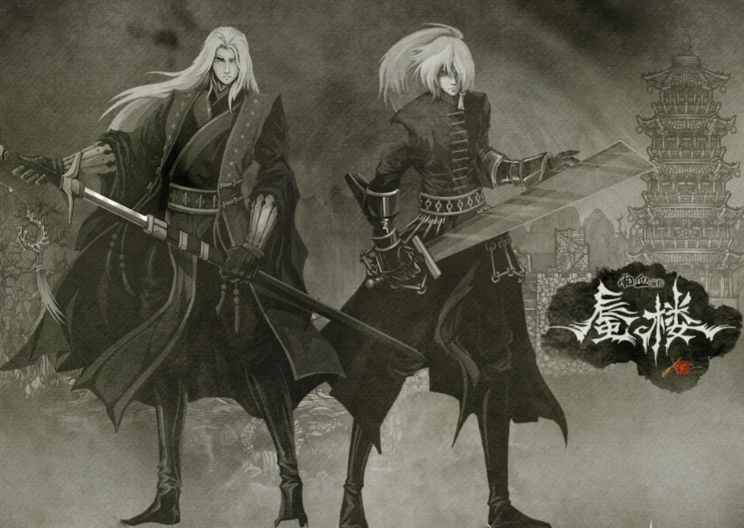
Liang, a graduate of Yale University’s architecture school, first became known for the indie Rain Blood series. Those games established his blend of dark Chinese wuxia, ink-wash visuals and steampunk influences.
He later moved to mobile with the Phantom Blade series, which gave S-Game early cash flow and allowed the team to expand. A AAA single-player game built with Unreal Engine 5, motion capture and complex physics requires years of spending that can run into hundreds of millions of yuan.
Tencent’s investment supplied liquidity and gave the studio room to work on long-cycle technology without being driven solely by short-term commercial targets, according to the article’s account of the company’s trajectory.
The early Class 9 trademark registration also suggests S-Game built legal protection for its core brand before full development and global promotion intensified.
A faster alternative to Soulslike combat
A major reason for the 91-point reception is the game’s combat design. S-Game upgraded a “combo chain” system first refined in its mobile action games for a premium PC and console title.
The studio broke traditional Chinese martial-arts routines into fast, fluid combat sequences with strong cancellation mechanics and rapid shifts between attack and defense. It also used action directors and traditional martial-arts masters for full motion-capture work.
The result is a high-mobility wuxia combat system rather than another imitation of the slower, high-punishment Soulslike formula associated with Hidetaka Miyazaki.
In recent years, hardcore action games have been dominated by deliberate Soulslike mechanics, while many Western action games have leaned on heavy strikes and cinematic QTE interactions. S-Game’s approach targets what the article describes as a gap for Eastern martial-arts movement and speed.
Premium games as a long-term IP business
Phantom Blade Zero is launching as a full-price, buy-to-play game on Steam and major console platforms. That is a direct test against global premium releases, rather than the free-to-play, in-game purchase and user-acquisition model common in China.
The Chinese market’s high-turnover mobile model is facing rising customer-acquisition costs and slowing user retention. A global premium release lets S-Game compete primarily on content quality.
The 2023 trademark registration could also support later collector’s editions, merchandise, anime and film adaptations, sequels and other extensions of the IP. It offers a legal foundation against overseas squatting or naming conflicts.
That shift points beyond one-off game development. It positions S-Game as a studio trying to operate a global industrialized IP with intellectual-property rights at its center.
Risks after launch
The high Metacritic score and No. 1 Steam ranking do not guarantee long-term commercial success. The first-month sales curve, cross-platform stability and performance across millions of PC configurations will determine refunds and player sentiment.
Unreal Engine 5 games have historically faced issues including shader-compilation stuttering, memory optimization and compatibility with mainstream handheld PCs. Widespread technical problems could quickly turn Steam user reviews mixed.
Premium games also have a shorter revenue window than live-service GaaS titles. Most sales tend to arrive in the first few months after release.
S-Game will therefore need high-quality DLC, broader physical publishing and careful cost control to maintain revenue after the launch window. That is a key test of whether it can evolve from a creator-led studio into a mature industrial game developer.
The trademark record and years of shareholder history trace a path from small Flash-era personal projects to the center of the global premium-game market. Whether Phantom Blade Zero can sustain both sales and reputation remains the larger question after its strong opening.