Pony.ai raises Beijing unit's registered capital to $220 million
Pony.ai lifted the registered capital of its Beijing research unit to $220 million from $170 million to fund Robotaxi production, computing and data compliance.
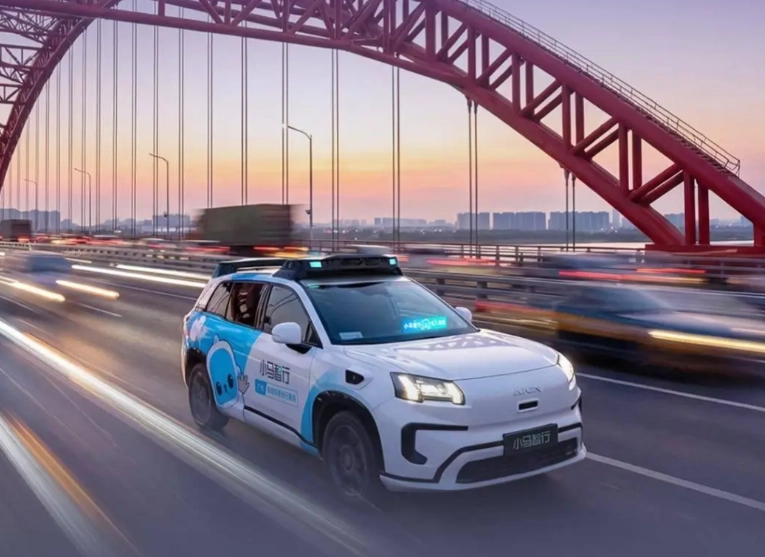
Pony.ai has raised the registered capital of its main Chinese engineering subsidiary by $50 million to $220 million, as the autonomous-driving developer pushes robotaxi production and fleet deployment toward scale in China.
The increase at Beijing Xiaoma Huixing Technology Co Ltd, recorded in corporate registry data tracked by Tianyancha, takes the unit's capital from $170 million to $220 million. The net addition of $50 million (about 360 million yuan) is a rise of roughly 29%.
The unit is not a local licensing or fleet-management shell. It is the group's core research base in China, holding the full-stack Level 4 software algorithms, end-to-end foundation models and the PonyWorld simulation system. The injection shows proceeds from Pony.ai's overseas listing and offshore reserves flowing back to its domestic technology engine.
Ownership and scope
Beijing Xiaoma Huixing was set up in April 2017. Its legal representative is He Xing, a Pony.ai co-founder and senior executive. Registered business scope covers basic artificial intelligence software, applied AI software and network and information security software. Pony AI Limited, registered in Hong Kong, owns 100% of the unit.
Why the capital is going in now
Pony.ai is moving its global fleet from about 1,000 vehicles toward several thousand. Seventh-generation robotaxis built on BAIC, GAC and Toyota models are rolling off lines and into daily commercial service.
Each new driverless vehicle needs automotive-grade sensor kits, tooling for Pony.ai's in-house domain controller and supply chain purchases, plus large volumes of calibration and road-test data. Higher fleet density also drives demand for cloud simulation and world models, which consume AI computing clusters continuously.
The larger capital base supports GPU rental in Beijing, recruitment of model engineers and research on national connected-vehicle security standards.
A data compliance firewall
Regulators in major economies have drawn hard legal lines around high-precision mapping, full video capture of road scenes and cross-border transfers of autonomous-driving algorithms. Pony.ai, listed offshore and operating in several countries, must build a compliance wall between its Chinese and overseas operations.
Network and information security software features prominently in the Beijing unit's registered scope. Holding $50 million directly under the domestic legal entity lets it own intellectual property, run cleansing, anonymisation and storage of domestic driving data, and apply for high-level security certifications and public data operating licences in China. That in turn eases deeper code-level work with state-owned automakers such as BAIC and GAC.
What still has to be proven
The harder test is unit economics. Fare revenue is growing fast in several cities, but Pony.ai has not yet removed safety staff everywhere, cut remote-takeover rates to minimal levels or sharply reduced per-vehicle hardware costs. Depreciation, charging and maintenance, commercial insurance and remote monitoring teams still weigh on quarterly results.
Competition is closing in from two directions. Ride-hailing giants such as Didi control traffic channels and are developing or partnering on Level 4 systems. Mass-market automakers including XPeng, Huawei and Tesla are using shadow-mode data from production cars and end-to-end vision-only computing to move into lighter-weight robotaxi use cases.
For Beijing Xiaoma Huixing, the question is whether it can build an independent, high-loyalty operating business in prime city travel corridors, rather than relying on revenue splits with third-party aggregators. The $50 million buys time and computing power for the next round of software and hardware iterations. It does not settle whether the business crosses into profitable scale.