Hello Inc's robotaxi unit raises registered capital to 1.69 billion yuan
Hello Inc's autonomous driving unit Zaoful Intelligent raised its registered capital 25% to 1.69 billion yuan and added partner-platform shareholders as it pushes into robotaxis.
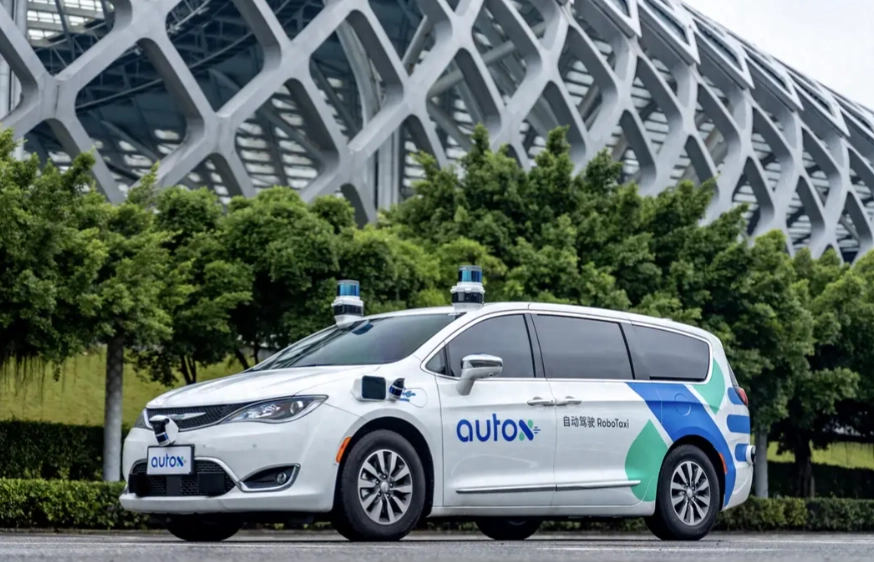
Hello Inc has raised the registered capital of its robotaxi unit, Shanghai Zaoful Intelligent Technology Co Ltd, from about 1.36 billion yuan to about 1.69 billion yuan (about $238 million), a 25% increase, corporate records show.
The move gives the ride-hailing company a war chest for a business that has yet to prove it can compete with China's better-funded autonomous driving players. It also formalizes stakes for new investors and for the technical team leading the effort.
New shareholders, bigger balance sheet
Tianyancha, a corporate records database, shows the change at Zaoful Intelligent, the operating parent of Hello's robotaxi business. New shareholders include Shanghai Yuyu Enterprise Management Consulting Partnership (LP) and Shanghai Zhaoyu Enterprise Management Consulting Partnership (LP).
The entity was set up in June 2025, with Peng Zhaokun as legal representative. Its business scope covers basic artificial intelligence software, algorithm software and application software development.
Registered capital of nearly 1.7 billion yuan is unusually large for a Chinese autonomous driving startup. Most such firms are built on Cayman holding structures and run lean domestic shell entities. The filing reflects a new round of institutional investment and the formal establishment of an equity incentive pool for core staff.
Zaoful Intelligent has carried the mark of industrial capital from the start. Behind Shanghai Junha Network, a Hello group entity, sits Shanghai Yunchang Enterprise Management Consulting, part of Ant Group. Battery maker CATL was also an early strategic partner.
The three-way alliance — Hello for operating scenarios and fleet management, Ant Group for algorithm and ecosystem capital, CATL for energy and charging infrastructure — had already committed more than 3 billion yuan (about $420 million) to the venture. The new partnership entities take in the latest external capital from state and industrial investors and create a holding platform for Peng's algorithms team and senior engineers.
Why Hello is pushing into robotaxis
Hello's two-wheel business built a huge user base, but shared bikes and e-bikes are a low-margin, asset-heavy business constrained by municipal quotas and maintenance costs. In four-wheel carpooling and ride-hailing aggregation, DiDi controls the largest driver pool while Amap and other ride-hailing aggregators control traffic. Hello, a latecomer, has struggled with driver supply and limited room to raise commissions.
Robotaxis offer an escape from paying drivers, who take 70% to 80% of ride-hailing order revenue. Once L4 autonomous driving vehicles break through the cost threshold, ride-hailing shifts from an asset-light matchmaking business to an asset-heavy operator selling driverless transport by the kilometer.
Hello's experience in local operations, vehicle scheduling and managing lower-tier cities and rural markets fits that model.
Steep hurdles ahead
Zaoful Intelligent is far behind on full-stack algorithms and real road data. Baidu's Apollo Go has a decade of testing and tens of millions of kilometers of public-road mileage. Training autonomous driving models on rare and complex cases requires large test fleets and heavy computing power.
Safety is another risk: a single accident caused by a software misjudgment or sensor failure could trigger regulatory action severe enough to suspend a regional license.
Vehicle costs matter too. Baidu has pushed the cost of its sixth-generation driverless vehicles to around 200,000 yuan and runs dense driverless fleets in cities including Wuhan. Zaoful Intelligent would need CATL's customized battery swapping and skateboard chassis support, plus a carmaker able to mass-produce high-level steer-by-wire chassis.
Permits remain a barrier across hundreds of cities. Whether the company can secure local state-owned partners and operating access will determine how long its 1.69 billion yuan lasts.
The capital increase sends a clear signal: the autonomous driving race has moved from algorithm demos to a contest of operating scenarios, heavy-asset manufacturing and local dispatch. Hello has put Zaoful Intelligent on the table at a valuation of nearly $3 billion. Whether that capital can produce a steady commercial return on real roads is the question Peng and management must answer.