Hoperun sets up Wuhan unit to make industrial robots
Hoperun Technology has set up a wholly owned Wuhan subsidiary with 5 million yuan (about $700,000) of registered capital to move from software into industrial robot manufacturing.
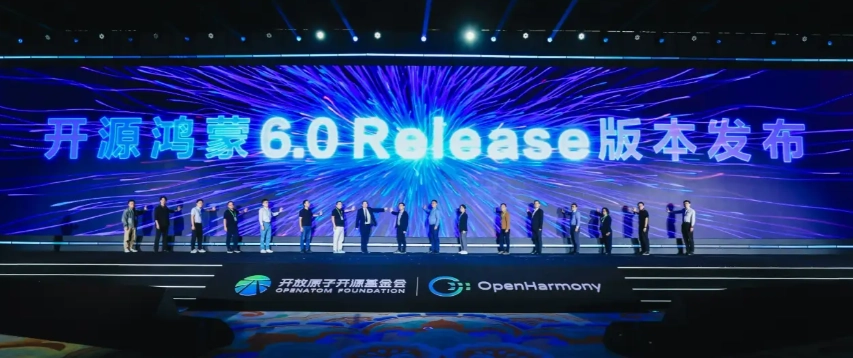
Hoperun Technology, a Shenzhen-listed software outsourcer and a core OpenHarmony code contractor for Huawei, has set up a Wuhan subsidiary to make industrial robots with 5 million yuan (about $700,000) in registered capital.
The move takes a company built on IT outsourcing and financial-sector software into hardware. It is a small, low-risk bet aimed at escaping shrinking margins in its core business and at securing a place in the market for robot operating systems.
A small vehicle with a broad mandate
Corporate records show the new entity, Wuhan Hoperun Huizhi Information Technology Co Ltd, was registered recently with Yu Xing as legal representative, according to the database Tianyancha. Its business scope runs well beyond software: industrial robot manufacturing, intelligent robot research and development, robot installation and maintenance, industrial internet data services and sales of artificial intelligence hardware.
Jiangsu Hoperun Software Co Ltd, listed on the ChiNext board of the Shenzhen Stock Exchange, owns 100% of the unit.
Full ownership keeps the parent in absolute control of the new business while ring-fencing financial risk. At 5 million yuan, the subsidiary is a lightweight scouting vehicle: it carries no multi-hundred-million-yuan factory burden, yet it holds a complete set of licences for robot manufacturing and hardware sales. That gives Hoperun's engineers a compliant route into industrial hardware at minimal cost to the parent's accounts.
Why a software firm turns to metal
The push is driven first by stalling growth and falling margins in financial IT and software outsourcing.
For years Hoperun's revenue has leaned on bank IT systems, traditional smart-device outsourcing and offshore staffing. As Chinese financial institutions tighten technology budgets and outsourcing rates are pushed down, a business built on headcount and billable hours has proven fragile, and its valuation on the secondary market has stayed depressed.
Even after climbing aboard the OpenHarmony and openEuler operating-system bandwagons, Hoperun remains largely a distributor of base systems. Without a foothold in higher-value terminal hardware and integrated systems, the ceiling on its software monetisation stays visible.
Optics Valley as the beachhead
Wuhan's Optics Valley was chosen for its manufacturing base and its pool of relatively inexpensive engineering talent.
The city is home to Huazhong University of Science and Technology and Wuhan University, which supply engineers in precision motion control, machine vision and embedded software. It also hosts Dongfeng Motor, FiberHome, YOFC and a large optoelectronics and new-energy vehicle assembly cluster.
For a company trying to enter robot hardware integration, local stamping and welding lines, optoelectronic component handling and semiconductor warehouse logistics offer ready-made proving grounds.
The real target: robot operating systems
The deeper ambition is a position in embodied AI and robot operating systems.
Robotics is shifting from arms that replay fixed trajectories to systems driven by large models. A modern robot fuses lidar-based SLAM mapping, multimodal vision for obstacle avoidance, edge computing boxes and millisecond-level coordination across joints. The traditional ROS stack has drawn criticism for weak real-time performance and security gaps.
Hoperun's strongest card is its long work on the OpenHarmony microkernel. HarmonyOS's distributed soft bus and deterministic latency engine suit the low-latency, high-precision command exchange between industrial robots and AGV/AMR mobile platforms.
By obtaining manufacturing licences directly through the Wuhan unit, the company is trying to break free of the role of mere operating-system supplier, squeezed by hardware vendors. It wants to lead integrated hardware-software packages, from embedded chip development boards and HarmonyOS robot controllers to complete machines, and to build reference projects for "HarmonyOS robots" in auto-parts sorting, power-grid inspection and factory material transport.
An engineering test and a crowded market
Yet a 5-million-yuan budget and a full set of manufacturing licences run into the hard realities of industrial engineering.
Industrial robots combine precision mechanical engineering, specialised RV and harmonic reducers, servo motors and motion-control algorithms. Repeatability measured in tens of microns and fault-free operating lives of tens of thousands of hours are not achieved by optimising code.
Without its own precision machining shops and an experienced mechanical commissioning team, the unit's robot manufacturing will likely start with contract manufacturing or assembly of bought-in shells. That leaves gross margins exposed to suppliers of core mechanical parts.
The market is also crowded. In lightweight and collaborative robots, unicorns such as JAKA, Aoshan and Dobot have built entrenched channels. In heavy industry, Fanuc and Yaskawa — two of the "big four" global robot makers — along with domestic leaders Inovance Technology and Estun Automation control access to automakers' tenders.
A software newcomer with 5 million yuan in registered capital will find it hard to win large integration contracts in a market already battling over existing demand.
What the filing signals
The registered capital and manufacturing licences send a clear message to the wider HarmonyOS and IT application innovation sectors: the era of selling software concepts alone is closing, and software contractors are reaching into physical equipment.
Hoperun has used a cheap, precisely sized vehicle to probe the deeper end of smart manufacturing. Whether it can make a viable business out of OpenHarmony-driven robots, against demanding mechanical reliability standards and brutal price competition, is the question management must now answer for public investors.