$12M Proportional Capital Increase: Fangzheng Motor's Production Outpost Targeting Robot Joints
Fangzheng Motor injects 20 million yuan into Fangde Robot, doubling down on the humanoid robot joint sector to counter margin pressure in its core business.
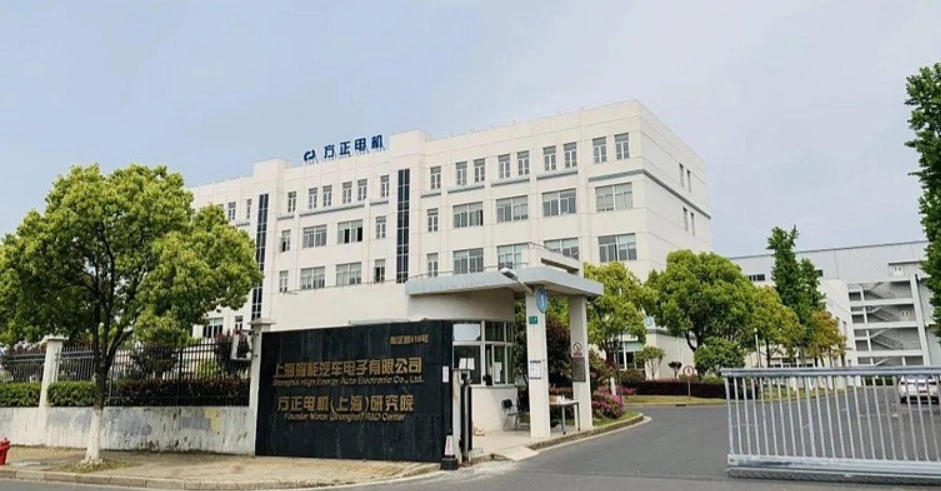
Amid an anxious cycle in which China's new energy vehicle drive motor industry is mired in a full-industrial-chain price war and OEMs are applying extreme price pressure to component suppliers, veteran motor manufacturer Fangzheng Motor has set its sights on the humanoid robot track, which is on the eve of mass production. Fangzheng Motor plans to join forces with Deqing Yuanfang to inject an additional 20 million yuan into its controlled subsidiary Zhejiang Fangde Robot Joint Technology Co., Ltd. in proportion to their original shareholdings, tripling the target company's registered capital from 10 million yuan to 30 million yuan.
This seemingly restrained additional capital injection is by no means an ordinary supplement of daily working capital, but rather a precise positioning move by the listed company—under the predicament of continuously thinning gross margins in its main business—to leverage its existing micro-special motor manufacturing foundation and advance into the core actuation mechanisms of embodied intelligence.
The Equity Logic Behind the Pro-Rata Capital Increase
Tracing the capital trajectory at the underlying commercial level to penetrate the subsidiary's equity structure, its interest-binding design is clearly documented in Tianyancha archives. According to the Tianyancha App, Fangde Robot was established in July 2023, with current registered capital of 10 million yuan, of which Fangzheng Motor holds 60% and Deqing Yuanfang holds 40%. Under the plan disclosed in the announcement, Fangzheng Motor will contribute 12 million yuan and Deqing Yuanfang will contribute 8 million yuan; after the capital increase is completed, the two parties' equity ratios will remain firmly anchored at 60% and 40%.
The listed company's controlling position has not loosened in the slightest, nor has the local partnership vehicle been diluted out. This step-by-step pro-rata capital increase directly rules out the possibility of an external strategic investor taking over at a high premium or the major shareholder unilaterally backstopping the investment.
The 40% second shareholder, Deqing Yuanfang, essentially carries the industrial collaboration demands of the core technical team and the Moganshan High-tech Zone in Deqing, Huzhou. The R&D logic of micro-special motors and automotive drive motors leans toward large-scale standardized manufacturing, whereas humanoid robot rotary joints and linear actuators have extremely stringent customized specifications for high power density, micro frameless torque motors, and the integration of precision reducers.
By setting up an independent entity and letting the technical partnership platform hold a large equity stake, Fangzheng Motor sought as early as three years ago to use this internal entrepreneurship mechanism to build a lightly equipped experimental field outside the bureaucratic processes of its main automotive business.
Strategic Pivot Under Pressure in the Main Business
The deeper reason for this capital infusion has never been about how hot the robot concept is, but about the brutal reality facing the drive motor main business.
Although Fangzheng Motor has deep mass-production and delivery experience in new energy vehicle main drive motors and micro motors, in the crevice between domestic automakers' self-developed motors and third-party suppliers' bloody price killing, its gross margin has long been flying close to the ground, and the slightest disturbance can drag down overall net profit. The deeper pain point is that motor manufacturing is standard heavy-asset manufacturing, and violent fluctuations in the prices of upstream copper, rare earth permanent magnets, and other raw materials often quickly consume the meager profits of the contract manufacturing segment.
The capital market has long entered a strict valuation dehydration period for pure automotive component targets. Fangzheng Motor urgently needs to transfer its own motor winding, magnetic circuit design, and precision machining processes to high-end industrial scenarios with higher unit added value and greater gross margin space—and humanoid robots, which require dozens of joint modules, are precisely the best landing point for the spillover of its motor technology.
The Heavy-Asset Threshold Behind 30 Million Yuan in Registered Capital
However, pushing registered capital to 30 million yuan also reflects the heavy-asset threshold that robot joint R&D must cross in the industrialization stage.
Staying purely at the laboratory sample prototyping stage can still be supported by a few million yuan in funding; but once humanoid robot complete-machine manufacturers enter the B-sample and C-sample engineering verification stage, they impose nearly harsh assessments on actuator consistency, heat control, service life, and mass-production yield at scale.This 20 million yuan in additional capital ammunition must quickly be converted into dedicated high-precision CNC machine tools, automated winding inspection equipment, and clean workshop environments.
More realistically, the embodied intelligence hardware track is still in an early trial-and-error stage where downstream complete-machine manufacturers are contending and commercial orders are extremely fragmented. Fangde Robot's capital increase to expand its asset scale is not only to cross the hard qualification threshold of supply chain audits by high-end customers, but also to reserve a buffer for possible subsequent production line equipment depreciation and R&D trial and error.
This tens-of-millions-yuan capital increase in early autumn sends a pragmatic signal to the entire precision motor and reducer industry chain: after the ebb of concept speculation, competition on the robot track has rapidly sunk from the false heat of the secondary market to head-on confrontation over workshop production lines and process yields.Fangzheng Motor is using its own funds to stabilize its controlling stake and thicken its capital foundation, attempting to hold its first-mover position on the eve of the robot joint explosion. But how to truly secure exclusive mass-production designations from leading humanoid robot manufacturers under the pincer attack of high-end bearing materials monopolized by Japan and South Korea and a host of strong domestic component rivals is the substantive answer Fangde Robot must deliver after its capital expansion.