Dongyangguang places a 100 million yuan wholly owned bet in Optics Valley, as the materials veteran crosses into embodied intelligence and a transformation test begins.
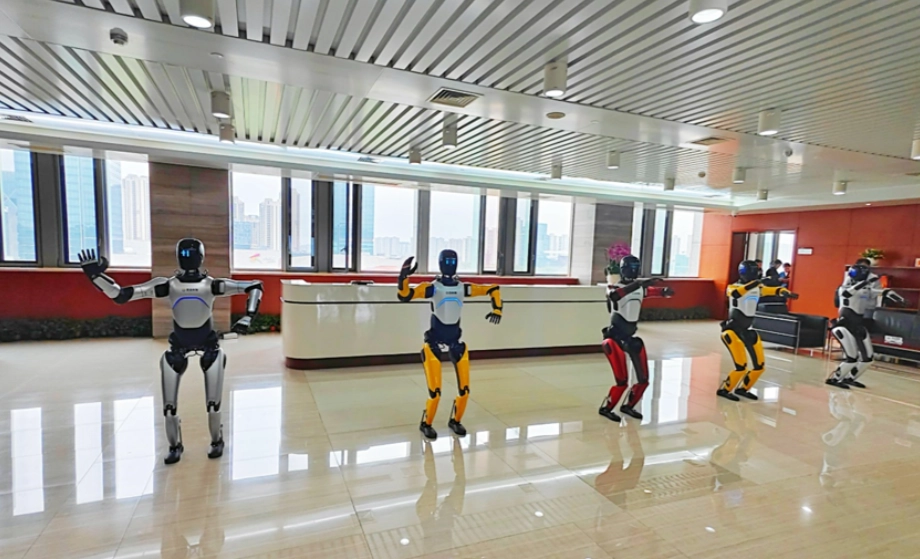
When Dongyangguang, a veteran industrial manufacturing giant primarily focused on aluminum electrolytic capacitors, electronic light foil, and fluorochemicals, rapidly dropped 100 million yuan in registered capital in the core heartland of Wuhan Optics Valley to establish the wholly owned entity Hubei Dongyangguang Optics Valley Dongzhi Technology Holdings Co., Ltd., what the capital market captured was by no means merely the expansion of a conventional off-site R&D branch by a traditional cyclical manufacturer. Shift the observation axis to Dongyangguang's strategic declaration that lists "embodied intelligence" alongside liquid cooling and new materials as three of its six main business segments, and look through its wholly owned control and its operating positioning targeting intelligent robot R&D and manufacturing as its sole objective, and it becomes clear: this is absolutely not a shallow attempt to follow a technological trend, but a perilous leap by a veteran manufacturing player with a heavy-asset raw materials foundation, under the squeeze of cyclical fluctuations in traditional consumer electronics and basic chemicals, attempting to leverage Optics Valley's optoelectronics and complete-machine industrial cluster to forcibly package its own motor, cable, and lightweight aluminum hardware capabilities into high-value-added embodied intelligence terminals.
Motivation for Breaking Out Under the Valuation Logic of Heavy-Asset Cycles
For a long time, Dongyangguang's valuation logic in the secondary market has been tightly anchored in the gravitational field of heavy-asset cycles. Whether it is upstream electrode foil and laminated foil, midstream fluorochemical refrigerants, or downstream new energy battery aluminum foil, these are essentially raw materials businesses driven by capital expenditure, electricity price costs, and large-scale production capacity. Such industries possess extremely strong cash flow harvesting capability during upcycles, but during headwinds of industry-wide overcapacity and brutal price wars in downstream consumer electronics and power batteries, heavy-asset depreciation and razor-thin processing fees often rapidly erode the income statement.
Against this backdrop, robotics is not only the frontier sector currently enjoying the highest valuation premium in the capital market, but also the ultimate vehicle for traditional metal processing and electronic component enterprises to achieve "material-to-part and part-to-system" transformation.By entering robot joint structural components, lightweight aluminum alloy torsos, and servo motor capacitors, Dongyangguang seeks to break the low-valuation fate of selling raw materials to others by the ton.
The Operational Outline of Wholly Owned Control and Location Calculation
Following the underlying commercial registration trail to penetrate the operational outline of this newly established entity, its parent company's strategic intent of wholly owned control is clearly visible in the Tianyancha records. Tianyancha business registration data shows that Hubei Dongyangguang Optics Valley Dongzhi Technology Holdings Co., Ltd. was officially approved and established on August 27, with Zhou Lin as the legal representative, registered capital of 100 million yuan, and a registered address precisely located in Wuhan East Lake New Technology Development Zone.
In the equity map penetrated by Tianyancha, this entity is directly 100% wholly owned by the A-share listed company Guangdong Dongyangguang Technology Holdings Co., Ltd. An even purer signal is written in the approved business scope: from "intelligent robot R&D" to "industrial robots, service and consumer robots, special operation robot manufacturing," the entire chain points directly at the core lifeline of complete robots and system-level integration.
The paid-in-level capital scale of 100 million yuan in real money and 100% parent company control intuitively demonstrate management's highly centralized will to establish a separate foothold in the robotics track.
No external financial VCs were introduced, nor was an ambiguous joint venture platform established with research institutions in the early stage, indicating that Optics Valley Dongzhi has been entrusted with the important task of serving as Dongyangguang's independent operating parent entity for its embodied intelligence strategy. Choosing to plant the entity deeply in Wuhan Optics Valley, the location calculation behind it is equally incisive: Optics Valley, as the industrial commanding height of optoelectronics, industrial automation, and laser processing in Central China, not only gathers top university research teams in robot dynamics and mechanical engineering from institutions such as Huazhong University of Science and Technology, but also has formed a complete precision machining and reducer supporting network in the surrounding area.
For Dongyangguang, which is accustomed to traditional heavy industry production in Guangdong and Shaoguan, placing front-end intelligent hardware R&D and complete robot assembly in Optics Valley allows it to capture the local engineer dividend at the fastest speed and shorten the trial production cycle from underlying motors and electronic controls to complete-machine assembly.
The Technical Chasm Spanning the Robotics Crossover
However, pulling back the glossy outer garment of the six major business segments in the annual report, this adventure of crossing over from traditional materials to robotics is facing a harsh technological chasm on the industrial front lines.
From a manufacturing logic perspective, making aluminum foil and making robots are completely different businesses. Dongyangguang has indeed accumulated deep industrial manufacturing experience in high-end aluminum alloy forming, liquid cooling heat dissipation pipelines, and capacitor components, and these underlying hardware capabilities can indeed be naturally reused in robots' lightweight skeletons, joint heat dissipation, and powertrains; but in the real death match of embodied intelligence, the true core premium and technical threshold are highly concentrated in motion control algorithms, high-torque-density joint actuators, six-axis force sensors, and the software-hardware decoupling of multimodal embodied brains.
A manufacturing veteran long deeply engaged in materials and components has nearly zero foundation in frontier fields such as software motion control, simulation training platforms, and sensor fusion. If Optics Valley Dongzhi wants to cross this software and algorithm barrier in a short time, there is no shortcut other than spending heavily to poach mature teams from outside, and this will directly push up the black hole of early-stage R&D expenses.
Terminal Commercialization Landing Dilemma and Strategic Dialectics
An even more brutal squeeze on the battlefield is directly reflected in the commercialization landing dilemma of the robot terminal market.
Optics Valley Dongzhi's business scope encompasses industrial robots, service robots, and special operation robots in one breath. This broad positioning of "wanting this, wanting that, and wanting the other" precisely reflects management's confusion and wavering regarding real landing scenarios. In the industrial robot field, the four major families and leading domestic special-machine giants have long beaten the prices of six-axis robotic arms down to the bone; in the service and consumer robot field, robot vacuums and commercial cleaning machines have had their channels and ecosystems locked down by extremely mature vertical players;
and in the special operation and biomimetic humanoid field, terminal shipments remain at an extremely early stage of slowly climbing from small-batch prototypes to hundred-unit-level validation.If the complete-machine platform built with 100 million yuan in registered capital cannot quickly find a closed-loop scenario with a clear return on investment (ROI) in specific vertical industrial working conditions, then the high trial production line depreciation and R&D personnel expenses may at any time transform from a vanguard of strategic transformation into a sunk burden that drags down the parent company's gross profit.
This hundred-million-yuan move in late summer and early autumn releases the most profound strategic dialectics to the entire Chinese traditional high-end manufacturing and cyclical materials sector: in the cyclical winter of excess stock, launching vertical integration extension toward frontier tracks representing the future is certainly bold, but the value laws of the business world never believe in the myth of conceptual packaging.From a materials manufacturer selling aluminum foil, capacitors, and refrigerants to directly entering the assembly and sale of highly complex intelligent robots, Dongyangguang must not only use real money to bridge the generational gap in algorithms and mechanical engineering, but must also prove to capital amid brutal market reshuffling that this is by no means merely conceptual juggling to preserve its listing status or inflate its P/E ratio.
Only by truly converting its own lightweight materials and heat dissipation advantages into irreplaceable physical performance and extreme cost in core robot components can this manufacturing veteran truly carve out a bloody path of breakthrough from hard to intelligent in the life-and-death elimination of the intelligent era.