The 100-yuan reimbursement approval controversy at Unitree Technology exposes a micro-management breakdown, with the founder's centralized power and a governance gap with modern practices becoming IPO concerns.
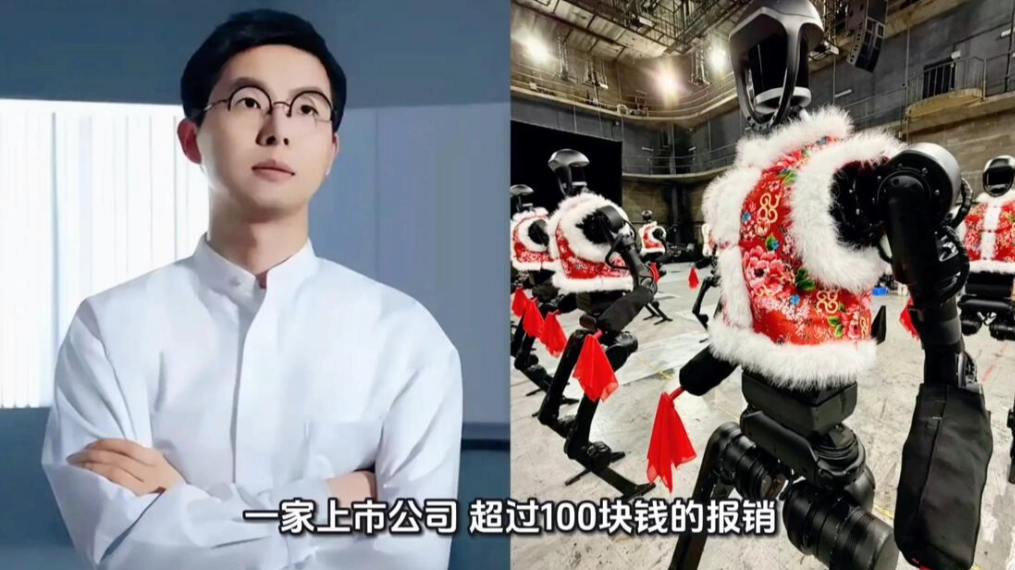
When the topic of "reimbursements over 100 yuan require Wang Xingxing's approval" was thrust into the center of public opinion at the start of September and quickly became intertwined with previously exposed internal management details such as executives scoring no more than 1 point and lining up for signatures, Unitree Technology's brief response—"much of the content is untrue, please do not take it seriously"—was less a powerful clarification than a typical rushed defense by a technical startup team when confronted with an organizational management crisis.
Faced with deep public questioning of the internal governance ecosystem of a star hard-tech company valued in the billions and expected to go public, this vague statement—which neither produced a specific approval authority matrix nor broke down the actual reimbursement process—could not calm outside anxiety over this robot unicorn falling into micromanagement imbalance at the threshold of scaled expansion.
Under the spotlight of hard tech and robotics entrepreneurship, Unitree Technology has long worn the halo of "pioneer of low-cost mass production" and "model of geek spirit." Founder Wang Xingxing, with an almost harsh awareness of cost control and extreme technical engineering capability, pushed the hardware prices of quadruped robotic dogs and humanoid robots down to the tens-of-thousands or even thousands-of-yuan range, becoming one of the few pioneers in the domestic embodied intelligence track to achieve early hardware commercialization.
However, the "extreme stinginess with every penny" and "hands-on with everything" that were effective in the garage geek era and even revered as virtues, once transplanted unchanged into a modern pre-IPO enterprise with hundreds or thousands of people collaborating, will inevitably mutate into an institutional cancer that stifles organizational vitality and drives up hidden communication friction.
A Governance Foundation with Power Highly Concentrated Inward
Following the underlying commercial registration archives to penetrate Unitree Technology's governance foundation, its characteristic of highly inward-concentrated power is displayed with striking tension in Tianyancha data. Tianyancha business data shows that Hangzhou Unitree Technology Co., Ltd. was established in August 2016, with registered capital already as high as approximately RMB 364 million, and the legal representative, chairman, and general manager still all held by Wang Xingxing alone.
In the group genealogy penetrated by Tianyancha, Unitree Technology has accumulated 8 member enterprises, including 1 core enterprise.
From a technical workshop with a few offices to a joint-stock group parent encompassing multiple subsidiaries with registered capital exceeding RMB 360 million, Unitree has long completed most of the journey of a modern enterprise in asset and legal form.
However, the joint-stock transformation and construction of a modern legal person at the commercial registration level did not simultaneously bring about a true delegation of management authority.
Regardless of whether the rumored "100-yuan approval threshold" is exaggerated, the public relations wording that "much of the content is untrue" cannot conceal its high dependence on the founder's personal signature in the daily reimbursement and expense approval chain. In a mature corporate financial internal control framework, a strict delegation of authority (DOA) system is usually established: frontline supervisors control travel and consumables within several thousand yuan, department directors approve professional procurement of tens of thousands of yuan, and only major capital expenditures exceeding the budget are submitted to the president or even the board of directors.
But when a founder with a technical background has long been accustomed to bringing every screw purchase and every taxi invoice into personal view, the operating center of gravity of the organization will be completely locked in front of the top manager's desk.
The Invisible Shackles of Micro-Centralization on R&D Innovation
This micro-centralization not only triggers the absurd scene of employees lining up outside the office for signatures, but also invisibly places heavy shackles on R&D innovation.
For R&D personnel to repeatedly go through procedures and write explanations for a few hundred yuan of technical trial-and-error consumables or prototype proofing fees, the time cost and emotional drain consumed far exceed the book value of the consumables themselves. What is even more fatal is the organizational psychological suggestion transmitted by the system: when assessments emphasize punishment over reward, executive evaluations are difficult to pass, and even basic reimbursements face magnifying-glass scrutiny from the highest level, the entire middle and back office team will quickly form a self-exemption-oriented safe-harbor strategy.
Professional managers dare not make business decisions, technical leaders dare not try high-risk architectures, and all staff retreat into the mediocre cycle of "request instructions, wait, and comply," causing a hard-tech startup team that should be the most agile to prematurely suffer from the big-company disease of extremely sluggish decision-making.
The Rejection Between Compliance Internal Control at the Pre-IPO Stage and Geek Personal Dictatorship
The deeper practical contradiction lies in the violent rejection between compliance internal control at the pre-IPO stage and geek personal dictatorship.
As a joint-stock company that has already launched IPO preparations, when regulators examine a pre-IPO entity, one of the core indicators they value most is the effectiveness and independence of internal control—that is, whether the enterprise has escaped absolute personal dependence on a single actual controller and whether it has established a sound, transparent modern governance structure with self-correcting capacity. If a public company with hundreds of millions of yuan in book funds still highly depends in its daily operations and management on the founder's personal micro-level moods and paper approvals, the maturity of its governance structure will inevitably face enormous interrogation in strict IPO inquiries and institutional due diligence.
The Way Out: Transferring from Personal Authority to Modern Governance
This public relations storm triggered by the rumor of 100-yuan reimbursements has sounded an alarm for all hard-tech unicorns at the center of attention. Relying on the founder's technical talent and cost ruthlessness can certainly win the breakthrough battle from zero to one; but when hardware enters mass production and the enterprise moves toward the public capital market, the ultimate competition in business is no longer merely the torque of a single motor or the gait of a single robot, but extends to the collaborative efficiency and power distribution of the entire organizational machine.
If it cannot proactively break the micro-level deadlock of personal power and cannot delegate the management radius to a modern governance system in true institutional trust, then no matter how dazzling the geek halo, it will ultimately, amid the silent erosion of organizational friction and talent loss, hit a development ceiling it cannot overcome.