Haidilao raises Shanghai unit's capital 14,451% to 150 million yuan
Haidilao lifted the registered capital of its Shanghai arm 14,451% to 150 million yuan and added domestic core unit Sichuan Xinpai as a shareholder.
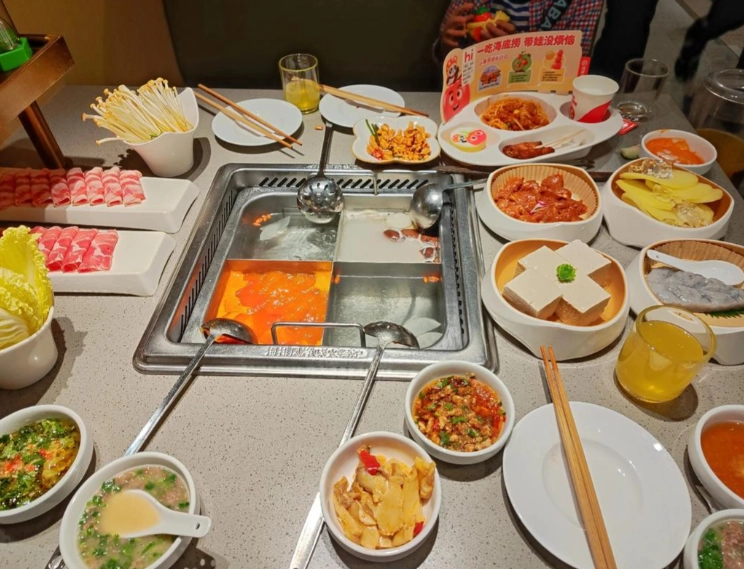
Haidilao has lifted the registered capital of its Shanghai catering unit to 150 million yuan (about $21 million) from 1 million yuan, a 14,451% increase, bringing a domestic core entity in as a co-shareholder.
The change turns a nominally small vehicle into a capitalised platform for east China. It comes as the hot pot chain pushes multi-brand incubation under its Pomegranate Plan and reworks how money moves between its offshore holding structure and its onshore operating companies.
From micro entity to regional platform
Corporate records show Shanghai Hanhai Catering Management Co Ltd added Sichuan Xinpai Catering Management Group Co Ltd as a shareholder, according to Tianyancha, a corporate records database. Registered capital rose from 1 million yuan to about 150 million yuan over the same filing.
The company was set up in October 2020 and its legal representative is Tang Lanying. Its business scope covers catering enterprise management, catering services and food operations. It also carries accommodation services, hotel management and publications retail.
The equity now sits with two holders: the offshore parent HAI DI LAO HOLDINGS PTE. LTD. and Sichuan Xinpai, the group's main domestic operating arm. Tang also heads Sichuan Xinpai and several other core Haidilao entities in China.
A 1 million yuan registration typically marks a shell used for transitional approvals on a single store or a discrete project. At 150 million yuan, the entity can support long-term lease guarantees in large shopping complexes, bulk supply-chain purchasing and equity stakes in regional subsidiaries. It also changes how banks will assess its credit.
Searching for a second engine
Haidilao has already run through two phases of restructuring. The Woodpecker Plan closed loss-making stores; the Hard Bones Plan reopened and consolidated others. Store density in major cities is now close to its ceiling.
The Pomegranate Plan is the answer so far: a push into barbecue through Yanqing Barbecue, fried chicken, Chinese fast food and lower-tier hot pot through Xiao Hai Hot Pot.
New formats need a mature consumer market to test in. Shanghai, a bellwether for dining trends and high-ticket spending, is the obvious proving ground. The business scope's unusual inclusion of accommodation and hotel management also fits Haidilao's recent experiments in camping, short breaks and lifestyle and tourism experiences.
Placing a well-capitalised platform in Shanghai gives the group an investment and treasury hub separate from the hot pot business, the source said, able to back barbecue, fast food and cross-sector ventures.
A dual onshore-offshore channel
Haidilao is listed on the Hong Kong Stock Exchange, but its top-level control has long sat with the Singapore entity HAI DI LAO HOLDINGS. Fully foreign-owned funding chains take time to bring onshore, which creates friction when the group is chasing deals, holding franchise deposits or negotiating with local governments.
Adding Sichuan Xinpai, the domestic arm with the strongest cash flow, creates a mixed base: foreign and domestic money in, profits out. The group can use free-trade zone channels for foreign exchange settlement and cross-border dividends, while also drawing on onshore retained earnings and yuan deposits. That speeds up capital allocation to restaurant targets in east China and beyond.
The tests ahead
The first problem is that none of the incubated brands has become a second pillar. Over the years Haidilao launched dozens of value brands, including Shibachuan, Laopai Youmian'er and Qiaoniang. Most faded after an initial novelty period and never approached the scale of the flagship.
Barbecue, currently the most closely watched of the new bets, is a crowded category with a supply chain that has little in common with hot pot. If the Shanghai platform applies the flagship's heavy-service, high-cost model to new projects, labour and rent depreciation could quickly burn through the new capital.
The second is quality control under a combined company-run and franchise model. Haidilao has opened franchising but set high capital and verification thresholds. As a management hub, Shanghai Hanhai will vet franchisees, distribute supply-chain ingredients and monitor performance. Balancing faster store growth against a three-decade service reputation will test its team.
The 14,451% increase and the mixed ownership structure send a clear signal to the restaurant and consumer sector. Single-brand, rough-and-ready expansion is over; groups are now deploying large regional capital platforms to incubate brands and allocate assets. Haidilao has put real money behind its east China base. Whether that base produces a durable brand beyond the crowded hot pot market is the question it now has to answer for investors.