JD Logistics Unveils Full Lineup of 'Brain+Wolf Pack' Robots
JD Logistics released its 'Brain+Wolf Pack' robot fleet covering the entire logistics chain from warehousing to delivery, introducing five new products and planning to procure 3 million robots over five years to advance unmanned logistics.
On September 9, at the JDD JD Global Technology Explorer Conference, JD Logistics unveiled the full lineup of its "Super Brain + Wolf Clan" robot application corps: the "Super Brain" large model handles intelligent decision-making and coordinated scheduling in complex supply chain scenarios, while the "Wolf Clan" has deployed "Nine Wolves" (9 products, 11 robots) across warehousing, sorting, and delivery operations—five of which are brand-new Wolf Clan robot products and technologies launched at this conference.
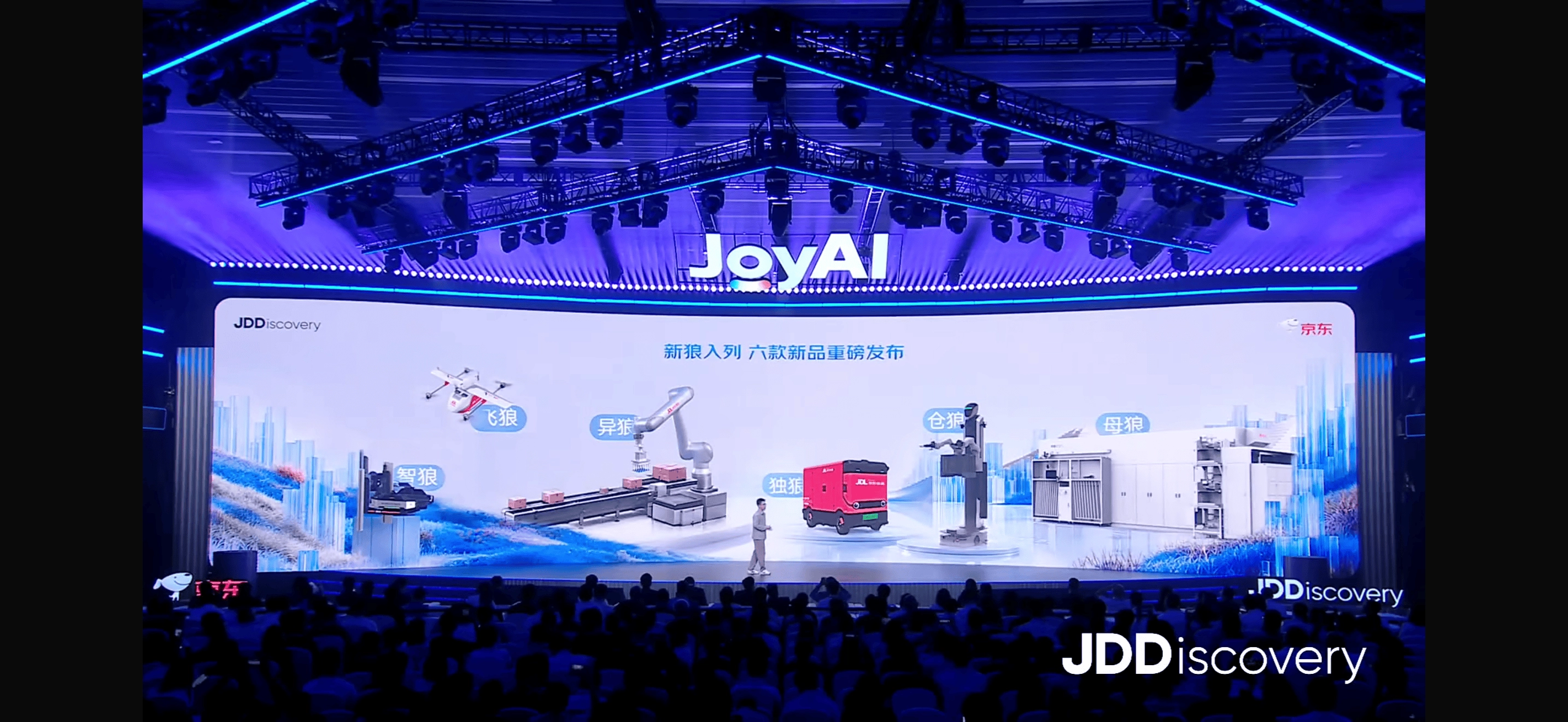
Logistics is one of the scenarios with the broadest application prospects for robotics. JD Logistics is committed to building the world's largest embodied intelligence robot application corps. It has already deployed the largest robot cluster in the supply chain field—covering the most application scenarios, at the largest scale, and with the widest range of product categories—spanning the full chain of warehousing, sorting, transportation, and delivery. Meanwhile, it will procure 3 million robots, 1 million unmanned vehicles, and 100,000 drones within five years to further advance unmanned operations across the entire logistics process and support the accelerated construction of the world's largest physical world operations center.
It is understood that the JD Logistics "Wolf Clan" robot corps specifically includes: Zhi Wolf (tote-to-person system, shuttle version tote-to-person system), Yi Wolf (embodied dexterous arm), Du Wolf (intelligent delivery vehicle, unmanned light truck), Fei Wolf (drone), Tian Wolf (pallet dense storage system), Di Wolf (handling robot), Cang Wolf (embodied picking robot), Mu Wolf (unmanned pharmacy), and Bao Mu Wolf (automatic sortation wall).
Under the command of the "Super Brain" large model 3.0, robot clusters across different segments are shifting from "each working independently" to "unified action," forming a super application field for Physical AI in the supply chain.
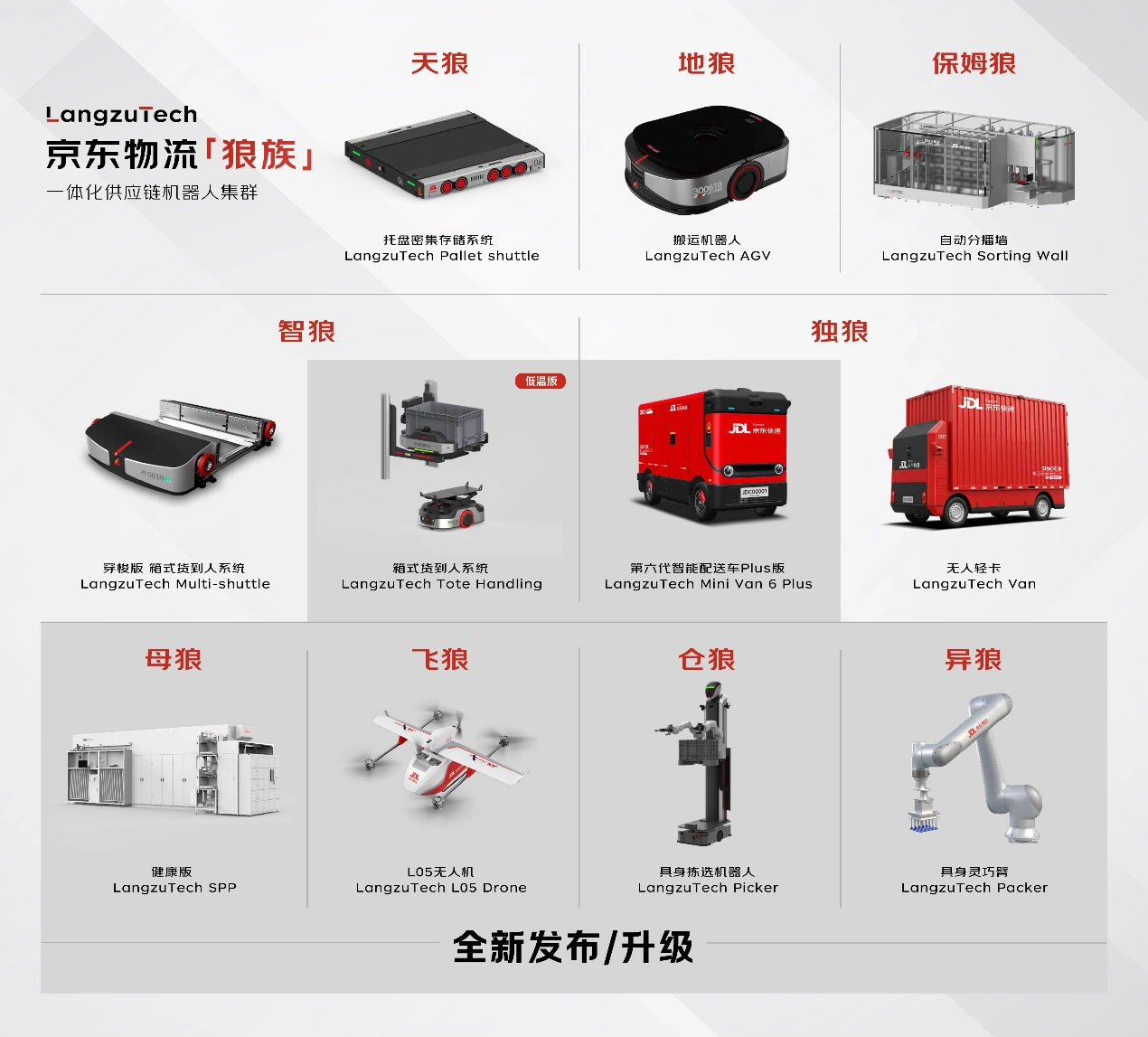
The five new Wolf Clan robot products and technologies released at this JDD conference are all industry-leading applications across various supply chain segments.
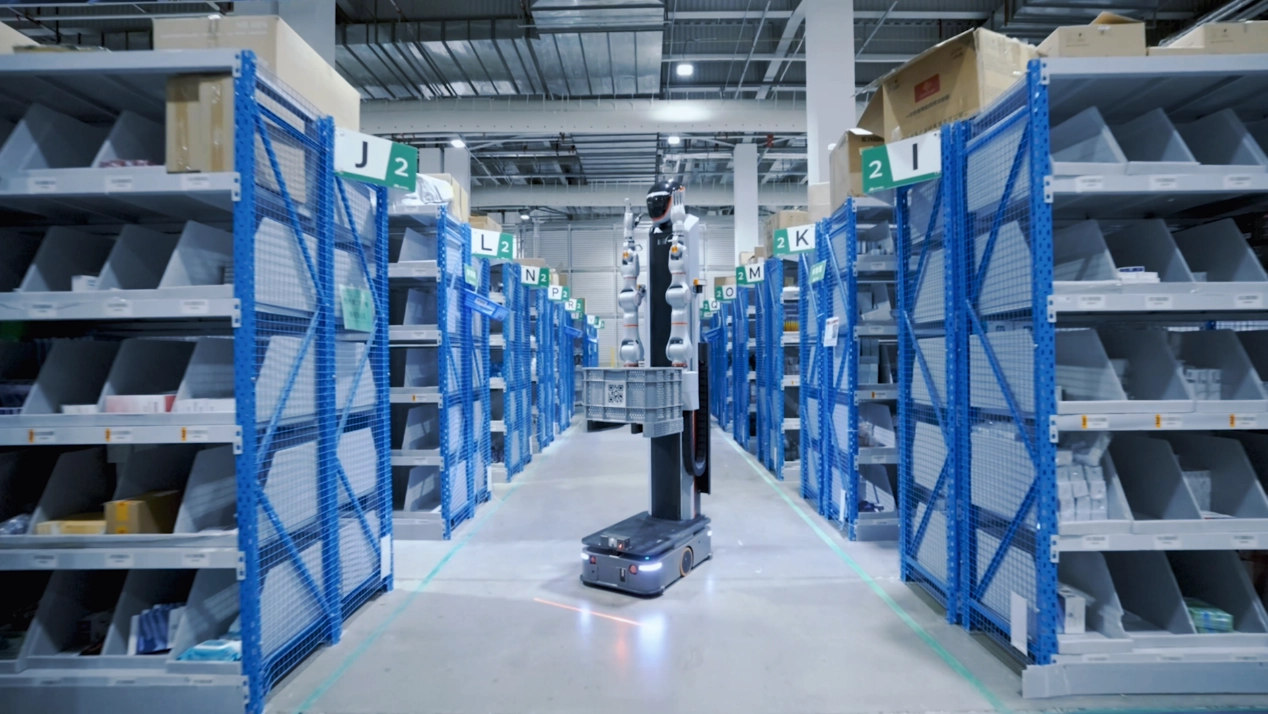
In the warehousing segment, Cang Wolf is the industry's first mobile picking robot for complex in-warehouse scenarios. Traditional warehouse automation retrofits often require six months of downtime, while Cang Wolf achieves "two-week rapid deployment"—arriving ready for use without requiring any renovation of existing warehouses. Real warehouses always contain varied goods, narrow aisle passages, and dynamically changing layouts. Cang Wolf integrates three major functions—intelligent picking, inspection and inventory counting, and autonomous mapping—with a picking accuracy of 99.9%, merchandise coverage of more than 85% across the full warehouse, and a comprehensive UPPH (units picked per hour) of 80. It has already begun routine operations.
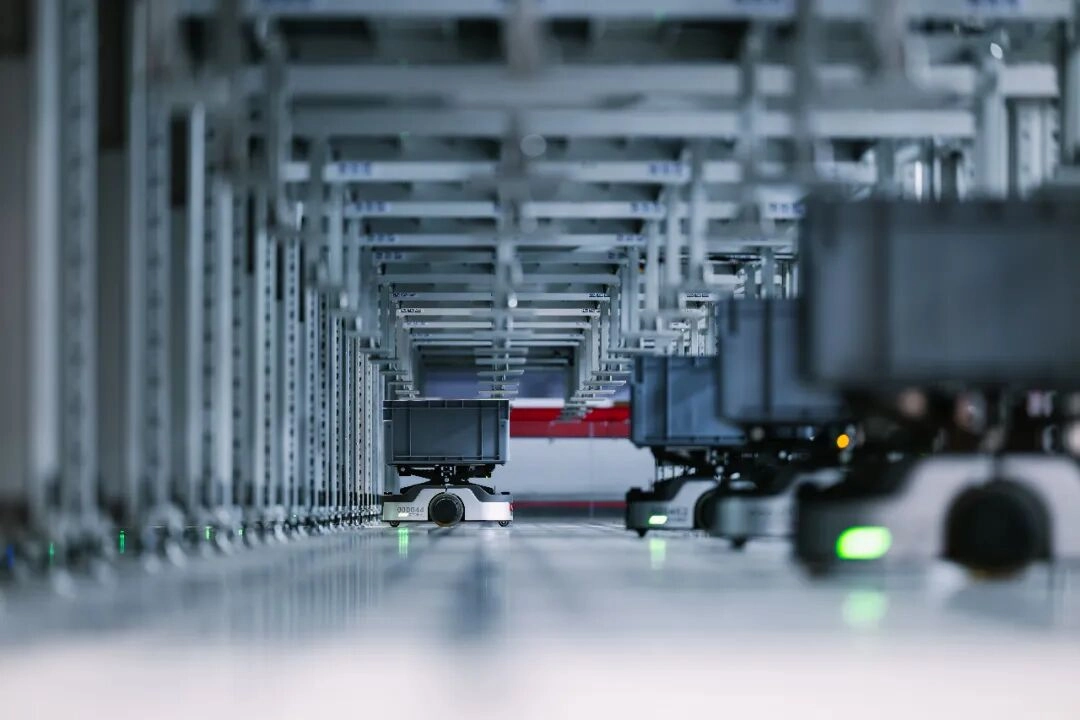
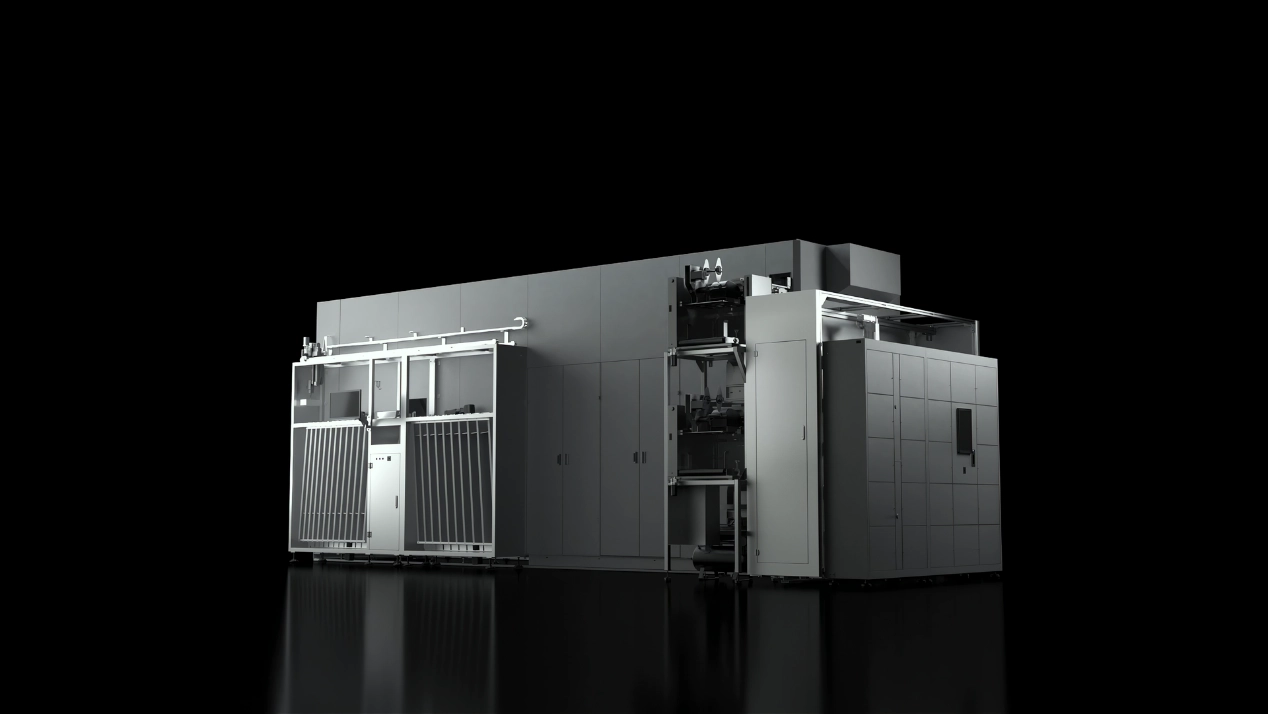
In the cold chain segment, the low-temperature version of Zhi Wolf is the industry's first tote-to-person solution for environments at minus 20°C, transforming "people looking for goods" into "goods coming to people." Cold storage is one of the logistics segments with the lowest degree of automation—ordinary equipment frequently malfunctions in minus 20°C environments, and manual operations are extremely inconvenient. Through the WOS global intelligent control system, proactive defrosting technology, and 100% contactless power supply, JD Logistics has solved the problem of equipment frequently shutting down at low temperatures, turning cold storage from "carried by people" into "done by robots." After deployment, this system has increased storage capacity by 100%, improved operational efficiency by 200%, and reduced per-unit costs by 10%.
In the retail fulfillment segment, JD Logistics has launched the industry's first fully integrated, end-to-end intelligent unmanned pharmacy—Mu Wolf Health Edition. Traditional pharmacy warehousing has long relied on manual management, making 100% gap-free compliance traceability difficult, requiring dedicated overnight staffing, and most industry automation solutions only support a single product type or single batch. Mu Wolf Health Edition uses a smart brain system to connect the entire automated process for pharmaceuticals from inbound to outbound, pioneering intelligent storage for mixed-batch and mixed-SKU pharmaceutical management. It operates 7×24 hours unattended, and while achieving 100% compliance traceability and 99.9% dispensing accuracy, it can pack 90 orders per hour.
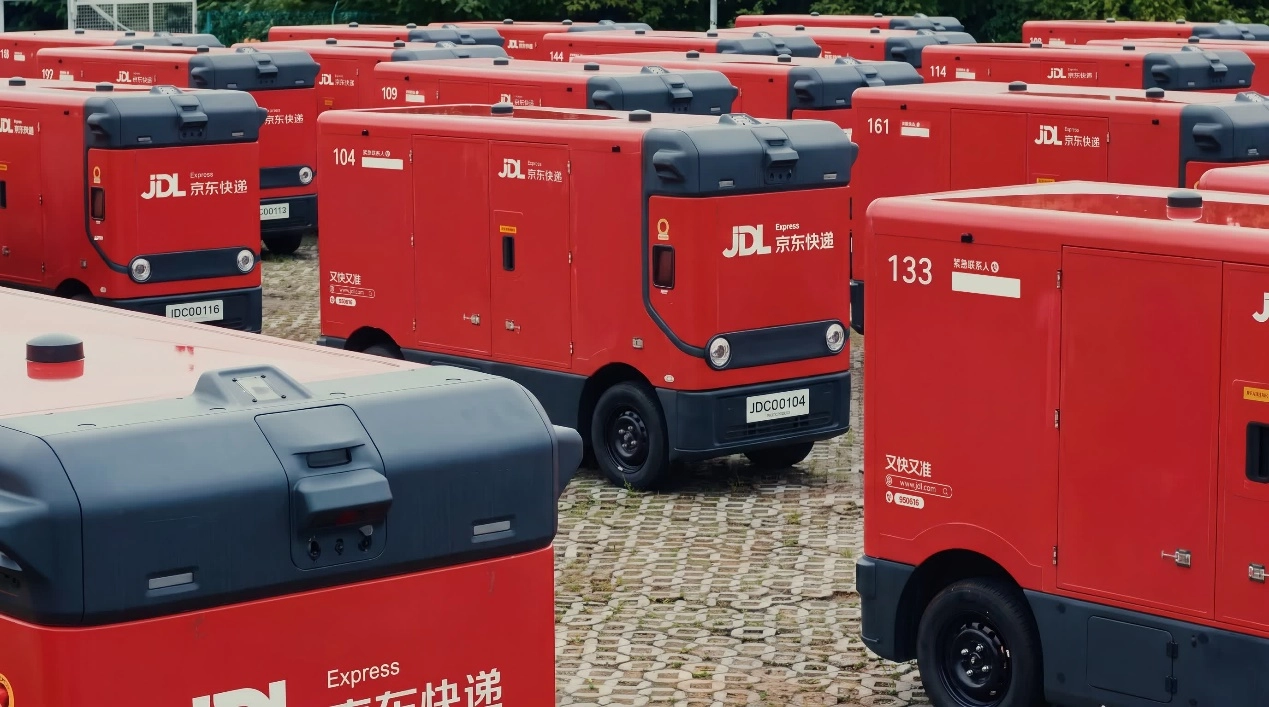
In the transportation segment—Du Wolf Sixth-Generation Intelligent Delivery Vehicle Plus Edition—is being scaled for deployment with L4 autonomous driving capabilities. It uses a single-stage end-to-end approach and is compatible with multiple map formats, including lightweight maps for public roads, map-free operation in enclosed campuses, and high-definition maps for underground parking garages and above-ground parking structures. This greatly reduces dependence on high-precision maps and effectively lowers deployment costs. The vehicle is equipped with automotive-grade electric powertrain and chassis, with a lifespan exceeding eight years, a maximum range of 200 km, and a payload capacity of 1,000 kg. Based on two core business scenarios—hub transfer and intra-city patrol—it achieves 24-hour unmanned transport with a 50% improvement in turnover efficiency. To date, thousands of unmanned vehicles operate routinely across hundreds of sites, reducing station transportation costs by 21%.
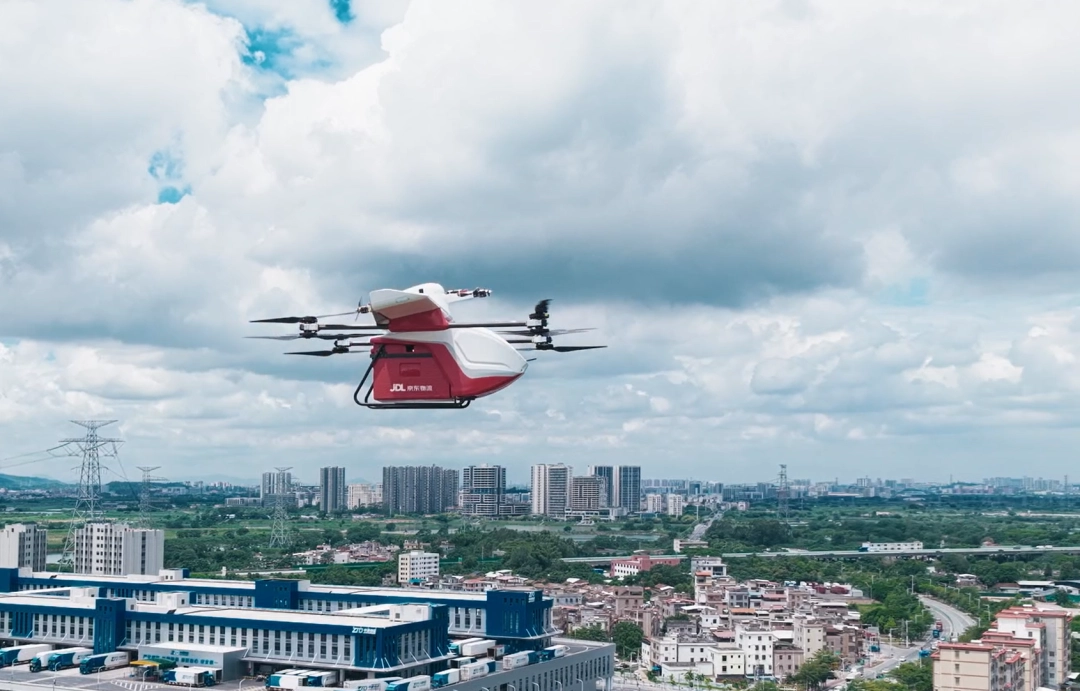
In the delivery segment—Fei Wolf L05 is the industry's first logistics drone that supports fully unmanned operations. Most industry logistics drones require manual battery swapping, manual loading and unloading, manual flight intervention, and periodic manual maintenance, keeping costs persistently high. "Fei Wolf" carries a 5 kg payload, has a 40 km range, and a cruising speed of 72 km/h. It can also be adapted with a robotic arm to perform automatic battery swapping and automatic container loading and unloading, achieving unmanned operation from takeoff to landing. Equipped with a command and control system, it automatically schedules aircraft and manages their health, enabling unmanned operation throughout the drone's entire lifecycle.
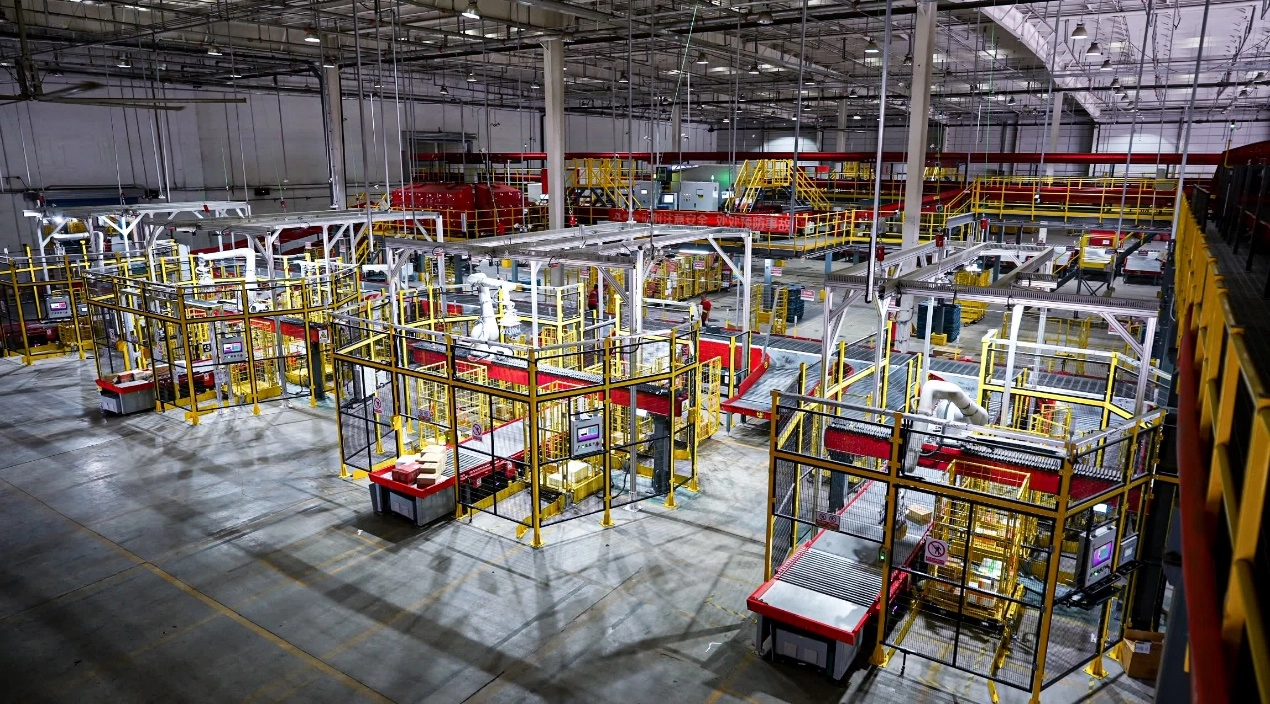
In addition, the newly upgraded Yi Wolf embodied dexterous arm also made an appearance at the conference. It is the world's only embodied intelligent robotic arm to achieve large-scale application in warehouse sorting. Faced with soft woven bags, bulging air column bags, irregularly shaped odd-sized items... traditional robotic arms are almost helpless when handling these non-standard objects. Through its "industrial dexterous hand," Yi Wolf has nearly 100 "hand configurations" and can flexibly grasp hundreds of items of various shapes, including cartons, bottled water, and rice, flour, and oil. To date, it has completed more than 13 million real package handling operations and is running 7×24 hour routine production across multiple sites.
Logistics is a continuous chain. From the moment a package enters the warehouse to its delivery, it passes through six segments: storage, picking, palletizing, sortation, transportation, and delivery. In the traditional model, those moving goods only move goods, those picking only pick, and those sorting only sort—there is no "dialogue" between equipment and no unified scheduling whatsoever. This is why AI entry into this field is extremely difficult: making a single segment intelligent is already enormously challenging, and getting dozens of types and hundreds of robots with different functions to operate simultaneously with highly efficient coordination is that much harder again.
A wolf pack is known for highly efficient coordinated hunting—each wolf performs its own role while working in tight coordination, and the efficiency of cooperative hunting far exceeds that of lone hunters. What JD Logistics wants to build is precisely a robot corps that fights in coordination like a wolf pack. What turns the "Wolf Clan" from fighting independently into acting in unity is the "Super Brain" large model 3.0.
Its core value is: first calculate the globally optimal solution, then command all intelligent equipment to execute in coordination.
Super Brain 3.0 is composed of five supply chain-native industrial-grade large models working in concert—PreX for prediction, OptiX for decision-making, OmniX for multimodality, GeoX for spatiotemporal analysis, and EmbodiedX for embodied intelligence—building a trinity technical system of Decision AI, Process AI, and Physical AI.
Decision AI fuses multi-dimensional information such as orders, warehouse network, road conditions, and weather to complete globally optimal decisions for hundreds of millions of packages in seconds—every day, countless packages, including which warehouse they should go to first, which route they should take, which vehicle should be assigned, and what pace each segment should follow, are all comprehensively planned. Process AI breaks down decision plans into specific executable instructions for each piece of equipment. Physical AI, relying on the CyberX physical control engine, sends instructions directly to the Wolf Clan robots and collects execution feedback in real time.
The coordination logic of Super Brain is reflected at two levels.
The first level is rhythm synchronization between segments. Taking in-warehouse operations as an example: packages that have completed picking need to enter the sortation segment in a timely manner, and after sortation is completed, they need to connect with loading and dispatching. Without Super Brain, each segment operates according to its own preset rhythm—if picking is fast, sortation cannot keep up; if sortation is fast, loading cannot make it in time—resulting in large amounts of waiting and idle cycling between segments.
With Super Brain, Decision AI calculates the optimal tempo for each segment in real time—at what speed the picking segment should produce output, how quickly the sortation segment needs to process, and when the loading segment should be in position—so the "Wolf Clan" in the warehouse, on the road, and in the air operates in coordination according to a unified rhythm. The completion of a preceding step immediately triggers readiness in the following step, reducing idle waiting between segments.
The second level is global dynamic scheduling. When real-world variables such as orders, road conditions, or transport capacity change, Super Brain not only re-plans the optimal solution at the warehouse network level—adjusting warehouse shipping rhythm, changing vehicle dispatch plans, and optimizing transport routes—it also simultaneously issues adjusted instructions downstream to the Wolf Clan equipment in each segment. Super Brain computes globally in the digital world, and the Wolf Clan follows changes in the physical world—only by distinguishing between daily rhythm and sudden response can this corps truly achieve coordination.
At present, this system has been deeply applied in more than 1,000 scenarios, with frontline operational efficiency improved by nearly 20%. The "Wolf Clan" has been deployed and operating in more than 20 provinces across China and more than 10 countries worldwide. The complete supply chain AI embodied ecosystem formed by the "Super Brain large model + Wolf Clan robots" has a core value that lies in this: it is not a single-point breakthrough in one segment, nor a simple assembly of nine independent devices—but rather a complete corps with full-chain coverage that is uniformly dispatched based on global optimization and operates in coordinated combat.
This is a true AI implementation tested by hundreds of millions of packages on a daily basis, and it is the largest physical world AI application in the logistics industry.