Agenbot's 5 Million Yuan Bet in Hengqin: Riding Cultural Tourism Venues to an Early Embodied AI Closed Loop
Agenbot has set up shop in Hengqin with 5 million yuan, using cultural tourism venues to monetize ahead of rivals and sidestep the long industrial validation phase.
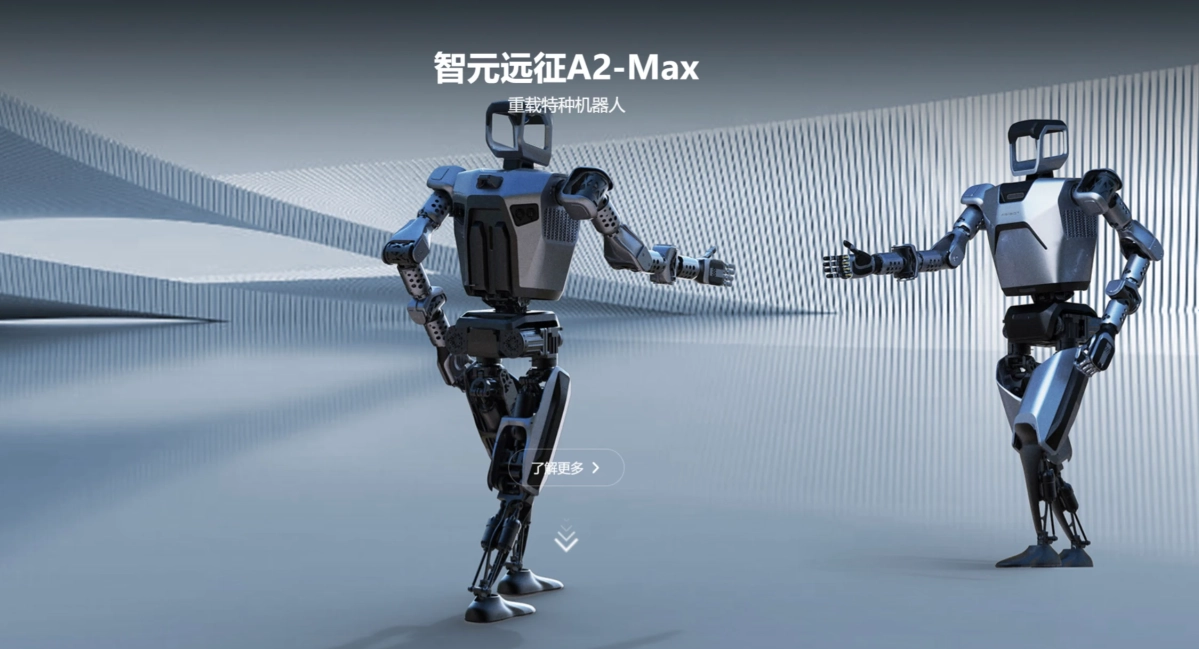
At a moment of anxiety when humanoid robot manufacturers are generally trapped in the long validation period of tightening screws on industrial manufacturing lines, and the commercialization of general-purpose dexterous manipulation still requires time, AgiBot, whose valuation has already entered the first tier of domestic embodied intelligence, has quietly played a highly ingenious tactical surprise move on the shores of the South China Sea.
The registered capital of 5 million yuan may seem modest, but when AgiBot Innovation (Shanghai) Technology Co., Ltd. embedded the new entity directly into the Hengqin Guangdong-Macao In-Depth Cooperation Zone as a wholly owned subsidiary and explicitly wrote the manufacturing of smart equipment for cultural venues into its business scope, this move southward was by no means an ordinary establishment of a South China marketing showroom. Rather, it was a highly realist cash-monetization sprint by this unicorn company, backed by the halo of Peng Zhihui, after having performed stunts in the laboratory and conducted trial runs in factory inspections, in order to seize ahead of others commercial scenarios with high gross margins, low fault-tolerance risk, and extremely fast cash-flow settlement.
Business Registration Cards: Penetrating the Operating Structure of the New Hengqin Entity
Following the traces left in business registration to penetrate the operating structure of this new entity, the shift in its breakthrough scenario is clearly evident in the Tianyancha files. The Tianyancha APP shows that AgiBot Innovation (Guangdong Hengqin) Technology Culture Co., Ltd. was officially established on September 22, with a registered capital of 5 million yuan, legal representative Xiong Yan, and wholly owned by AgiBot Innovation (Shanghai) Technology Co., Ltd.
The key information worth digging into is buried in the subdivided approved items of the business scope: in addition to the routine research and development and sales of intelligent robots, categories with strong cultural tourism attributes such as digital cultural and creative software development and the manufacturing of smart equipment for cultural venues have been prominently placed at the front.
Scenario Choice: Industrial Coldness and Cultural Tourism as a Shock Absorber
In the conventional path of big tech companies and hard-tech startup teams, the ultimate main battlefield most expected for embodied intelligent humanoid robots is often automobile final assembly workshops, 3C precision electronics production lines, and dangerous special-operation environments. However, the industrial scenario is an extremely cold touchstone: workshops demand mean time between failures of thousands of hours for robots and impose near-zero-tolerance rigid assessments on millimeter-level precision in parts assembly.
Once a bipedal robot falls, or a robotic arm's grasp deforms and causes a production line shutdown, the startup not only finds it difficult to collect payment but also faces massive breach-of-contract compensation.
Cultural tourism, museums, and high-end exhibition hall scenarios恰恰 constitute an excellent commercial shock absorber at present.
Compared with the extreme harshness of industrial environments, the core demands of science museums, museums, corporate showrooms, and theme parks for robots are greeting and guided tours, interactive Q&A, specific action performances, and cutting-edge visual impact. In these controlled enclosed spaces with non-continuous operations, floor flatness is extremely high, lighting and the environment are predictable, and the robot's motion control algorithms do not need to cope with sudden disturbances from harsh working conditions;
even if there are occasional minor motion stalls or multimodal semantic understanding deviations during interaction, the audience will regard them as part of the technological fun and will not trigger industrial-grade production accidents at all. An even more fatally tempting point lies in the budget size: governments at all levels and large state-owned enterprises have always been generous in hardware procurement for smart cultural tourism and digital venues. A single customized robot with a highly anthropomorphic appearance and conversational ability can easily sell for hundreds of thousands or even millions of yuan at a high premium within an exhibition hall integration package, and payment collection hardly involves the long-quality-guarantee-deposit withholding of industrial supply chains.
Placing the Move in Hengqin: Policy Dividends and a Springboard for Going Global
Placing the move in the Hengqin Guangdong-Macao In-Depth Cooperation Zone is even more a calculation of policy dividends and a springboard for going global, fitted together seamlessly.
As a special-zone gateway closely connected to Macao, Hengqin not only enjoys significant fiscal and tax benefits such as a 15% corporate income tax rate, but also possesses uniquely advantageous customs clearance and foreign exchange conveniences in the fields of cultural tourism, exhibitions, and commerce. Macao gathers an extremely high-density cluster of high-end resort hotels, international convention and exhibition centers, and entertainment resort areas, and has extremely strong budgets for trying out immersive performances and intelligent reception with cutting-edge technology concepts.
By establishing the technology culture entity in Hengqin, AgiBot can directly bid for digital exhibition hall sections of government and enterprises in the Greater Bay Area and Hengqin, and retreat by using Macao's international window to showcase its embodied intelligent physical hardware to cultural tourism procurers in Southeast Asia and globally, avoiding the cumbersome trade compliance frictions that may be encountered when going global directly from a mainland entity.
Track Signal: The Realist Cash-Flow Bottom Card
This 5 million yuan business registration layout in early autumn releases the most bare-bones signal to the entire humanoid robot track: before general artificial intelligence and hardware mechanisms are fully mature, the era of relying on sentiment and burning financing to barely hold on has passed. Even a technology-faction unicorn shrouded in top-tier star power must bow to reality and find a commercial foothold that can quickly contribute real gold and silver hematopoietic capacity.
Sending robots into factories is the sea of stars that changes the world, but first sending them into cultural venues to make money and survive is the realistic cash-flow bottom card that AgiBot must secure before surviving the long industrial winter.