Kailong High Technology Takes 60% Stake in Shanghai Embodied AI Venture
Kailong High Technology, a diesel emissions-control supplier, has set up a Shanghai embodied-AI joint venture it controls 60%, with chairman Zang Zhicheng as legal representative.
Kailong High Technology, a Shenzhen-listed maker of internal combustion engine aftertreatment systems, has set up a Shanghai joint venture for embodied AI, with the chairman personally serving as legal representative of the 10 million yuan (about $1.4 million) entity.
The move marks an unusually direct foray by a legacy auto-parts manufacturer into AI software and robotics, as the company's core emissions-control business faces a structural squeeze from electric heavy trucks and falling margins.
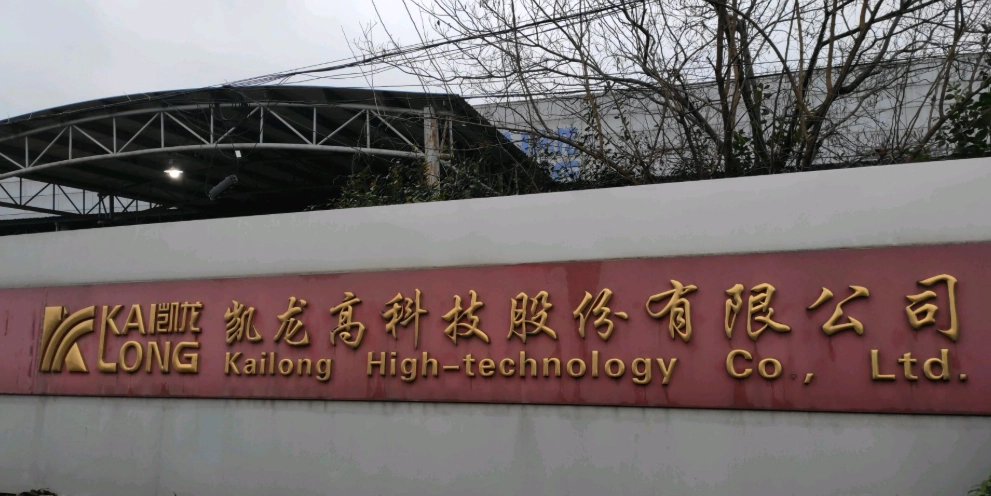
Kailong High Technology (Shanghai) Co., Ltd. was formally established on September 14, according to corporate records database Tianyancha. Its registered capital is 10 million yuan, and Zang Zhicheng, chairman and actual controller of the listed parent, is its legal representative.
Kailong High Technology Co., Ltd. has subscribed 6 million yuan for a 60% stake, while Xingluo Xunlian (Shanghai) Embodied Intelligence Technology Partnership (Limited Partnership) holds the remaining 40% with a 4 million yuan contribution.
Control and a talent pool
The 60% holding gives Kailong consolidation rights and operating control over the new entity. Zang's personal role as legal representative breaks with the usual practice of assigning an investment vice president or technical director to such vehicles, a signal that the parent intends to steer strategy at the highest level.
The 40% held by Xingluo Xunlian is designed as a partnership pool tied to external algorithm teams and core researchers. Embodied AI development depends heavily on algorithm scientists and multimodal AI architects, and a traditional manufacturer's pay structure can neither recruit nor retain them. The limited partnership structure gives the joint venture an equity-incentive platform from day one.
An aggressive business scope
The approved business scope goes beyond routine robot R&D, sales and industrial robot manufacturing. Basic artificial intelligence software development and general-purpose AI application systems sit at the core.
Kailong built its business on selective catalytic reduction (SCR) systems and diesel particulate filters (DPF) for diesel engines.
The squeeze at home
The deeper reason for the pivot is structural contraction in Kailong's main exhaust-treatment business.
For more than a decade the company rode its early lead in emissions standards to strong returns in the diesel commercial vehicle aftertreatment market. Rising penetration of battery-electric heavy trucks and continued progress in hydrogen fuel cells have now capped long-term growth for the traditional engine supply chain.
Commercial vehicle makers, absorbing losses from price wars, keep pressing suppliers on aftertreatment prices. Kailong's overall gross margin is under pressure and earnings have become more volatile. Auto-parts manufacturing is asset-heavy and low-multiple, and investors have long since exhausted their patience with pure diesel aftertreatment concepts.
Kailong needs a higher-value segment where it can redeploy its precision machining, high-pressure fluid control and electronic control unit (ECU) expertise. Embodied AI robots rely on micro electro-hydraulic servo systems, precision actuators and embedded motion controllers, manufacturing processes that overlap with precision diesel injection control.
Without advanced motion-control algorithms and a perception "brain," however, hardware makers remain low-cost shell suppliers. By locating the new entity in Shanghai, a hub for large AI models and algorithm talent, Kailong aims to use the 400 million-yuan-partner stake as leverage to draw in multimodal perception and embodied decision-making specialists from the Yangtze River Delta.
What comes next
The modest registration sends a clear signal across the auto-parts and embodied AI sectors: the escape from traditional auto manufacturing into AI and robotics is no longer a PowerPoint concept but a survival move. Kailong has secured its base with absolute control and a founder-led commitment. The open question is how far its engine-control engineering experience can be fused with frontier general-purpose AI systems, in a field dominated by industrial robot giants and fast-iterating embodied models.