Xinfengming builds 100 million yuan fiber plant in Hubei's Tianmen
Xinfengming will invest 100 million yuan (about $14 million) in a wholly owned new materials plant in Tianmen, Hubei, moving polyester yarn output closer to inland textile clusters.
Xinfengming Group will put 100 million yuan (about $14 million) of its own cash into a wholly owned fiber subsidiary in Tianmen, Hubei, moving the polyester filament yarn maker inland from its coastal Zhejiang base.
The move matters because China's polyester filament yarn industry is now an oligopoly, and coastal capacity faces hard limits on energy use and dyeing quotas. Xinfengming is following its customers — garment and fabric makers that have shifted west to the Jianghan Plain.
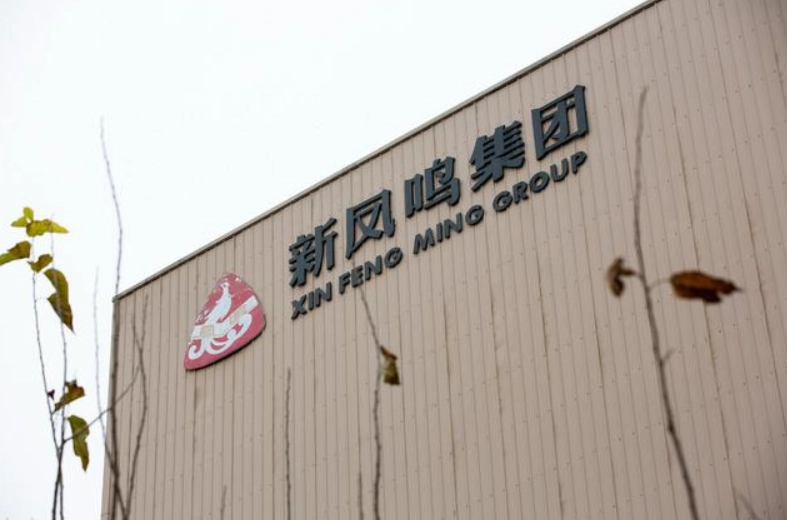
A 100% stake, no partners
The listed parent said in a filing that it will establish Xinfengming Tiannuo New Materials (Hubei) Co. Ltd. with its own funds and a 100% stake. The investment is not a related-party transaction or a major asset restructuring.
Tianyancha, a corporate records database, shows the entity has been registered, with Yao Zhifeng as legal representative and 100 million yuan in registered capital. Its address is Yuekou Industrial Park in Tianmen.
The business scope goes well beyond synthetic fiber manufacturing and sales. It also covers high-performance fibers and composites, new materials research, fabric textile processing and fabric dyeing and printing.
Parent founded in 2000
Xinfengming Group Co. Ltd. was set up on Feb 22, 2000, with about 1.68 billion yuan (about $236 million) in registered capital, according to Tianyancha. Its legal representative is Zhuang Yaozhong, the second-generation head of the family business, and it is based in the Zhouquan Industrial Zone of Tongxiang, Zhejiang.
Xinfengming and its home-city rival Tongkun Group are known as the "Tongxiang twin giants." Together they control more than 30% of global filament yarn capacity.
Its manufacturing has long been concentrated on the coast — Tongxiang and Huzhou in Zhejiang, and Xuzhou in Jiangsu. Those sites sit close to port-supplied purified terephthalic acid (PTA) and ethylene glycol, but face tightening caps on water use, steam costs and pollution quotas.
Chasing the downstream cluster
The bigger driver is the westward migration of China's weaving and dyeing industries. Rising labor and land costs in the Yangtze and Pearl River deltas have pushed smaller textile firms inland, and Tianmen and Hanchuan have absorbed a large share.
Under the old setup, POY, FDY and DTY yarn made in Zhejiang travelled by road or river to central China. Freight and transit time ate into thin processing margins and slowed response to urgent orders. A plant in Tianmen puts spinning next to the fabric and apparel e-commerce hubs it supplies.
The scope of the new unit also lets Xinfengming push past commodity yarn. Standard filament yarn earns only tens to hundreds of yuan a tonne, and is squeezed by swings in crude and PTA prices. Functional fibers — flame-retardant, antibacterial, moisture-wicking — and dyeing and greige fabric production carry far higher added value.
Yuekou Industrial Park has the fine chemicals and dyeing infrastructure to support that, the company's reasoning goes. It also lets Xinfengming avoid Zhejiang's tight dyeing approvals.
Cash and control
Holding 100% with no local government investment vehicle keeps full management control over equipment, automated lines and sales strategy. Paying the first 100 million yuan from operating cash flow, at a time when petrochemical and fiber capital spending is cooling, also supports its case for cheap green project loans from local banks.
The risks
The first test is raw materials. Xinfengming has large PTA facilities at Dushangang and elsewhere on the coast, but shipping bulk feedstock inland by barge or rail tanker may offset part of the saving on outbound finished goods.
The second is demand. Many of the Tianmen garment and weaving customers depend on short-cycle e-commerce hits and mid- to low-end domestic sales. A pullback in consumption, or high apparel return rates that cut loom utilization, would hit depreciation costs at the new plant during its ramp-up.
Zhuang and Xinfengming have committed real money to the textile heartland of central China. Whether the new base can clear the logistics and demand hurdles is the question the whole industry will be watching.