Inner Mongolia Power sets up 1.8 billion yuan pumped-storage firm
Inner Mongolia Power has wholly funded a 1.8 billion yuan (about $250 million) Halaqin pumped-storage company to ease renewable curtailment and peak-load pressure on its independent grid.
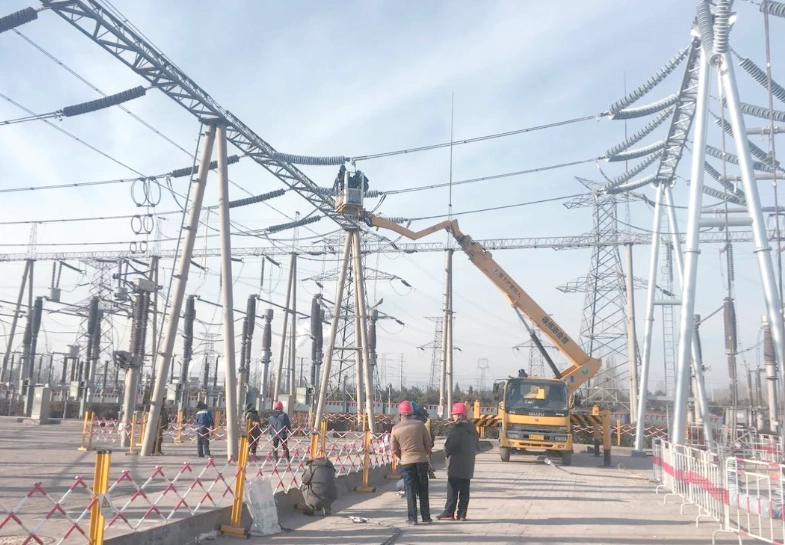
Inner Mongolia Power has set up a wholly owned pumped-storage hydropower unit with 1.8 billion yuan (about $250 million) in registered capital, tightening its grip on peak-shaving capacity for China's only independent provincial grid outside the two state utilities.
The new company, Hohhot Halaqin Pumped-Storage Co Ltd, is a bet on the Mengxi grid's ability to absorb a tidal wave of wind and solar power. It also locks in dispatch control over a plant Inner Mongolia Power will need to keep its grid stable.
Full ownership, 1.8 billion yuan
Corporate records on Tianyancha, a Chinese business database, show the entity registered in Hohhot with He Jiang as legal representative. Inner Mongolia Power (Group) Co Ltd holds 100% and has subscribed the full 1.8 billion yuan.
Its business scope covers power generation technical services and engineering management, alongside solar, wind and energy storage technology services. The list signals a grid-balancing asset rather than a single conventional power plant.
Inner Mongolia Power runs grid assets across eight leagues and cities in western Inner Mongolia. Unlike State Grid and China Southern Power Grid, which span multiple provinces, it is the only independent provincial grid operator in China.
State-owned capital holds the asset outright, with no outside generation group or private investor involved. That keeps the plant an unconditional dispatch resource for frequency control, black start and seasonal balancing.
The Halaqin and Wuchuan areas south of the Daqing Mountains have long used their elevation drop for pumped-storage duties serving Hohhot and the wider Mengxi grid. Pumped-storage projects typically run into tens of billions of yuan, and project equity conventionally covers about 20% of total investment. On that basis, 1.8 billion yuan could support a project worth 8 billion to 10 billion yuan (about $1.1 billion to $1.4 billion).
Curtailment and grid volatility
Inner Mongolia is China's largest new energy province. Wind and solar bases across the Kubuqi Desert, the Ulan Buh Desert and the grasslands are coming online in batches.
At midday, abundant sun and wind can saturate the grid within moments. At night, with no sun and little wind, the shortfall falls heavily on coal-fired plants. Limited interconnection capacity with the North China grid means Mengxi cannot export every burst of green power.
Chemical battery storage is quick to deploy but discharges for only two to four hours and carries high per-unit degradation costs. Against hundred-gigawatt-scale renewable capacity, that is a marginal fix.
Pumped storage lasts for decades and can run for six to eight hours or more per cycle, making it the workhorse for smoothing large swings. The Halaqin entity amounts to a physical reservoir of electricity near the load centre of Hohhot: pumping at midday when prices are low or negative, generating during the evening peak, and preventing frequency swings in extreme weather.
The arithmetic under the two-part tariff
The deeper logic is financial. A two-part tariff reform issued by the National Development and Reform Commission set a settlement mechanism based on a capacity price plus an energy price.
The capacity price follows a "permitted cost plus reasonable return" principle. Once a plant is operating and meets dispatch requirements, its costs are passed through provincial transmission and distribution tariffs to industrial and commercial users, underpinning a stable return of about 6.5% internal rate of return. The energy price adds variable income from spot markets and peak-valley arbitrage.
For Inner Mongolia Power, which has ample cash flow but needs quality assets to hold, converting 1.8 billion yuan into a regulated pumped-storage asset serves two purposes. It meets mandatory storage quotas tied to renewable consumption, and it locks in low-risk returns on the balance sheet for decades.
Construction and monetisation risks
Registration is only the starting point. The project still faces a long build and a market test.
Years of heavy spending
Pumped-storage stations are large water infrastructure projects. Work includes geological surveys of the Daqing Mountains, excavation of a vast underground powerhouse, high-head pressure pipelines and dams for the upper and lower reservoirs.
Construction typically runs five to seven years or longer. Through that period, capitalised interest on billions of yuan in syndicated loans and heavy upfront outlays will test the group's cash-flow flexibility. Any delay caused by complex fault structures would sharply raise the carrying cost of early investment.
Water limits and ecological red lines
Hohhot and the Yinshan range are short of water, yet pumped storage needs reservoir cycling volumes in the millions of cubic metres. Under the top-level rules for ecological protection and high-quality development in the Yellow River basin, securing permits for first fill and for long-term evaporation top-ups will be demanding.
The project team must also solve icing in the upper reservoir during severe winter cold, which wears on hydraulic machinery. Those are engineering and environmental tests at once.
What comes after the paperwork
The 1.8 billion yuan and the full-ownership record on Tianyancha mark a heavy stake driven by a regional grid operator on the eve of the energy transition's hardest phase. Inner Mongolia Power has used its own money to hold the central dispatch asset and to install a shock absorber for green power leaving the northern grasslands.
Whether the plant becomes a dependable backup for the grid on schedule, under strict renewable-integration reviews and dual constraints on water and construction time, is the question the company must now answer to the wider northwestern energy network.