Shuangta Food buys back 1.51% of shares with policy-backed loan
Shuangta Food has spent 80 million yuan (about $11 million) buying back 1.51% of its shares, using a policy loan to defend a valuation hit by the plant-based meat slump.
Shuangta Food has spent 80.3 million yuan (about $11.3 million) buying back 1.51% of its shares, tapping a policy-backed loan as the pea-protein maker defends a stock price stuck near 4 yuan.
The buyback is a defensive move for a company that once sat at the top of the global plant-based protein supply chain. Shuangta supplied pea protein to Beyond Meat, and its market value ran into the tens of billions of yuan during the plant-based meat boom. That bubble has since deflated, and so has the stock.
More than half the planned buyback already done
In a filing on buyback progress, the company said that as of Oct 31, 2026 it had repurchased 18.606 million shares through centralized bidding, equal to 1.51% of total share capital. Prices ranged from 4.08 yuan to 4.50 yuan a share, for a total outlay of 80.33 million yuan. All the shares are earmarked for an equity incentive or employee stock ownership plan.
The original plan set a floor of 150 million yuan (about $21 million) and a ceiling of 200 million yuan (about $28 million), and brought in a special loan facility for share buybacks and stake increases.
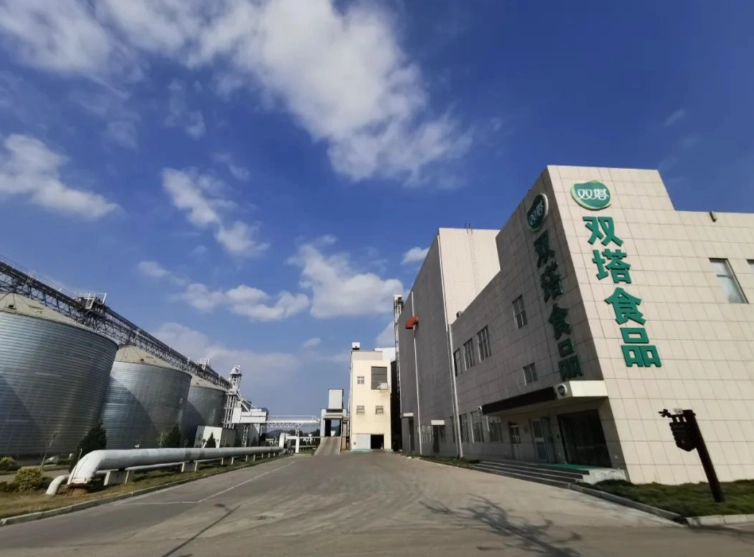
The spending is more than routine capital management. Shuangta, based in Zhaoyuan in Shandong province, is a traditional agricultural processor that has spent years absorbing the loss of orders from European and US plant-based meat customers. It has leaned on cost cuts and process improvements to steady the base, and is now using a policy tool to counter a share price that has traded below book value.
A county-level manufacturer with three decades of history
Corporate records from Tianyancha, a corporate records database, show Yantai Shuangta Food Co Ltd was incorporated on Sept 10, 1992, with Yang Junmin as legal representative and registered capital of about 1.234 billion yuan (about $174 million). It is listed as operating, with its registered address in Zhaizhai village, Jinling township, Zhaoyuan, Shandong. It was formerly known as Yantai Jinhua Vermicelli Co Ltd.
The company began as a small vermicelli plant making Longkou vermicelli, a type of Chinese glass noodle. It later built a business around extracting everything from peas: starch for vermicelli, protein for plant-based meat, fibre for feed.
Yang's team rode the concept to a valuation of tens of billions of yuan. After the industry shakeout, the stock has fallen far from that peak.
The current buyback, approved by the board under Yang's direction, is partly a financial tactic to steady the shareholder base with cheap policy loans. It also lays groundwork to tie key staff interests to the company's second attempt at growth.
Profit recovery and valuation defence
The immediate driver is a push to repair margins after the violent swing in the plant protein market.
Overcapacity after the plant-based retreat
Food-grade pea protein was once in such short supply that Shuangta earned fat export margins. Then came high inflation in Europe and the US, weakening sales of plant-based burgers and a collapse in repeat purchases. Major overseas customers slashed volumes, leaving the industry with severe overcapacity and a price war.
In the first three quarters the company reported revenue of 1.769 billion yuan (about $249 million) and net profit attributable to shareholders of 40.39 million yuan (about $5.7 million), modest double-digit growth on both counts. Profit remains well below the several hundred million yuan booked at the peak.
With earnings only slowly recovering and the market still valuing the company as a low-margin agricultural processor, the stock has lingered around 4 yuan. Buying heavily between 4.08 and 4.50 yuan locks in cheap incentive shares, and the special buyback loan lets the company fund the support operation at low cost.
Holding the team together and moving upmarket
The deeper motive is to keep core technical and overseas sales staff and to shift deeper-processed products into higher-end uses.
Competition in China's vermicelli industry is cutthroat, and margins on low-end bulk vermicelli are razor thin. Breaking the agricultural cycle means moving into high-purity pea protein for pharmaceutical use and infant formula, plus functional dietary fibre and prebiotic ingredients.
Such a shift depends on retaining researchers and export staff. Putting close to 20 million repurchased shares into an employee holding platform is intended to loosen the grip of a single large shareholder or family-controlled structure, with targets tied to gross margin gains and to landing high-margin overseas customers.
Tests ahead: raw material cycles and consumer demand
Having spent more than 80 million yuan, Shuangta still faces swings in agricultural commodity prices and slow adoption of plant-based foods at home.
Imported pea costs and trade exposure
Shuangta relies mainly on imports of high-quality non-GMO yellow peas from Canada and other countries. Freight rates, currency swings and drought-driven crop losses can feed into procurement costs within weeks. If raw material prices spike while weak consumer demand prevents the company from passing costs downstream, the thin margins squeezed out through lean production could be wiped out again.
The long slog of building plant-based demand in China
While the US and European plant-based meat markets have hit a growth ceiling, Chinese consumers still treat plant protein products as something to try rather than buy again. Whether sold to restaurants as a meat substitute or to shoppers as a healthy, low-fat option, plant protein products are running into trade-down spending.
Unless Shuangta can push pea protein into genuine daily-use categories such as sports nutrition, nutrition for the elderly and plant-based dairy, concept hype alone will not lift its valuation.
What comes after the buyback
The 1.234 billion yuan in registered capital and the records tracing back to Zhaoyuan tell the story of a Chinese farm-products processor riding out the ups and downs of a global supply chain. Yang and Shuangta have shown their commitment with more than 80 million yuan of real money, and have staked the turnaround on technology and staff incentives.
Whether that is enough depends on the commodity cycle and on whether health-conscious consumers actually embrace the products. That is the test the company now faces, with close to 20 million repurchased shares in hand.