SGEG Buys Back Shares as Revenue Growth Fails to Lift Profit
SGEG spent 111.27 million yuan on buybacks in three months as its core electrical-equipment business faces margin pressure and losses.
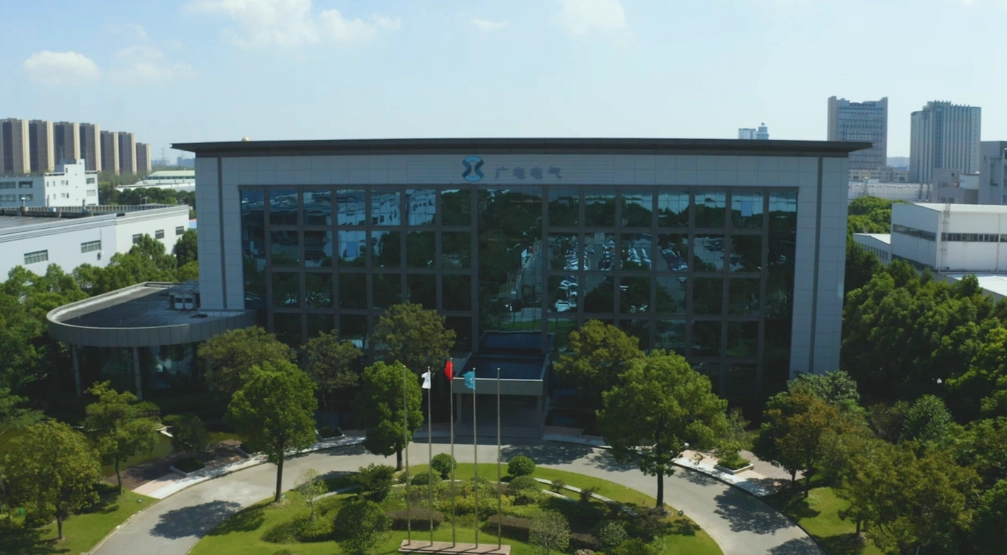
SGEG has spent more than 111 million yuan buying back stock in three months, even as surging revenue failed to prevent a loss in the first three quarters.
The share purchases show how a nearly 30-year-old Shanghai power-equipment maker is using cash to support its valuation, retain technical staff and navigate a price war in low-voltage electrical equipment.
The buybacks come as Chinese regulators press listed companies to strengthen market-value management and encourage cash-rich firms to use repurchases for employee incentives and investor confidence.
More than 111 million yuan repurchased in three months
SGEG, formally Shanghai Guangdian Electric (Group) Co. Ltd., said it had repurchased 29.802 million shares by Oct. 31, 2026. The stake equals 3.49% of total share capital.
The company paid 111.2725 million yuan (about $15.7 million) through centralized competitive bidding. In October alone, it bought 1.9278 million shares for 7.1745 million yuan.
All repurchased shares are planned for a future employee stock ownership plan or equity incentive scheme.
The board approved a repurchase plan of 100 million to 200 million yuan in late July. SGEG exceeded the lower end within three months.
The rapid move is more than routine employee-benefit planning. It is a defensive use of cash while the company faces cutthroat competition in low-voltage electrical equipment assemblies and a loss despite higher revenue.
Nearly 30 years as an industrial manufacturer
Corporate records provider Tianyancha shows SGEG was founded on Dec. 12, 1995. Its registered capital is about 854 million yuan, and Zhao Shuwen is its legal representative.
The company remains active and is registered on Huancheng East Road in Shanghai’s Fengxian District. It was formerly known as Shanghai Guangdian Electric (Group) Co. Ltd., without the joint-stock company designation.
SGEG built its industrial base through early Sino-foreign joint ventures and contract manufacturing for foreign brands.
It once worked closely with GE through a joint venture and became a major domestic supplier of medium- and low-voltage switchgear assemblies and power electronic components.
That landscape changed after the joint-venture business was restructured and Chinese electrical-equipment suppliers expanded. SGEG now competes in a market with far more domestic manufacturing capacity.
The repurchase serves two immediate goals: supporting a long-weak share price and using equity to bind key technical staff and stabilize research teams.
Revenue rises 55.47%, but profit turns negative
The clearest pressure point is SGEG’s financial performance during its transition.
In the first three quarters, revenue jumped 55.47% from a year earlier to 904 million yuan. Yet net profit attributable to shareholders was a loss of 26.3607 million yuan.
The loss after excluding non-recurring items widened to 32.0975 million yuan, according to its just-released third-quarter report.
The gap between rapid revenue growth and falling profitability reflects severe price competition in downstream centralized procurement for traditional power equipment.
Orders have increased in areas including new-energy power-station grid connection and industrial smart-grid distribution. But margins are being squeezed by volatile prices for copper, steel and other upstream metals, as well as homogeneous bidding for switchgear assemblies.
That makes the share repurchase a direct tool to offset negative market sentiment and prevent the company’s market value from falling toward its net asset value.
Digital upgrade faces barriers
SGEG also faces a strategic challenge in moving toward higher-end digital and intelligent electrical systems.
The low-voltage distribution industry is no longer limited to sheet-metal processing and component assembly. Foreign leaders Schneider Electric and Siemens, together with domestic rivals Chint and Liangxin, are developing higher-margin products.
Those include power distribution systems for the artificial intelligence data center sector, green microgrids and energy-storage power conversion equipment.
SGEG has mature production lines and technical experience. But it still faces strong technology barriers when pursuing demanding customers such as data centers and broad semiconductor factories.
Tianyancha records underscore both its long history and the organizational burden of transforming a nearly 30-year-old manufacturer.
Placing nearly 30 million repurchased shares in an employee incentive pool is designed to tie younger technical staff and sales teams to the company’s expansion in energy storage and specialized power equipment.
Cash use and turnaround remain the test
Even after spending 111 million yuan, SGEG must still conserve cash and return its main business to profit.
First, the buyback may leave less cash for research and factory upgrades.
The repurchase program can reach 200 million yuan. For a company that lost money in the first three quarters, a large outflow of own cash can support near-term earnings-per-share metrics and the share price, but it also reduces funds available for other priorities.
Those include development of new-generation smart circuit breakers and a lights-out factory upgrade, which uses automation to reduce the need for manual labor.
If industry conditions remain weak, heavy cash consumption could reduce SGEG’s buffer against a deeper industry shakeout.
Second, the incentive plan still needs credible performance tests.
A repurchase is only the first step. Whether it improves productivity depends on the performance conditions attached to equity awards.
If broad manufacturing investment fails to recover over the next two to three years, or if high-end electrical orders cannot reverse the margin pressure, employees may not meet vesting targets. The incentive system built by the buyback could then fail to deliver its intended effect.
A turnaround test for an established manufacturer
SGEG’s 854 million yuan in registered capital and Fengxian manufacturing base reflect a Chinese power transmission and distribution equipment pioneer that has evolved through nearly three decades of industrial change.
Under Zhao Shuwen, the company is using cash buybacks to signal support to investors and make clear the urgency of its transformation.
The remaining question is whether the new link between capital and talent can help SGEG escape its losses in a polarized electrical-equipment market and a brutal low-voltage price war.