Seres to cancel all 983 million yuan of repurchased shares
Seres will cancel all 983 million yuan ($138 million) of shares it has repurchased, cutting its share count to lift earnings per share as AITO sales grow.
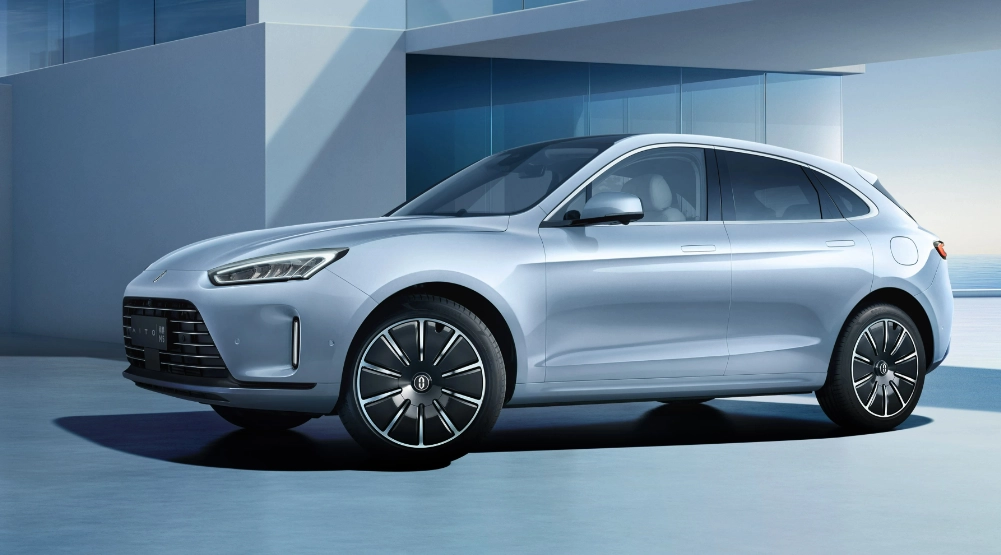
Seres will cancel all 17.5 million shares it has repurchased for 983 million yuan (about $138 million), the Chinese automaker said, opting for a full cancellation rather than the usual practice of holding the stock for employee incentives.
Cancelling repurchased shares permanently shrinks the share count and lifts per-share earnings and net assets — a blunter form of shareholder return than buy-and-hold buybacks. For Seres, whose market value has climbed past 100 billion yuan on the back of its Huawei-backed AITO brand, the move is also a statement about cash flow that has turned decisively positive.
Buyback close to the floor of the plan
In a filing on its repurchase progress, Seres said it had bought 17,535,670 shares, or 1.01% of total equity, through the Shanghai Stock Exchange's centralised bidding system as of Oct 31, 2026.
Prices ranged from 43.99 yuan to 91.00 yuan a share, for a total outlay of 983 million yuan. The company had announced a programme of 1 billion to 2 billion yuan (about $140 million to $280 million); spending so far is close to the bottom of that range.
Seres said the shares will be cancelled in full and its registered capital reduced accordingly. Most listed Chinese companies earmark repurchased stock for employee stock ownership plans or incentive schemes.
A corporate record that tracks the transformation
Tianyancha, a corporate records database, shows Seres Group was incorporated on May 11, 2007, with registered capital of about 1.742 billion yuan (about $245 million) and Yin Xianzhi as legal representative. It is registered at No. 7 Wuyunhu Road, Shapingba district, Chongqing.
The database also lists former names: Chongqing Yu'an Holdings, Chongqing Xiaokang Automobile Holdings and Chongqing Xiaokang Industry Group. The record follows a spring and shock-absorber workshop that became a builder of low-end Dongfeng Xiaokang minivans and then a premium electric-vehicle maker.
On a base of more than 1.74 billion shares, management is now committing close to 1 billion yuan in cash to cut the share count outright — a signal of confidence in operating cash flow now that the company has left losses behind.
AITO volume is funding the buyback
The cash behind the cancellation comes chiefly from sustained sales of higher-priced models, led by the AITO M9 and AITO M7.
With average selling prices above 300,000 yuan and even 400,000 yuan a vehicle, Seres is no longer the marginal new-energy player that relied on repeated private placements to stay afloat. Retained earnings and cash on the balance sheet have given it a shareholder-return capability closer to that of established global automakers.
A full cancellation means net assets and earnings per share are lifted permanently, without any later dilution from reissued stock.
Defending the share price
A second motive is the share price, which has swung sharply around the 100 yuan mark.
Buying steadily across a range as wide as 43.99 yuan to 91.00 yuan signals that management is prepared to keep absorbing stock whatever the market mood. With institutions rebalancing auto holdings, a cash-funded cancellation gives long-only funds and foreign holders a counterweight to selling pressure.
Deeper Huawei ties, cleaner equity structure
The cancellation also fits Seres' effort to deepen cooperation with Huawei's car business unit and clarify its equity relationships.
Seres previously spent 10 billion yuan (about $1.4 billion) on a stake in Shenzhen Yinwang Intelligent Technology, moving from a manufacturing partner in Huawei's smart-selection car programme to a core shareholder in Yinwang.
Paying for that investment while shrinking its own share count shows the balance sheet can carry both, and that management is not neglecting the day-to-day management of existing equity.
What comes next
Heavy reliance on two models
Gross profit and volume remain concentrated in the AITO M9 and the new AITO M7. If rivals bring out extended-range or battery-electric SUVs with comparable driver-assistance features at similar prices, average gross margin per vehicle could come under pressure and cash generation could slow.
Repeating that dominance with later models such as the AITO M8 is the condition for keeping the cash engine running.
Capex and overseas expansion both need cash
Seres also faces large future calls on cash: remaining payments for the Yinwang stake, highly automated plants, and overseas certification and dealer networks.
With the buyback programme capped at 2 billion yuan (about $280 million), further cancellations must be weighed against the reserves needed to fight an extreme price war.
After the buyback
The 1.742 billion yuan of registered capital and the Wuyunhu Road address trace a Chinese automaker's path from a workshop in Chongqing's hills to the centre of the industry. Cancelling close to 1 billion yuan of stock is a hard show of confidence.
But with advanced driver assistance spreading across the sector and the premium segment turning into close-quarters combat, Seres must show it can hold its base and still bring new products to market.