Shenzhen Energy opens cafe atop waste incinerator chimney
Shenzhen Energy has turned its Nanshan waste-to-energy plant into a coffee, tourism and fitness destination to defuse neighbourhood opposition and diversify revenue.
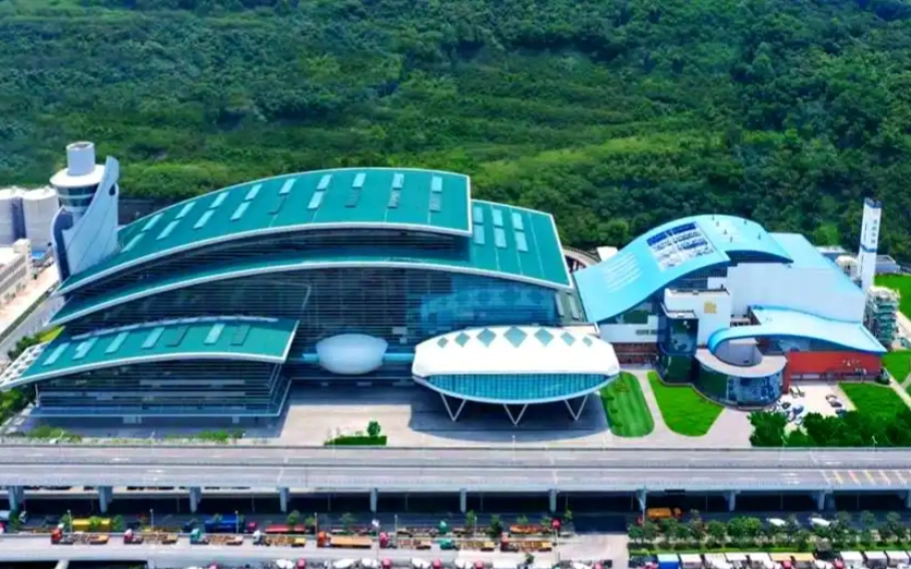
Shenzhen Energy Environment has turned the 72-metre chimney of its Nanshan waste incinerator into a cafe and viewing deck, betting that openness can soften opposition to a plant that burns 2,300 tonnes of household waste a day.
The Sky Bar, a recycling art gallery and a guided industrial tour route have made the Nanshan Energy Ecological Park a social media draw. They are also a commercial hedge. As subsidies fade, the operator is converting a municipal cost centre into a mixed-use urban space with new sources of cash flow.
Who runs the park
The operating company, Shenzhen Energy South Ecological Environmental Protection Co Ltd, was founded in 2018 with 374.81 million yuan (about $53 million) in registered capital, according to corporate records database Tianyancha. It is wholly owned by Shenzhen Energy Environment Co Ltd, a subsidiary of a large local state-owned energy group.
Its registered business scope runs well beyond incineration: waste-to-energy generation sits alongside tourism, science education and small-scale catering. In April the company added sports venue facility operation and fitness and leisure activities, according to its registration filings.
NIMBY pressure forced the opening
The plant sits in Shenzhen's Nanshan district, backed by Xiaonanshan hill and facing the Lingdingyang estuary. It is ringed by luxury housing in the Qianhai-Shekou Free Trade Zone and by dense industrial parks.
Building a mega-incinerator in the core of a top-tier city invites resistance over dioxin emissions, odour and falling property values. The traditional approach, a walled plant closed to outsiders, only deepens suspicion.
By turning the exhaust stack into a bar with views and opening the site as an industrial tourism showcase, Shenzhen Energy Environment is offering the public a form of proof: it dares visitors to drink coffee above the vent. The catering and tourism licences recorded by Tianyancha give that strategy legal footing.
A commercial hedge as subsidies retreat
Waste-to-energy plants have long relied on two revenue streams: a per-tonne disposal fee paid by local governments, and a national subsidy for renewable power fed into the grid.
Central renewable subsidies are being phased out and local payments are taking longer to arrive. Burning waste for a thin disposal fee is running into a hard cash-flow ceiling.
A site with mountains on one side and the sea on the other is a wasted asset if it remains a sealed processing workshop. Ticket sales and school visits came first, then dining in the chimney, then the April addition of sports facilities and fitness. The company is trying to add higher-margin leisure and travel income on top of power sales.
The balancing test ahead
Safety versus footfall
Behind the styling, the site remains an industrial zone handling 2,300 tonnes of waste a day, with high-temperature and high-pressure boilers, giant grab cranes, gas purification and negative-pressure enclosed halls. Visitor routes must be kept absolutely separate from hazardous operations.
A momentary equipment failure or a leak of odour could wreck the visitor experience and turn the public trust built through openness against the core business.
An SOE running consumer businesses
Incineration operators are good at maintaining heavy machinery, tuning automated processes and selling bulk energy. Their management systems reward safety, compliance and steady output. Restaurants, gyms and art exhibitions depend instead on close reading of young consumers, constant social media marketing and frequent content refreshes.
Without a market-savvy operator brought in, the new catering and fitness lines risk becoming vanity projects that cannot cover high property maintenance costs, let alone generate cash.
Can traffic become a durable model?
The registered capital, the wholly owned chain and the shift in business scope from incineration to fitness all mark a deeper experiment by one of China's leading environmental utilities in redrawing the boundaries of urban public facilities. A cup of coffee 72 metres up has melted some of the hostility.
The harder question is whether the crowds will settle into a stable long-term business, one that satisfies both the safety ledger and the market's demands. The answer will be watched across the municipal utility sector.