China Rare Earth to buy 51% of Liangshan unit via share issue
China Rare Earth will issue shares to buy its parent's 51% stake in the Liangshan unit, ending intra-group competition and adding a major light rare earth mine.
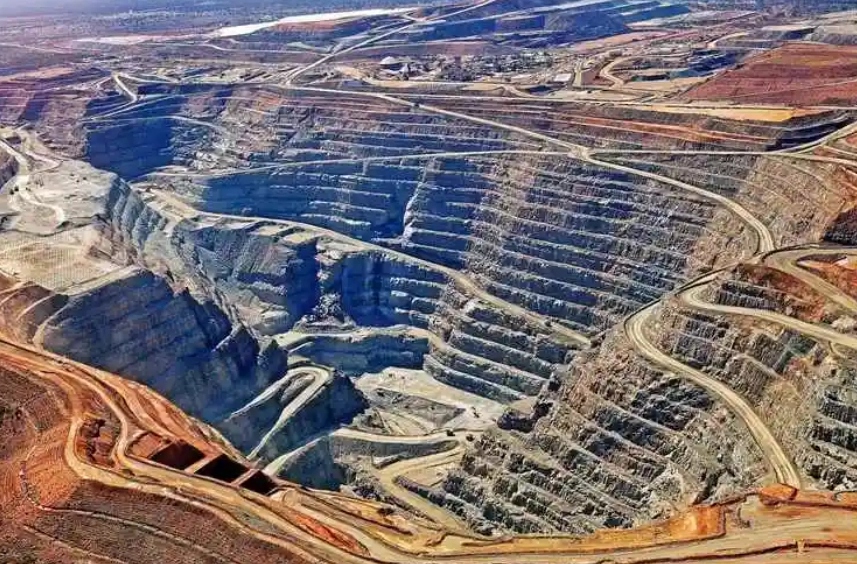
China Rare Earth, the group's only listed rare earth resources platform, suspended trading on Nov 2 to buy the 51% stake its parent holds in China Rare Earth (Liangshan) Co Ltd, paying with new shares.
The move puts the group's biggest light rare earth mine inside its listed vehicle and ends years of competition between sister companies. It comes as Beijing's consolidation of rare earths, deemed a key strategic resource, enters its final phase, and as strategic industries press for secure upstream supply.
China Rare Earth said the deal is expected to be a major asset restructuring and a related-party transaction, but not a backdoor listing. The main counterparty is initially the controlling shareholder, China Rare Earth Group. The company also plans to raise matching funds.
The target: 1.5 billion yuan of capital, a central-local shareholding ladder
China Rare Earth (Liangshan) Co Ltd was set up in 2008 with registered capital of 1.5 billion yuan (about $210 million), according to corporate records database Tianyancha.
| Shareholder | Stake |
|---|---|
| China Rare Earth Group Co Ltd | 51% |
| Sichuan Shuyu Mining Investment Co Ltd | 39% |
| Mianning County Investment Development Co Ltd | 10% |
Both China Rare Earth Liangshan and the listed company sit under China Rare Earth Group. The mix of a 51% central SOE control block with provincial and county-level holders is central to the deal: it ties central and local interests together and puts the ownership structure on a compliant footing.
Ending intra-group competition
Intra-group competition has hung over the listed company since China Rare Earth Group was created almost five years ago. The listed arm, long based in Ganzhou, focuses on mining and processing medium and heavy rare earths.
In Liangshan, Sichuan province, China Rare Earth Liangshan holds the mining rights and core capacity of the Maoniuping rare earth mine in Mianning county — China's second-largest light rare earth base after Bayan Obo in Inner Mongolia.
The two sister companies have clashed openly over rare earth quotas and separation and processing work. By injecting its 51% controlling stake in exchange for new shares, China Rare Earth Group both honours its commitment to the market and securitises one of its strongest cash-generating mines.
Fixing the "south heavy, north light" imbalance
The second driver is the listed company's lopsided portfolio. Investors have long known China Rare Earth as a medium and heavy rare earths specialist.
In industrial use, however, light rare earths — especially neodymium and praseodymium, the core materials for permanent magnets — account for more than 80% of consumption in EV drive motors, large wind turbines and industrial servo robots.
The listed company previously depended on external quota purchases for light rare earth ore, squeezed between expensive upstream purchases and weak downstream prices. Adding China Rare Earth Liangshan and its high-grade bastnasite at Maoniuping gives it the largest and highest-grade light rare earth source in China outside China Northern Rare Earth's Bayan Obo.
That should lift its thin self-sufficiency in ore and build a closed loop spanning both light and heavy rare earths, from mines to separation.
The 49% local block and a step-by-step structure
The remaining 49% is split between Sichuan Shuyu Mining Investment Co Ltd, backed by Sichuan provincial state capital, with 39%, and county financing platform Mianning County Investment Development with 10%.
Resource deals touch local tax revenue, ecological compensation and fiscal allocations, and they invite long negotiations. Naming China Rare Earth Group as the main counterparty suggests a step-by-step approach.
The listed company would first take the 51% stake, locking in control and consolidation, while the matching fundraising leaves room to settle with local shareholders or fund mine upgrades later.
That structure avoids a drawn-out valuation fight with minority local holders, shortens approvals and speeds delivery of control.
Valuation, dilution and the ecological bill
The company still faces a hard bargain over valuation in a downcycle and the need to balance competing interests.
Rare earth prices have stayed near the bottom after sharp gains in earlier years. With 1.5 billion yuan of registered capital and a premier mine, China Rare Earth Liangshan could be valued in the tens of billions of yuan.
A high price would mean a large share issue for a listed company with registered capital of only about 1.061 billion yuan (about $150 million), heavily diluting minority shareholders. A low price would raise state-asset audit questions and could trigger pushback from Sichuan Shuyu Mining and Mianning County Investment Development over locked-in asset value.
Maoniuping also sits on the fragile southeastern edge of the Qinghai-Tibet Plateau. Past mining by multiple operators has left tailings ponds to be checked, waste-rock sites to be restored and heavy-metal soil and water work to be done.
Once the mine sits inside a listed company, every environmental inspection and safety margin will face market scrutiny. Ongoing restoration spending and deeper mine upgrades will test post-deal profit.
Ten trading days to answer
The 1.5 billion yuan of registered capital and the 51/49 central-local split, as shown on Tianyancha, mark a turning point for an industry moving from fragmented ownership to consolidation.
The share-based purchase opens the way for the listed company to become a full-spectrum strategic resources group. Whether it can deliver a plan that satisfies the parent's strategy, local state shareholders and public investors within the 10 trading days allowed for the proposal is the test ahead.