Zhaofeng, Leju robot venture nears 400 million yuan in orders
Zhaofeng and Leju's 80/20 venture is the front-runner for a 299.9 million yuan robot platform deal, betting factory floors can train embodied AI.
Zhejiang Zhaofeng Mechanical and Electronic said its robot venture has been picked as front-runner for a 299.92 million yuan (about $42 million) robotics innovation platform project, lifting its orders and pending awards toward 400 million yuan.
The venture, Zhejiang Zhaoju Intelligent, is 80% owned by Zhaofeng and 20% by Leju Robotics. Its swift run of state-funded tenders shows how old-line manufacturers are pairing factory-floor access and balance-sheet heft with humanoid robot know-how to win embodied AI contracts.
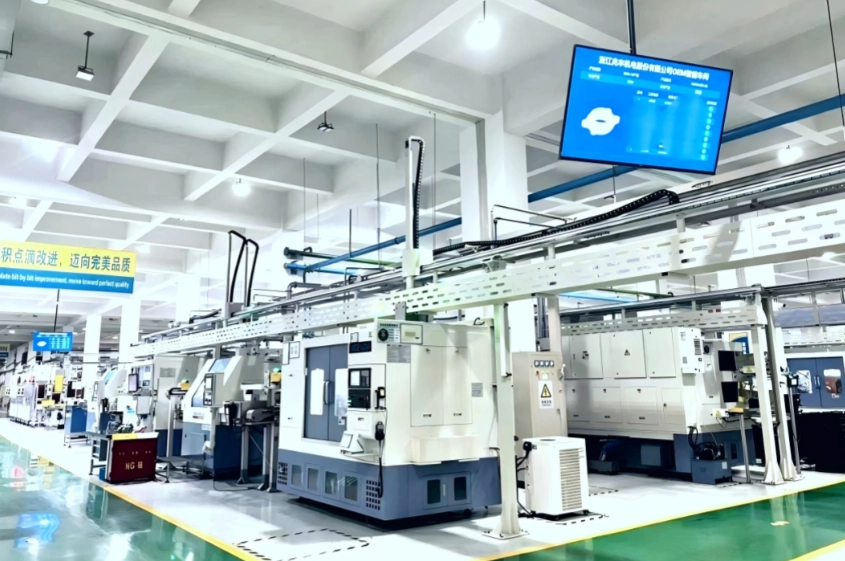
Zhaofeng said in a filing that Zhaoju was named a candidate winner for the project. The public notice period has ended, but the company has not received a formal award notice and no contract has been signed.
The bid follows a 92.273 million yuan (about $13 million) contract in June for the Huizhou Humanoid Robot Innovation Center, purchased by Huizhou Embodied Intelligence Innovation Investment. Together, the two deals bring Zhaoju's orders and pending orders close to 400 million yuan (about $56 million) within months of its creation.
Both tenders were issued by innovation service platforms led by local state capital and industrial funds, not by manufacturers.
A young venture, an 80/20 split
Tianyancha, a corporate records database, lists Zhaoju as 80% held by Zhaofeng and 20% by Leju Robotics (Shenzhen). Zhaofeng has said the venture will develop embodied AI robots for machinery and auto-parts manufacturing, and handle robot training and operations in complex industrial settings.
Factory floor meets robot brains
The shareholding reflects a clear division of labor: the traditional manufacturer brings sites and capital, the technology unicorn brings the engineering.
Zhaofeng is a leading domestic maker of automotive wheel-hub bearing units. It has been squeezed by thin margins in the auto supply chain, overseas tariffs and low valuations for conventional machinery makers. Its edge is decades of real stamping, forging, precision machining and heavy assembly work, plus listed-company credit lines and access to government industrial parks.
Leju, affiliated with Harbin Institute of Technology, has top-tier humanoid hardware (the Kuafu series), dynamic gait algorithms and the OpenHarmony operating system ecosystem. Its gap is the one common to embodied AI startups: few real, high-frequency industrial training sites, and a light asset base that makes multi-hundred-million-yuan government tenders hard to bid for.
Driver one: local governments race for AI infrastructure
These platform projects are typically launched by local state capital, which buys precision humanoid hardware, embodied sensing sensors, motion capture systems and digital-twin training grounds. The aim is shared computing and training centers serving small and medium manufacturers in the region.
Startups selling single robots can neither absorb the upfront financing nor handle line-level integration. Zhaoju combines Zhaofeng's listed-company credit and local government ties with Leju's standing with the Ministry of Industry and Information Technology and within the industry.
Driver two: a data flywheel
The deeper ambition is data. The industry's main bottleneck is a shortage of high-quality real-world physical interaction data. Robots that only pour tea in clean showrooms never learn to handle oil-slicked floors, sudden light changes, heavy loads or tight-tolerance assembly.
By winning public platform contracts, Zhaoju gets to deploy hundreds of robots across real industrial clusters. Force, vision and touch data gathered at bearing press-fitting, machine loading and high-risk forging stations can be built into a proprietary industrial embodied training dataset that feeds back into Leju's models.
Governments and companies pay for the hardware; Zhaoju keeps the data. That is its fastest route to separating itself from rivals.
Delivery and durability tests
The engineering deadline
The near-300-million-yuan project still has to travel from candidate status to signed contract and commercial acceptance. With local finances and state spending under close scrutiny, contract terms, delivery milestones and staged payments are strict.
Putting humanoids into complex manufacturing is not plug-and-play. It requires custom flexible grippers, rebuilt safety fencing and deep integration with existing MES production systems. If the robots cannot meet industrial cycle times, or keep stopping and slowing the line, final delivery and audit acceptance face long delays and depreciation risk.
Will buyers come back?
The next question is repeat business once the first wave of policy-supported procurement fades. So far the buyers are local state innovation investment firms. Whether private manufacturers and OEMs will spend several million yuan each on humanoids to replace gantry robots or six-axis cobots depends on total cost of ownership and payback.
If the machines cannot beat mature, cheap industrial arms on cost, these platforms risk becoming showcase pieces rather than self-sustaining businesses.
A track laid, a test to pass
The 80/20 split and the tender trail on Tianyancha mark a sharp turn by a traditional Zhejiang manufacturer in the AI era. Zhaofeng has laid track for Leju's robots to reach factory gates, and opened a higher-valuation path for itself.
But manufacturing demands absolute reliability at rock-bottom cost. Whether this venture can slot showroom technology into roaring machine tools is the answer it now owes the hardware industry.