Ping An operating profit rises 8.3% as AI use surges
Ping An's first-nine-month operating profit rose 8.3% to 125.9 billion yuan (about $17.7 billion) as AI cut costs, though low bond yields remain a risk.
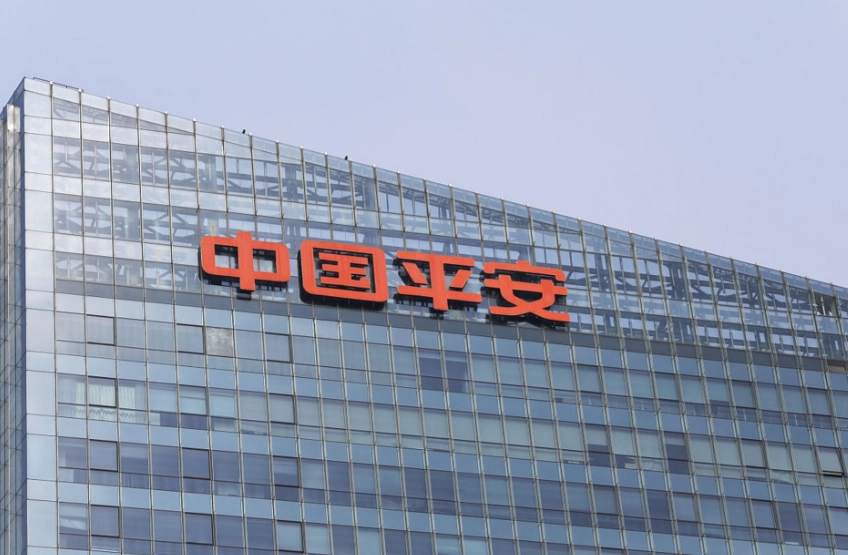
Ping An Insurance (Group) Company of China said operating profit rose 8.3% to 125.9 billion yuan (about $17.7 billion) in the first nine months of 2026, with artificial intelligence starting to show up in the cost line.
Chinese insurers are squeezed between low bond yields and a shortage of assets that match long-dated liabilities. Ping An's answer is automation at industrial scale: internal token consumption topped 330 billion a day in September 2026, more than tenfold the level at the end of 2025. The group, whose assets now exceed 10 trillion yuan (about $1.4 trillion), is betting that model-driven efficiency can defend margins as the traditional life-insurance agency model fades.
AI moves from pilot to profit driver
Operating earnings per share came in at 7.23 yuan, up 9.2%. The headline number rests on deep cuts to the cost of running a business that is both information-heavy and labour-intensive.
Ping An puts its annual spending on sales calls, underwriting, document entry and claims inspection at tens of billions of yuan. It now routes much of that work through large language models:
- AI service channels resolve 91% of customer queries end to end, sharply reducing the need for human agents.
- For claims and underwriting, automated settlement and image-based vehicle damage assessment cut handling time from days to minutes.
- Multimodal anti-fraud models have blocked several billion yuan in false claims, the company said.
- The cost per token fell 81%, turning heavy model usage from a cash drain into retained operating profit.
Built in Shekou, registered in Futian
Corporate records describe a company that grew from a local property insurer in Shekou into one of the world's most systemically important financial institutions. Tianyancha, a corporate records database, lists Ping An as incorporated on March 21, 1988, with registered capital of about 18.11 billion yuan (about $2.6 billion).
Chairman and legal representative Ma Mingzhe has led the group for most of that history. Its registered address is the Ping An Finance Center on Yitian Road in Shenzhen's Futian district. Previous names include China Ping An Insurance Company.
Ma's team has for more than a decade channelled roughly 1% of annual revenue — around 10 billion yuan a year — into fintech research. That spending gave Ping An its own computing and algorithm infrastructure before the generative AI wave arrived.
Accounting changes and cross-selling add to the gain
Cost cuts are only part of the story. The full adoption of IFRS 9 and IFRS 17 has magnified the swing that stock market moves inflict on insurers' reported net profit, making operating profit a cleaner read on the core business.
Operating profit excludes short-term investment volatility and one-off items. Ping An also links life insurance, bank wealth management and Ping An Health's medical and elderly-care services into shared customer accounts, which supports cross-selling and contracts per customer.
With China's population ageing, the group bundles home-care and senior-living community benefits into annuity and whole-life policies. That offers customers real services instead of a pure rate pitch, a defence against rivals competing on yields to win liabilities.
Spread losses and the trust ceiling for AI
The bigger risk sits on the investment side. Ping An's insurance investment balance has passed 5 trillion yuan (about $700 billion), while 30-year government bond yields stay near historic lows and property valuations in core cities are still bottoming out.
New business value grew in a burst during the first nine months, helped by a low base and by an expected cut in assumed rates. Finding stable fixed-income assets yielding above 4% for a huge book of high-guarantee liabilities remains the industry's central problem.
If long-run returns stay below the cost of legacy policies, savings wrung out of operations by AI would be swallowed by losses further out. Several billion yuan of cost relief is small against potential spread losses measured in trillions.
AI also hits a ceiling in wealth management. Models handle routine underwriting and common questions well, but family trusts, high-end annuities and large inheritances worth hundreds of thousands to millions of yuan still depend on senior human advisers.
The agent force has halved from a peak of more than 1 million to roughly 300,000. Whether AI can help that smaller, elite group close large policies — rather than just draft text — is still an open question for clients.
Can computing power beat the long cycle?
Nearly four decades of history and 18.11 billion yuan of registered capital have carried Ping An through several macro cycles. Its answer to the current one is a digital layer built on hundreds of billions of tokens a day, moving the industry from headcount to efficiency.
The unresolved test is whether medical and elderly-care services combined with AI can outrun the pull of negative spreads. That is the question the market will ask after these results.