Logitech faces backlash again over ad that mocked customers
Logitech's authorized China account drew nationwide backlash for a promotion seen as mocking customers, its second such incident this year, with the company blaming a third-party operator.
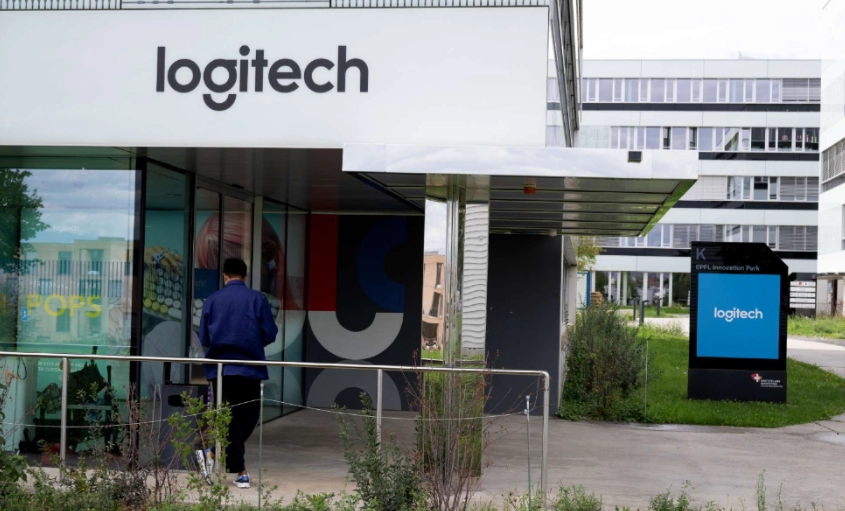
Logitech's China marketing is under fire again after an authorized account ran a promotion that appeared to mock buyers, its second such episode this year.
The row lands at an awkward moment. Chinese peripheral brands are undercutting Logitech's premium pricing, and regulators have already fined both its China subsidiary, over non-compliant products, and the agency that runs its online stores, over an advertisement.
The account in question used a "price-cut dog" emoji in a promotional post, prompting a wave of criticism online. Logitech's response followed a familiar script: the account is officially authorized, a third party operates it, and the dog was only an emoji.
Months earlier, a Logitech flagship store ran copy that read: "The moment I cut the price, don't you come running over like a dog?" The line drew a heavy regulatory penalty.
Who actually runs Logitech's China storefronts
Corporate records show the structure behind the Swiss company's China operation. Logitech (China) Technology Co Ltd was set up in September 2011 with registered capital of US$7.8 million. Its legal representative is Kun Liu, and Logitech Hong Kong Ltd owns it outright, according to the corporate database Tianyancha.
Those records also list a past penalty: the Jing'an District Market Supervision Administration fined Logitech China more than 930,000 yuan (about $130,000) over products that failed national or industry standards for health, personal and property safety.
The frontline storefront and distribution work sits with Shanghai Baishide Electronic Co Ltd, founded in March 2001 with 5 million yuan (about $700,000) in registered capital. Its legal representative is Jiang Zhongchang.
In June, the Jing'an district regulator handed Baishide the maximum 200,000 yuan (about $28,000) fine for publishing an advertisement that "obstructed public order or offended public morals," the penalty records show. That case followed the flagship-store slogan.
The split between a foreign brand owner and a local agency exposes a deeper failure of management as price competition intensifies.
A premium moat that is crumbling
Logitech's pricing power rests on its HERO sensor, LIGHTSPEED wireless and the moulds of its GPW series, known to Chinese gamers as Gou Pi Wang. That combination long supported fat margins in the 1,000-yuan flagship gaming mouse segment.
The gap has narrowed fast. PixArt now sells its high-end sensors to any buyer, and a wave of Chinese custom-peripheral startups has emerged.
- Local brands pair the flagship PAW3950 sensor with 4K or 8K wireless polling rates and magnesium-alloy bodies weighing tens of grams, at 200 to 300 yuan.
- With the technical lead erased, Logitech has resorted to steep price cuts and large discount coupons to defend volume.
- Inside the brand, a long-held top-down view of the market clashed with the crude internet memes e-commerce staff use to chase discount traffic.
- Marketers betting that all publicity is good publicity turned the company's resentment over discounting into contempt for the people buying its products.
Outsourced operations, outsourced blame
The deeper problem is a liability vacuum created by the "outsource and deflect" model common among multinational consumer electronics firms.
Global headquarters defines brand assets. The daily work on Tmall, JD.com, Douyin and Kuaishou — store operations, private-domain accounts, ad creative — is handed to third-party agencies such as Baishide.
- Agencies are measured on brutal gross merchandise value targets and click-through rates.
- Without strict compliance review from Logitech China, staff reach for extreme internet subculture memes to hit return-on-investment targets.
- When backlash comes, Logitech China issues an apology saying a third-party employee acted without authority, and Baishide absorbs the 200,000 yuan fine, shielding the brand legally.
- Yet a second similar controversy has arrived with the penalty still on the record, so the deflection has not fixed oversight; it has become a shield against corporate responsibility.
Two fines, one pattern
The 930,000 yuan product-quality penalty and the 200,000 yuan advertising penalty together map the compliance gaps in Logitech's China business.
Hardware judged non-compliant with safety standards, and a sales channel penalized for offending public morals, add up to an erosion of trust across the chain. Chinese consumers are quick to publish hardware reviews, and core gamers are unforgiving about brand values.
Repeatedly treating customers as a punchline has damaged the engineering halo built over decades and pushed loyal users toward domestic rivals.
The bill after governance breaks down
The US$7.8 million in registered capital, the two penalty decisions and the agency's ownership record on Tianyancha describe how governance slipped as the company pushed deeper into China.
Outsourcing let Logitech chase e-commerce traffic cheaply. The traffic has repeatedly carried it over legal lines and public sentiment.
With Chinese peripherals now matching it on specification and shoppers turning rational, the company must show whether it can drop the arrogance and the deflection, and rebuild basic respect for its Chinese customers.