SenseTime revenue jumps 30% as generative AI growth accelerates
SenseTime's nine-month revenue rose 30.4% to 3.79 billion yuan (about $530 million) and gross margin climbed 4.3 points, as generative AI sales more than doubled in the third quarter.
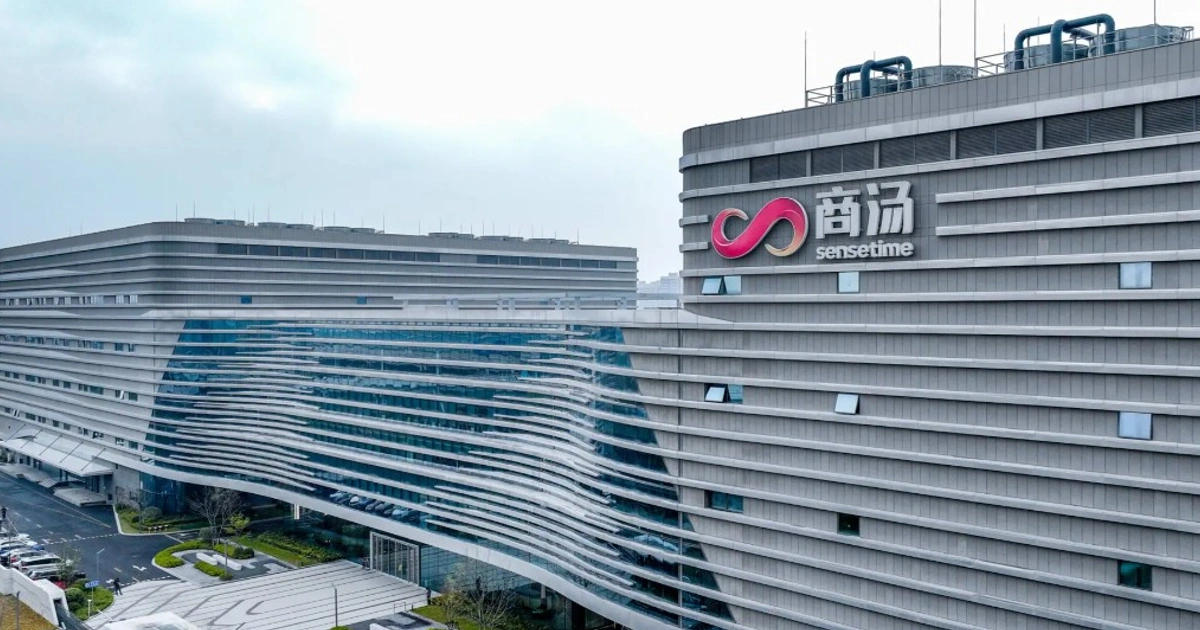
SenseTime Group's revenue rose 30.4% to 3.79 billion yuan (about $530 million) in the nine months to Sept 30, 2026, the company said on Nov 18, with growth quickening from the first half as generative AI scaled.
Gross margin climbed 4.3 percentage points to 43.4%, and gross profit grew faster than revenue, up 45.0% to 1.65 billion yuan (about $230 million) from 1.14 billion yuan a year earlier. The company said the figures point to improving revenue quality.
Generative AI remained the main growth engine, outpacing the group overall, with third-quarter revenue more than doubling year on year. SenseTime said returns on earlier strategic investment are beginning to show as commercialization speeds up.
Models move from capability to delivery
SenseNova 6.8 Flash unifies understanding, reasoning and generation across text, images, 3D, video and app interfaces, and can drive complex tasks spanning hundreds of steps. It ranks near the top of Flash-tier models on several benchmarks.
SenseNova U1 Pro supports self-correction during the creative process and native 8K output. On DesignArena, an international leaderboard, it placed second only to the GPT Image 2 series and well ahead of Nano Banana 2.1 and Grok Image 2.
SenseNova Loop 9B explores how far intelligence can go under memory constraints, matching 27B-scale performance at 9B parameters. More than ten domestic chipmakers adapted their hardware for it on day one, helping put existing Chinese chips to fuller use. Code2Video gives explicit control over text, formulas, trajectories and timing.
RoboRSI applies recursive self-improvement to physical AI and has beaten state-of-the-art results on several leaderboards. SenseTime said these advances will feed into its next generation of native multimodal models.
Token volumes climb as infrastructure scales
SenseTime built a 10,000-GPU heterogeneous inference cluster in the third quarter, lifting overall token throughput about fivefold. Average daily token volume on the SenseCore cloud platform rose from more than 2.4 trillion in July to 6 trillion in October.
The Lingang computing center won "5A" certification for both computing efficiency and power efficiency. SenseTime AI infrastructure ranked first in China's Neocloud market with nearly 50% share.
Agents and vision AI
SenseTime is embedding its enterprise agent products in customer workflows through a unified agent management system and a forward-deployed engineer (FDE) model. Its enterprise agent solutions sit in the "industry lighthouse" quadrant and rank third on customer value.
Raccoon's web version leads general-purpose tool suites by monthly unique visitors and time spent. Seko, its AI video agent and content creation tool, is paired with a distribution network covering more than 9,000 overseas channels in 180 countries and regions, giving creators a route to monetize AI content abroad.
The Ruying digital-human line took the top spot for digital-human GMV across platforms during the 618 shopping festival, and the Kapi series has passed 50 million cumulative users.
SenseTime has held the largest domestic share of the vision AI market for 10 consecutive years, and kept first place in China's private-deployment computer vision market in the first half of 2026 with 19.5%. Overseas revenue continued to grow, with repeat-customer revenue rising.
The company said its original model research, AI infrastructure, customer base and delivery experience continued to drive commercialization through the first three quarters, helping turn system-level AI capability into commercial value at scale.
Looking ahead, SenseTime expects further model iterations, economies of scale in token infrastructure and wider adoption of agents in industry workflows to convert technical strength into sustained operating returns.