Genki Forest reports double-digit 2026 growth for Alien, Hao Zizai
Genki Forest marked its tenth anniversary by reporting double-digit 2026 growth for its Alien electrolyte water and Hao Zizai wellness drinks, even as both categories slowed.
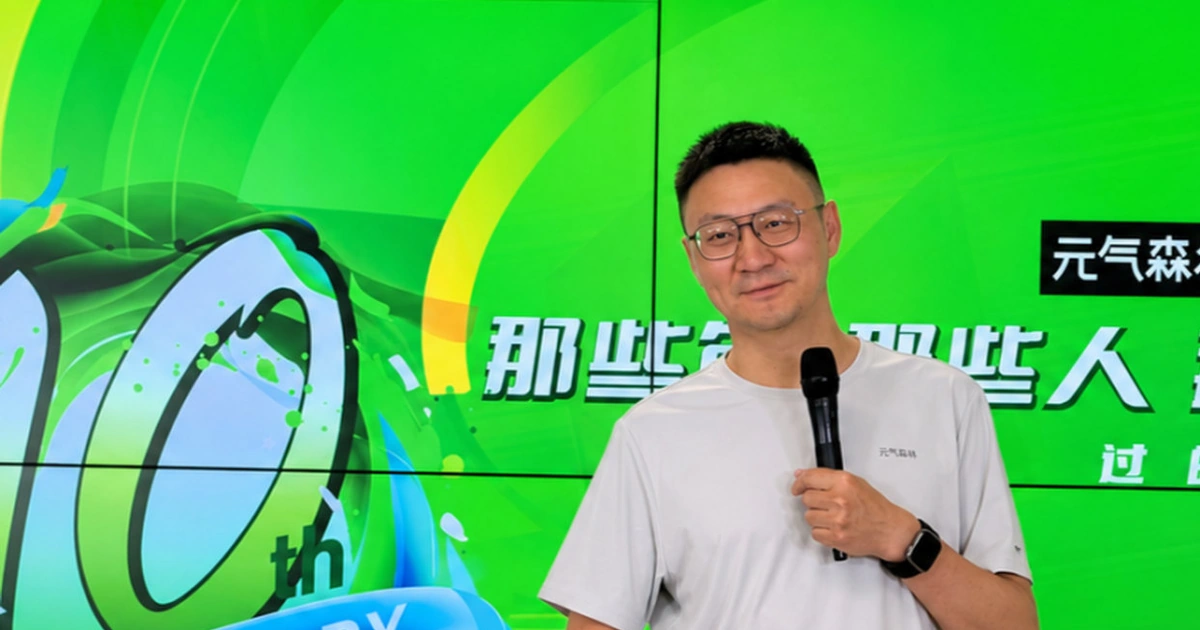
Genki Forest said its Alien electrolyte water and Hao Zizai wellness drinks both grew by double digits in 2026, holding the top sales shares in two of China's most crowded beverage categories.
The numbers, announced at the company's national distributor conference in Zhuhai on Nov 20, matter because the wider drinks market is shrinking. Alien and Hao Zizai are growing from a high base: about 46.5% and 50.8% of their categories by sales in 2025, according to data from Mashangying and Qianzhan Industry Research Institute.
Genki Forest, founded a decade ago, frames the result as the payoff from "doing subtraction" — not fewer products for their own sake, but concentrating resources on a smaller number of bets worth refining.
A market split in two
Mashangying's monitoring of typical stores nationwide found soda, ready-to-drink juice, sweetened ready-to-drink tea and packaged water all fell year on year in the second quarter of 2026, by between 8% and 15%. Only sugar-free ready-to-drink tea grew, up 16.1%.
Functional drinks are the exception. Electrolyte water grew 88.8% year on year in the first quarter of 2026, with the market expanding from 2.7 billion yuan (about $380 million) in 2022 to close to 20 billion yuan (about $2.8 billion) in 2025. Chinese-style wellness water — drinks built on ingredients used in traditional medicine — grew 35-fold in three years, including a single-year gain of more than 350% in 2023.
Density followed growth. By the first half of 2026, electrolyte water had at least 28 brands and more than 100 SKUs. Wellness water drew 23 brands and 59 new products in 2025 alone.
Electrolyte water: hold price, defend mindshare
Competition starts on the shelf. A single electrolyte drink is now split into zero-sugar and sports versions, different pack sizes and different drinking occasions. The question for shoppers has shifted from whether to buy electrolyte water to which bottle.
Promotions push the fight closer to the store. In 2026 many brands ran 1-yuan trade-ins, scan-code cash rewards and buy-one-get-one offers. Price is only part of it: redemption speed, verification efficiency and whether subsidies actually reach shopkeepers matter as much.
Genki Forest's answer is tiered management. Core products defend price and positioning, lighter pack sizes bring in new buyers, and the product line keeps moving toward more specialist formulations.
Alien still led the category with a 46.54% sales share in the first half of 2025, according to Mashangying, and posted double-digit growth in 2026 against 28 brands and more than 100 SKUs.
Distributors offer a ground-level view. In August, some said Alien was Genki Forest's fastest-growing product in their territories, lifted both by consumer recognition of electrolyte water's health claims and by promotions such as the "1-yuan Enjoy" offer.
Promotions lower the barrier to a first purchase. Repeat buying still depends on the product and the brand. Alien's category recognition came from years of product investment and channel work.
Wellness water: a cooling category, a supply-chain fight
Wellness water competes on ingredients, formulas and supply chains rather than price alone. In 2018 the category had just four brands. Hao Zizai launched in 2023 and, according to the company, passed 100 million yuan (about $14 million) in sales within four months.
2025 was the turning point. As more brands piled in, the category moved from concept to quality. Before 2023, brands competed over whether a drink contained red bean and coix seed. After 2025, they compete over ingredient origin, formula complexity, processing and supply chain.
A Qianzhan report found that the share of brands disclosing ingredient origins rose from 47% to 55% between 2023 and 2025, while the share making their own products rose from 21% to 34%.
The category cooled sharply in 2026. Mashangying data show offline wellness water sales fell 20.1% year on year in the second quarter, the steepest drop among monitored categories. New products fell to 49 from 134 a year earlier as smaller brands exited.
Hao Zizai still grew by double digits. The company points to ingredient and process investment. Its R&D team toured growing regions and blind-tested more than 40 red bean varieties before choosing "Pearl Red" from Heilongjiang. In 2025 it set up nearly 10,000 mu (about 670 hectares) of red bean fields in Heilongjiang with Shiyue Daotian, and fixed sourcing regions for coix seed, red dates and goji berries.
Production uses a slow simmer followed by aseptic cold filling. The process needs more manual handling than a fully automated line but preserves more of the ingredients' aroma and layers, with company-owned plants safeguarding quality and delivery.
Growing in a cooling category says more than riding a boom. The gap between brands comes down to accumulated strength in products, supply chains and channels.
Subtraction: fewer SKUs, sharper innovation
Founder Tang Binsen summed up the year as "growth through subtraction". The number of SKUs on sale is the lowest in years and inventory turnover the best in recent years. The pace has not slowed: innovation has been redirected from quantity to accuracy, with new products tested on a small scale before launch.
Recent years went into the lemon category, where the company stabilised a -196°C liquid nitrogen locking process. This year's sparkling water work focused less on stacking new flavors than on reworking mouthfeel and the kick of carbonation, using limited editions for seasonal tests.
Old products hold the base, new products add volume, limited editions test the market. Fewer items, each more focused.
Three priorities for 2027
On channels, the company plans a system built around coverage, turnover and sell-through. It will add channels for more drinking occasions and assign staff to develop closed-network outlets. It also plans to separate online and offline pricing so that price room remains for distributors and stores.
Digital tools underpin this. The first year of the "1-yuan Enjoy" campaign has closed: consumers open a cap, see they have won, and pay 1 yuan at a store; the store verifies the win and the distributor delivers replacements. Product and redemption records let the manufacturer see terminal inventory, not just what sits in distributor warehouses.
For distributors, outlet registration and inventory turnover are moving online. In Zibo, one distributor registered 2,513 outlets for the campaign. Digitalisation has stretched from spending to day-to-day operations.
On partnerships, the conference returned repeatedly to defining regional responsibilities, roles and rights so distributors hold real operating initiative in their territories. Tang said he wants distributors to be "partners who hold the market together and build a business that lasts twenty years".
Product plans follow the same map. Alien will extend zero-sugar and sports versions into more event and fitness partnerships. Hao Zizai will keep developing drinks from Chinese ingredients, adding a ginger and red date water, and keeping both large bottles and a 330ml format. Sparkling water will continue seasonal limited flavors. Vitamin C water will take the Manfen brand name, with upgraded formula and packaging.
The base underneath
Genki Forest's first company-owned plant started production in Chuzhou, Anhui, in 2019. By May 2026, when it signed for a seventh plant in Xuchang, Henan, it had invested nearly 8 billion yuan (about $1.1 billion). The Xuchang site is planned for eight aseptic lines and annual capacity of 1.2 billion bottles. With plants across the country, average time from production to consumer has fallen from seven days to under two.
In March 2026 the company opened a 200 million yuan (about $28 million) R&D and testing base in Xianning, covering flavor testing, process validation and small-batch trial production in-house.
By the end of 2025 it worked with more than 1.28 million outlets, a net gain of 120,000 in the year. A five-codes-in-one traceability system turns each bottle's route to market, each redemption and each expense into trackable data.
With SKUs trimmed, inventory structure and cost per case have improved, with the latter now at a relatively good level for the industry. Subtraction removed complexity; what rose was operating efficiency.
Room left to grow
Electrolyte water is no longer a sports drink. Industry research on drinking occasions found non-sport settings accounted for 75% of consumption in 2026, including commuting, late nights, air-conditioned rooms and meals out.
Wellness water rides longer trends toward food-as-medicine and lighter health regimens. Public consumer profiles put the main buyers at ages 18 to 36, with women a core group.
The electrolyte water market is expected to exceed 33 billion yuan (about $4.6 billion) in 2026. Chinese wellness water is forecast to grow more than sixfold by 2030 from its 2025 level. Both categories are still expanding, but competition will concentrate further.
Alien launched in 2021 and Hao Zizai in 2023, giving both an early lead and brand recognition. The next test is not how many new products arrive, but how efficiently they are developed and how well supply-chain and channel strengths are converted into a durable advantage.
Tang calls the early sparkling water, marketed on zero sugar, zero fat and zero calories, the company's "boyhood gift". In 2026, with Alien defending its share and still growing in the most crowded part of the market, he calls it the "coming-of-age gift".
Between the two sits a management system built up over a decade: old products repeatedly refined, new ones answering real demand, seven plants holding quality and delivery in-house, digital tools reaching the store shelf, and distributors moving from delivery nodes to co-operators.
In a market this crowded, subtraction is what makes innovation faster and more accurate — arguably a more useful signal to the industry than any single hit product.