Unisound quarterly revenue jumps 53.3%, fastest since Hong Kong IPO
Unisound's third-quarter revenue rose 53.3% to 344 million yuan (about $48 million), its fastest growth since listing, on usage-based enterprise AI deals.
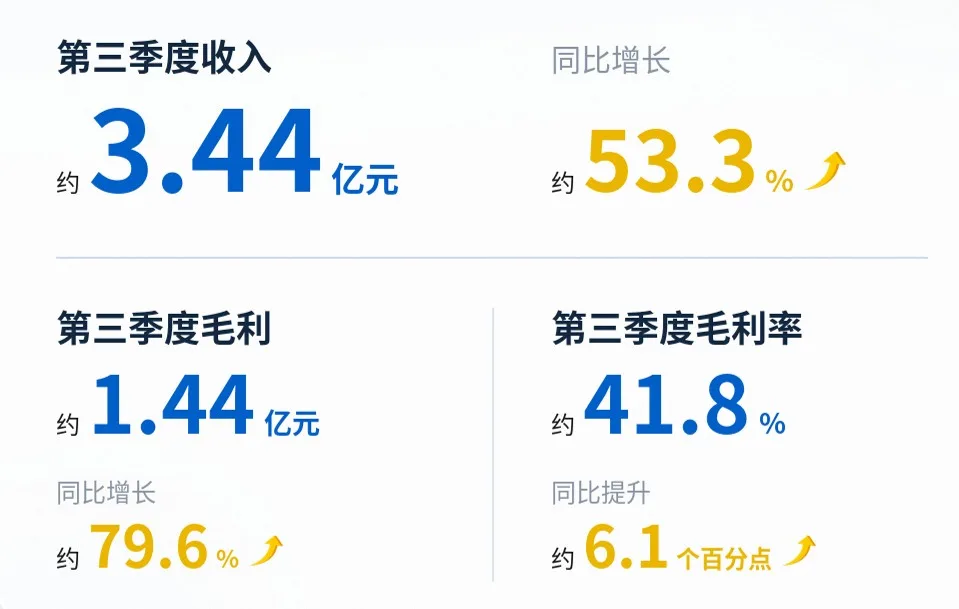
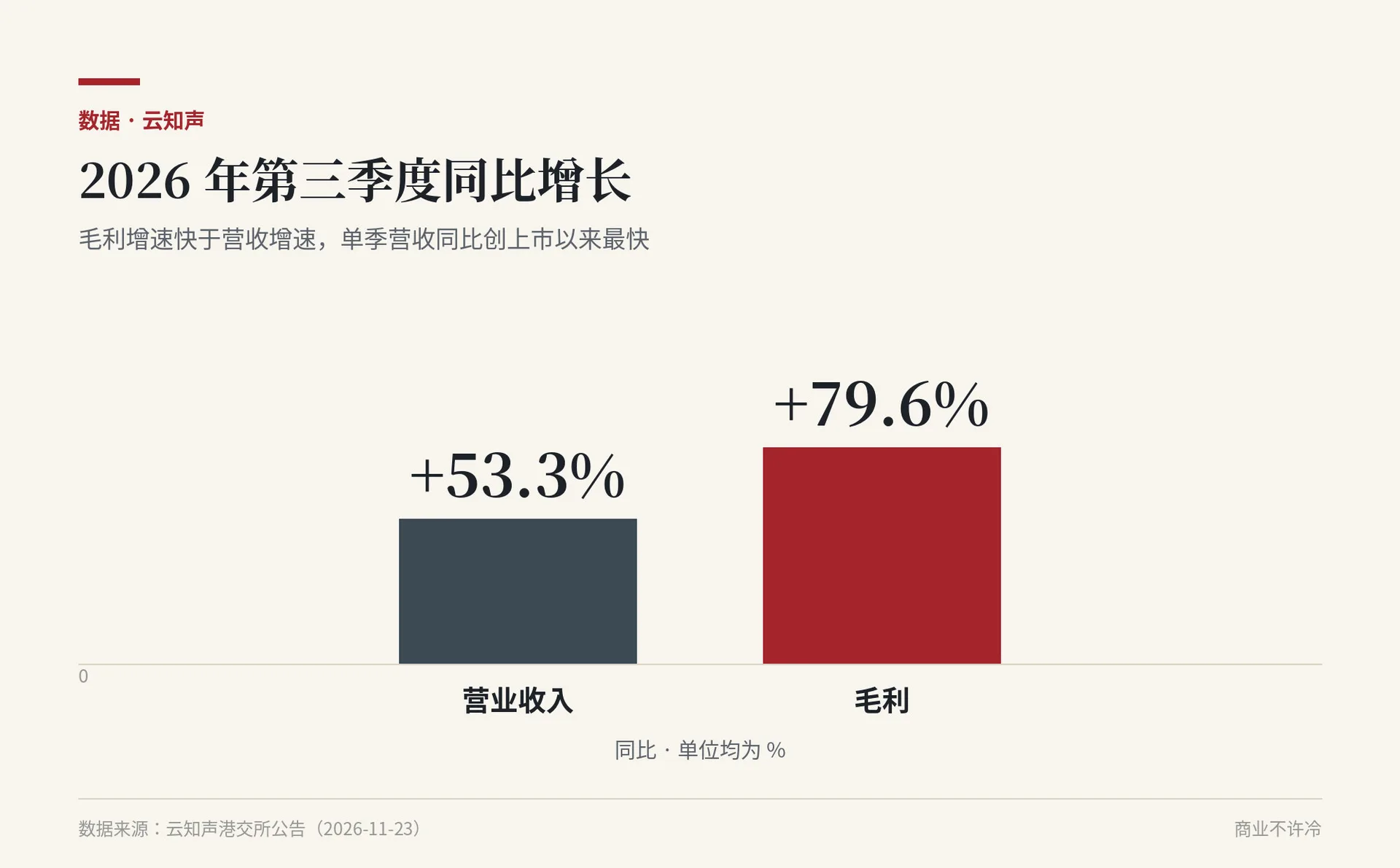
Unisound booked 344 million yuan (about $48 million) in third-quarter revenue, up 53.3% year on year — its fastest quarterly growth since the AI model developer listed in Hong Kong in June 2025.
Gross profit rose 79.6% to 144 million yuan (about $20 million), lifting the gross margin to 41.8%, up 6.1 percentage points. The gap between profit growth and revenue growth is the story: Unisound is arguing that China's large-model sector is being repriced on billable usage rather than on stage demos.
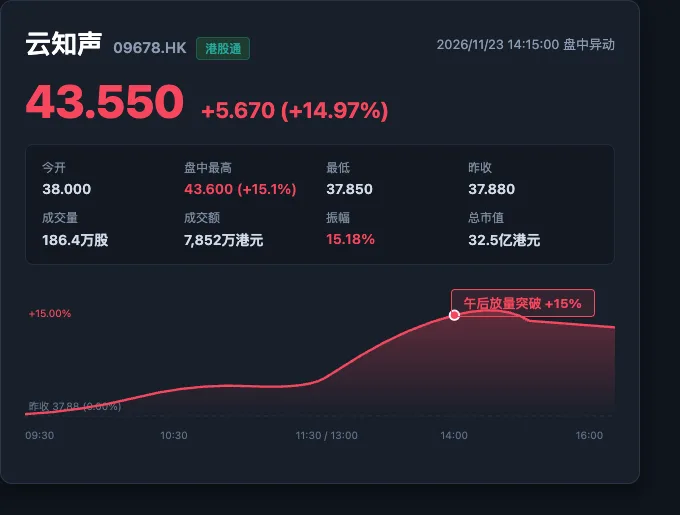
Its shares rose nearly 15% intraday in heavy volume after Hang Seng Indexes Company said it would add the company to the Hang Seng Tech Index.
Capital stops paying for storytelling
The global AI rally is cooling, and investors are judging model developers by harsher standards. Two years of demonstrations and benchmark scores produced lofty valuations that look fragile next to deteriorating cash flow.
Anthropic listed on Nasdaq and was briefly valued at $2 trillion before sliding to about $1.3 trillion, according to the Chinese source. What sustains that kind of pricing for a loss-making company is an unusual revenue mix.
Roughly 80% of Anthropic's revenue comes from enterprise usage-based billing, and more than 70% of that from large clients, based on overseas tech media reports and public disclosures. Actual consumption, paid for by customers, has become the measure of value.
A benchmark for China's model makers
The same logic is squeezing Chinese model developers. Hundreds of domestic models have largely fallen into price wars over similar capabilities, with little revenue to show for it. Teams without real deployment scenarios cannot fund long-term computing costs or win large enterprise orders.
The survivors, in this view, will not be asset-light players kept aloft by subsidies and demos. They will be companies that turned models into engines of production execution.
Deep water: no room for hallucination
That means going where error tolerance is low: industrial manufacturing, rail transit, insurance supervision and clinical medicine. Consumer chatbots can improvise; a scheduling system or a clinical pathway cannot.
The training data for those tasks is not on the public internet. Rail operating rules and dispatch logic, medical insurance fund supervision rules used by insurers, and the clinical pathways and quality-control guidelines of top-tier (Class 3A) hospitals are learned only through years of work inside real operations.
Unisound says its decade-plus of industry data has produced high-quality professional annotations and knowledge graphs covering entire vertical workflows — a time barrier that later entrants cannot easily cross.
The company has folded that data into its in-house U2 native agent model to push vertical deployments at scale. In healthcare, its most demanding market, it built the U2-Med system for serious clinical use and the U2-RadiMed multimodal medical imaging model.
In the latest OpenAI HealthBench medical dialogue results, published in October 2026, U2-Med ranked first among participating models with 73.67 on HealthBench Full and 61.07 on HealthBench Hard.
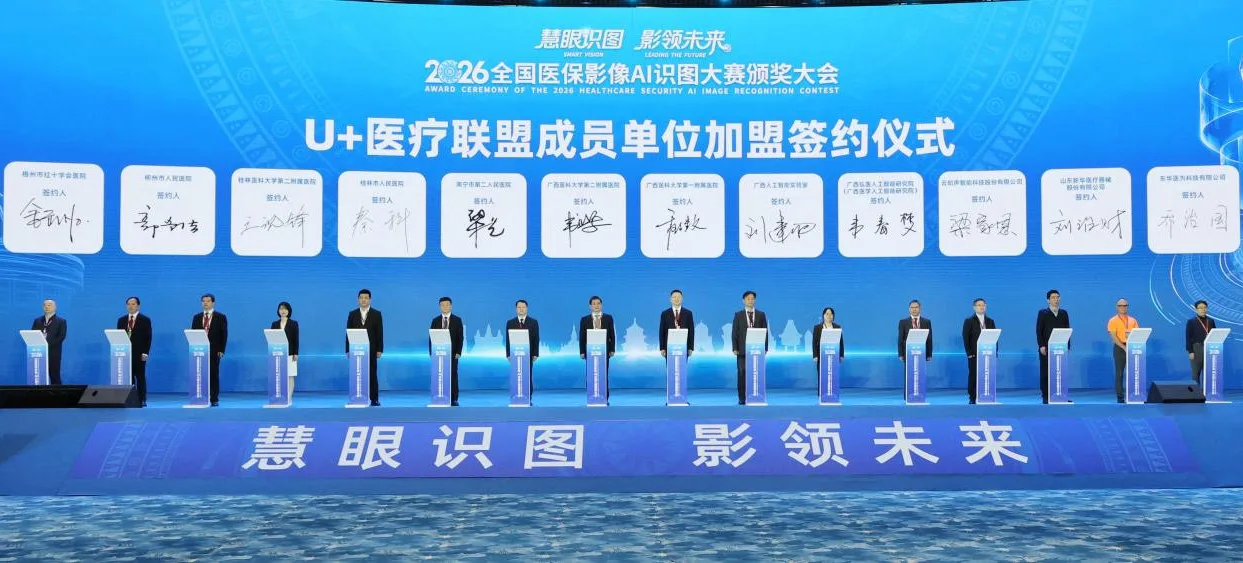
Unisound describes the system not as a chatbot but as a tool that pulls key information from patient records, checks drug contraindications and drafts compliance documents for doctors. It says the system has served more than 470 medical institutions, over 80% of them top-tier (Class 3A) hospitals.
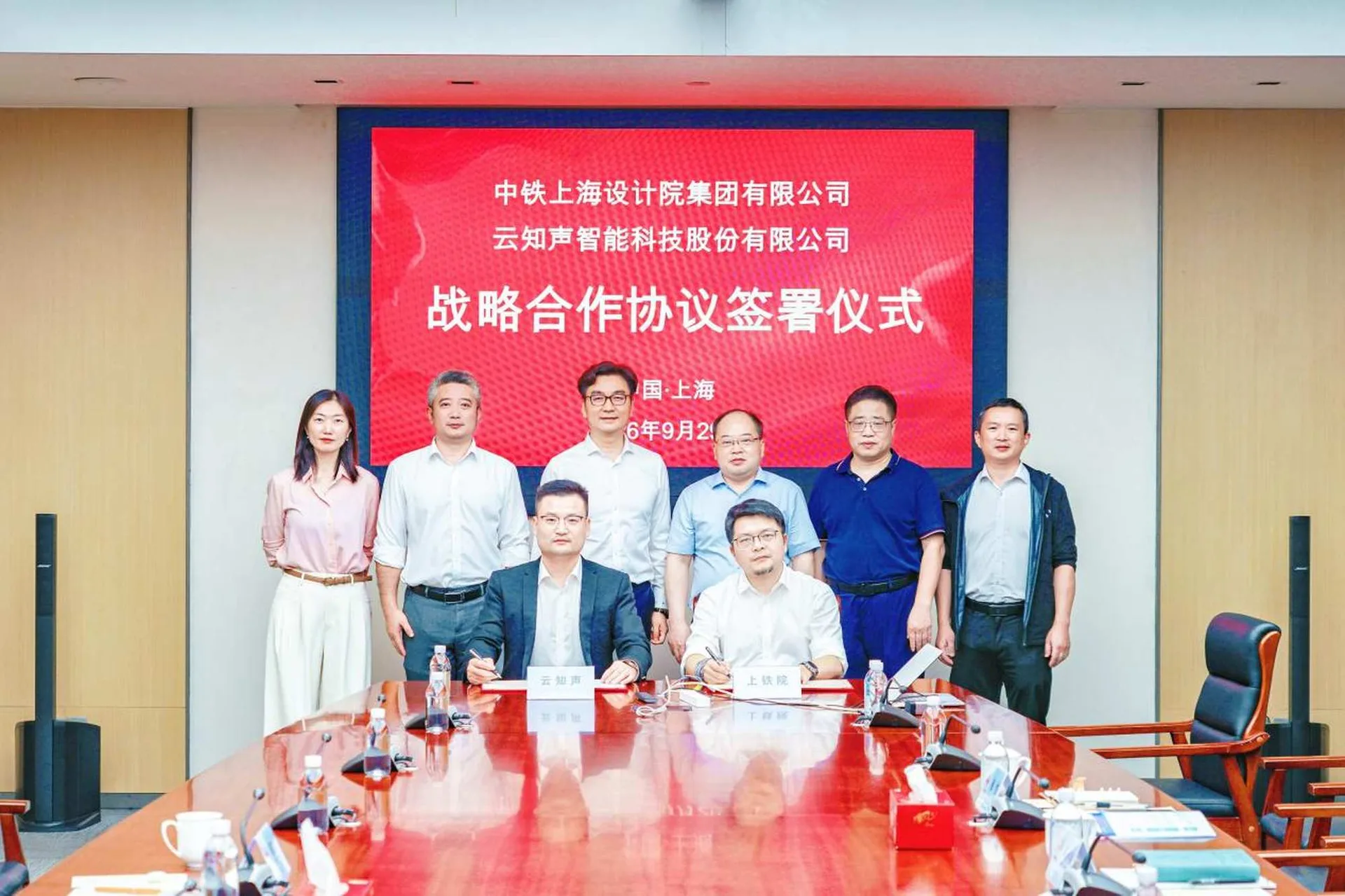
Elsewhere, Unisound built a MaaS intelligent computing platform and agent development tools for Shanghai Shentong Metro, and co-developed a dedicated model with China Railway Shanghai Design Institute. In insurance, it works with a leading property and casualty group on intelligent supervision of medical insurance funds.
Record growth, and margins that outrun revenue
The third-quarter numbers show gross profit growing more than 26 percentage points faster than revenue. For a long time, enterprise AI has fallen into a trap: the bigger the deal, the heavier the delivery and the thinner the profit, as engineers are dispatched for custom development and private deployment.
Unisound's margin expansion suggests the mix is shifting away from labour-intensive delivery toward standardized, high-reuse products. Revenue for the first nine months of 2026 topped 900 million yuan (about $127 million), with gross profit above 330 million yuan.
Volume is driving the change. The company launched U2-Flash in the quarter as its new mainstream general model, balancing capability, response speed and cost for real tasks.
U2-Flash placed seventh among Chinese model vendors on the Code Arena WebDev ranking and took first place in four industrial code tracks: chip RTL, code compilation migration, vector rendering and long-horizon agent decision-making.
Weekly token calls on U2-Flash have passed 1 trillion, and daily calls are more than 30 times the level on its launch day, according to the company's latest disclosures.
Beyond general models, Unisound's multilingual speech models cover more than 100 dialects and over 15 international languages, all available on TokenHub. In the quarter it completed Fujian province's first compliant token-export deal with partners and plans a 100-billion-token resource pool overseas.
The company is still climbing, though. Weekly calls in the trillions show momentum, but converting that into durable gross profit depends on enterprise customers renewing in these hard verticals.
Into the Hang Seng Tech Index
Unisound qualified through the largest rule change since the Hang Seng Tech Index launched in 2020. Constituents expanded from 30 to 50, and the index created a revenue-growth category for the first time.
Only 10 seats were opened under that channel, with strict criteria: revenue growth among the fastest in tech, two consecutive fiscal years of revenue of at least HK$500 million, and average daily turnover of at least HK$100 million over the past three months.
Unisound entered with revenue growth of nearly 40%, alongside industrial heavyweights including CATL. Less than 18 months after its Hong Kong listing, and after joining the Hang Seng Composite Index and Stock Connect, it had moved up two tiers to the flagship tech benchmark.
Passive assets tracking the Hang Seng Tech Index totaled about $37.1 billion at the end of September. Analysts estimate the expansion will shift about HK$29 billion in passive money; one report projects Unisound could draw more than $100 million, or roughly HK$830 million, when the change takes effect on Dec 7.
Index buying improves short-term liquidity, but whether it becomes long-term active ownership depends on whether Unisound keeps delivering. The 53.3% quarterly growth and the 900 million yuan nine-month total are its evidence so far.
On the capital side, Hong Kong Stock Exchange filings show Unisound's buyback program, capped at HK$100 million, has repurchased more than 170,000 shares. Core management previously spent over HK$5.1 million buying shares on the secondary market.
The plain test
Any new technology eventually faces commercial scrutiny in the field. Hype can win attention early, but the companies that survive a downturn are those holding real industry data and solving customers' operational problems.
The questions that decide how far a technology company goes are simple: can projects be delivered and accepted at high quality, will customers pay and renew annually, and can each yuan of computing spending earn itself back through real business?