Nvidia CEO exit draws Bezos warning on outside hire
Jeff Bezos warned Nvidia not to hire an outside CEO after Jensen Huang resigned, arguing the founder's control of its technology and supply chain would be hard to replace.
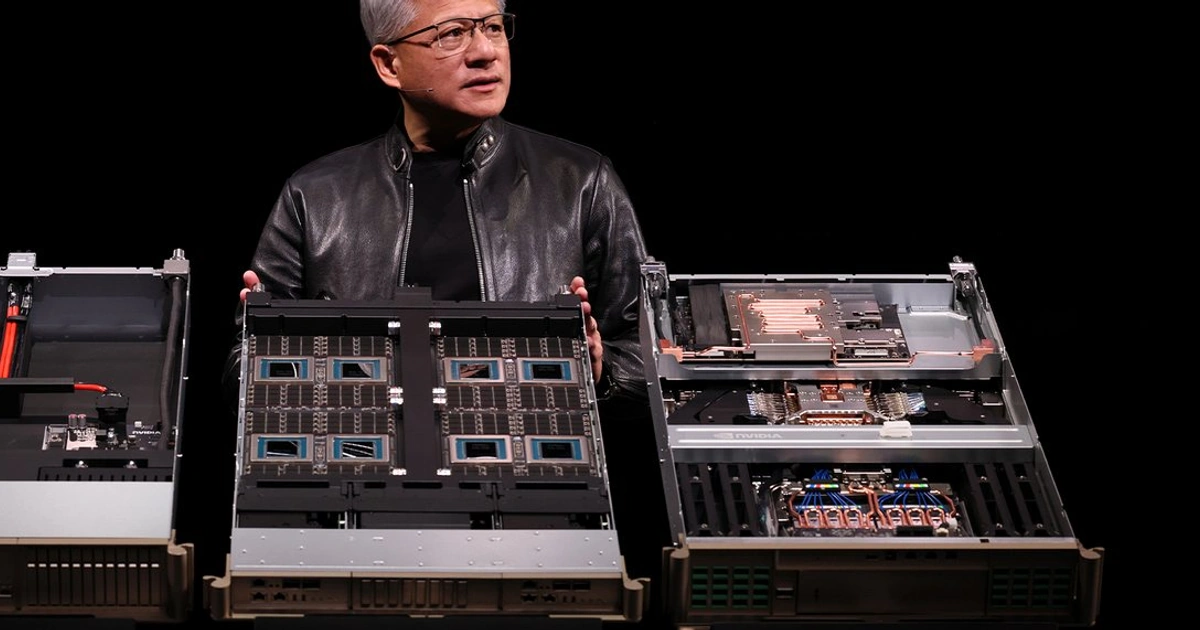
Jensen Huang said on Nov. 12 that he is stepping down, and Nvidia's board is already looking for a successor, with Arm CEO Rene Haas among the veterans under consideration. Jeff Bezos has a warning: do not hire from outside.
The Amazon founder said an external chief executive would almost certainly fail at Nvidia, putting the odds of success at minuscule. Several Wall Street funds with large Nvidia positions have written to the board asking it to keep a window open for Huang's return, and employees have circulated petitions on the company intranet backing the founder's reinstatement.
For a company worth trillions of dollars, founder departures usually follow a script. Apple, Microsoft and Amazon all handed power to professional managers without drama. Investors are treating Nvidia differently because the company is a super-machine bolted to one person: hardware architecture, network topology, software ecosystem and supply quotas all turn on the same gear.
Sixty bosses, one brain
A manager who is used to reading financial statements and listening to layered reports may not even find the ignition key.
Nvidia has kept an unusually flat, wheel-shaped structure. About 60 senior executives report directly to Huang, according to disclosures by the Financial Times and other media.
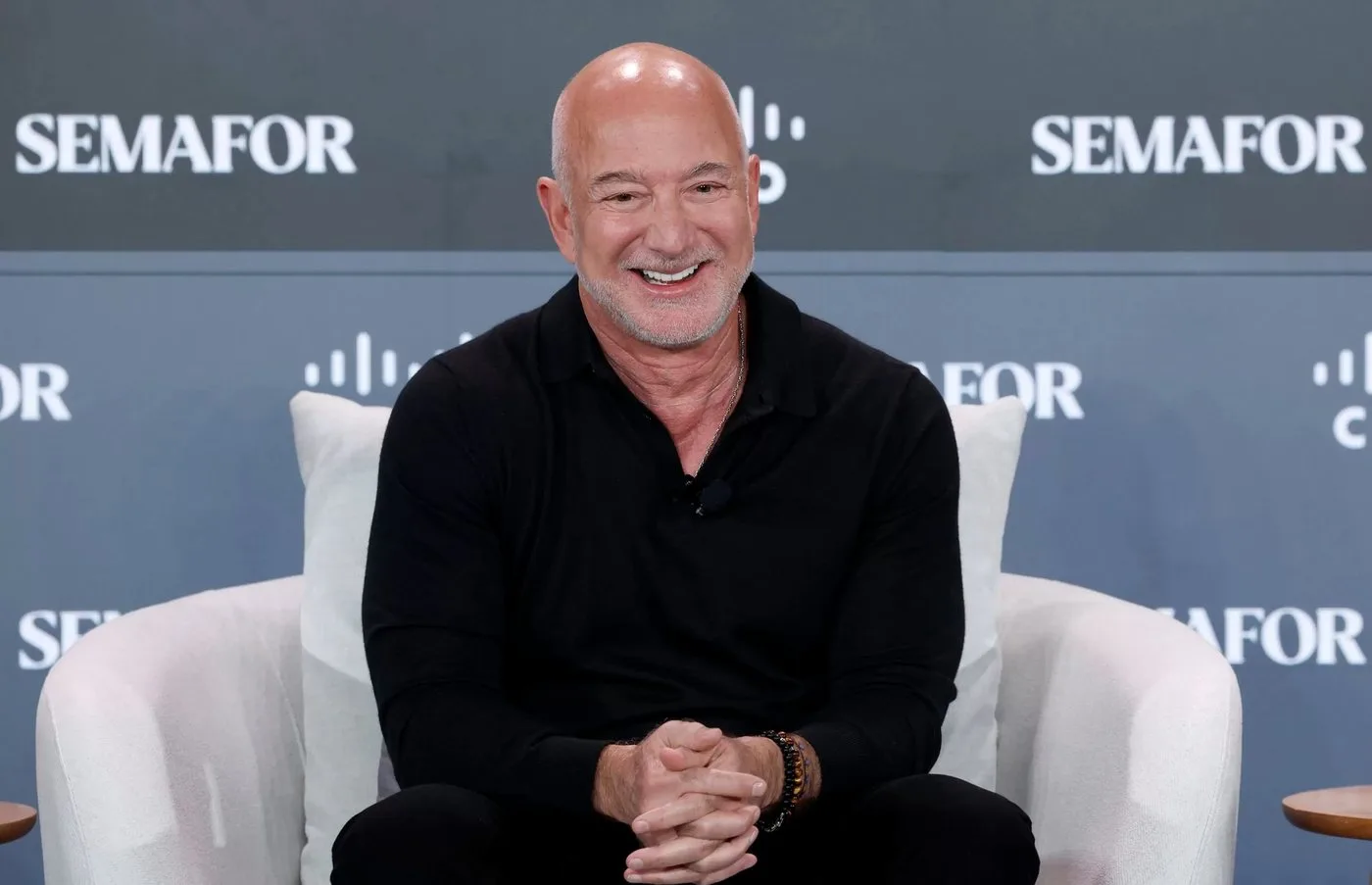
In more than 30 years the company has never had a chief operating officer or co-presidents. Huang gathers core lieutenants on Mondays and rarely holds one-on-one meetings. The heads of chip design, system architecture, networking, software compilation and sales sit in the same room and settle technical disputes face to face. Huang personally spot-checks the five most important items employees report each week, and skips levels to question frontline engineers.
Business schools call this high-risk. At Nvidia it works as a high-throughput technical router. A single GPU change, from wafer tape-out down to compiler matching, ripples through everything. In a pyramid, cross-department compromises drag on for months in middle management. At Nvidia, Huang is the full-bandwidth system bus, with 60 technical ports plugged straight into his head. He can redirect resources toward liquid-cooled racks in a corridor, or settle a next-generation internal bus standard in a day.
Centralization removed the friction and sustains a one-generation-a-year cadence. But it left no power-sharing mechanism behind. Pull out the router and the 60 spokes lose their reference point. An outside manager facing a wall of low-level engineering decisions may not even know who should sign off.
Selling racks, not chips
Many people still see Nvidia as a seller of graphics cards and accelerator chips. That misreads the business model. Qualcomm, Broadcom and even AMD design chips, hand them to TSMC for manufacturing and sell them by the unit to server makers. Nvidia now delivers something else.
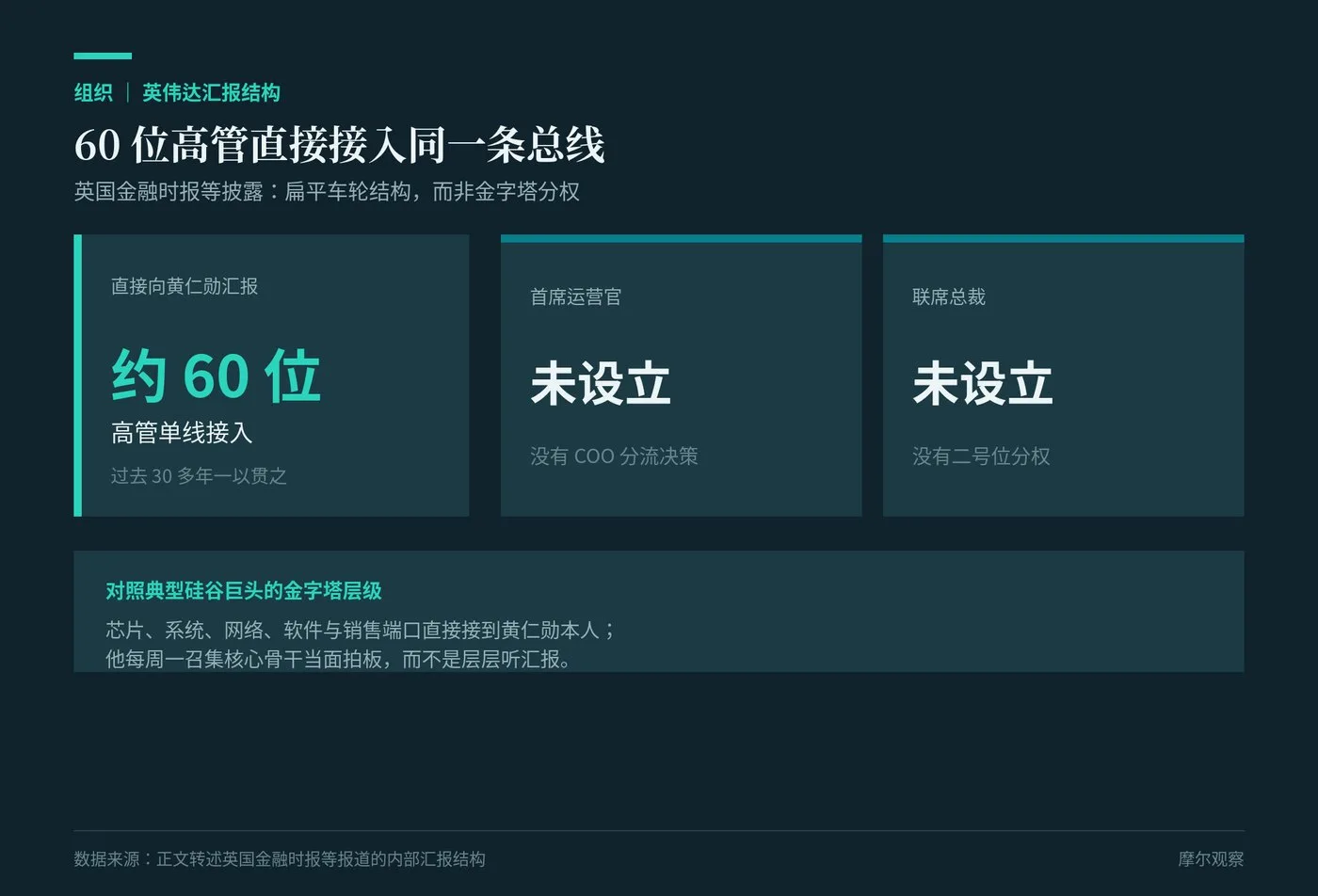
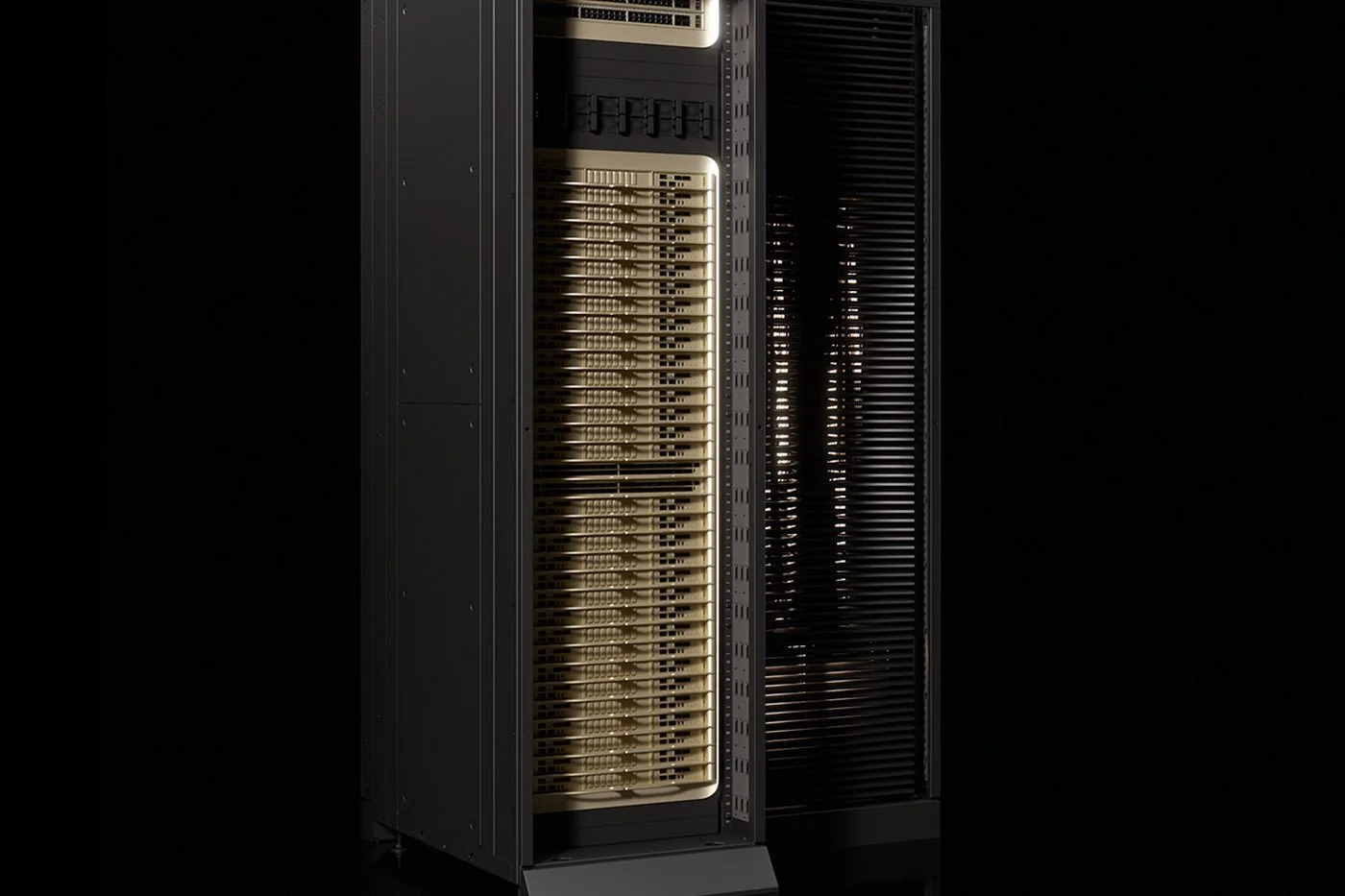
At the GTC conference in Berlin, Huang showed the NVLink 72 system. What Nvidia sells to Microsoft, Meta and Amazon is not loose chips but a fully integrated, high-density rack: 72 GPUs, 36 CPUs, high-speed copper cabling, power units and liquid-cooling pipes.
A single rack weighs more than a ton, draws more than 100 kilowatts and typically costs millions of dollars. That pushes the competitive barrier into systems engineering.
Inside the rack, 72 chips form one large compute domain over the proprietary NVLink fabric. A small impedance shift or a ripple in the coolant can halt a large-model training run. Stability requires microsecond-level tuning across chip microarchitecture, switch design, board wiring and the CUDA communication library. A software engineer writing CUDA operators can go straight to a networking executive to change switch register logic; the network team can call on the chip division to adjust the next mask.
An outside manager's instinct is to draw boundaries and run separate profit centers. Split chips, networking and systems integration into separately accounted units and the interlocking flywheel comes apart. Nvidia can ship supercomputers in volume because it tolerates local losses for system-level coordination.
The bet with no second place
Nvidia survived repeated near-death moments by taking on problems that might not pay off for a decade. SemiAnalysis has reported that many of Huang's strategic research bets were known internally as zero-return wagers. For the first five or even 10 years they produced no profit and consumed tens of billions of dollars of R&D budget.
CUDA is the clearest case. In 2006 Huang decided to put expensive computing logic into every graphics card. Manufacturing costs rose, gross margins took a hit, and Wall Street analysts publicly called it a self-destructive waste of resources. Huang kept spending for seven or eight years through a share-price slump. When deep learning took off, it became the software moat every AI developer has to cross.
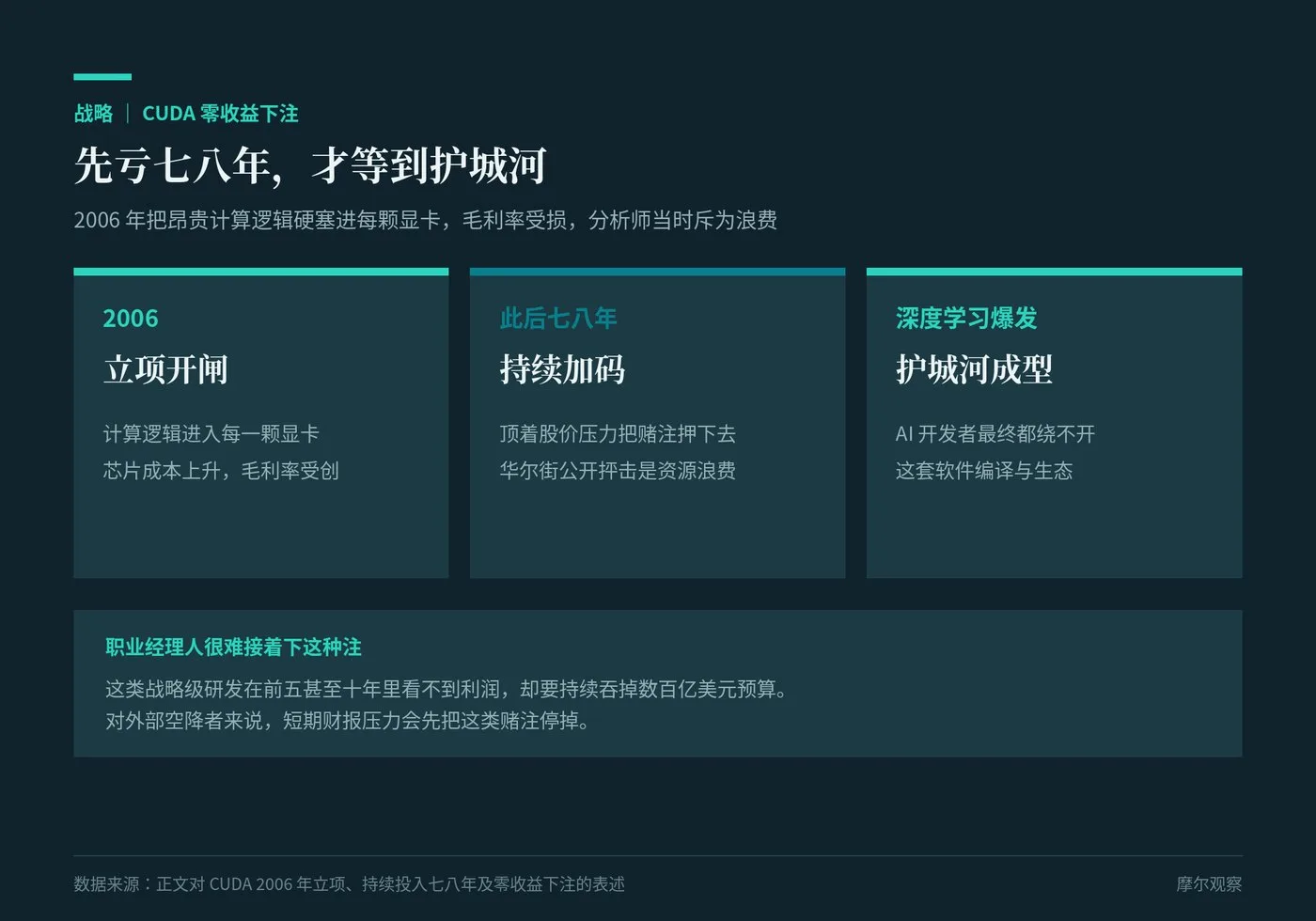
Only a co-founder with absolute standing could make that call, and could tell the board no while staking the company on his own technical judgment.
A professional manager lives by board terms and quarterly results. An outside hire's first job would be to steady the stock, control capital spending and lift near-term margins. Few would keep funding frontier work that burns billions of dollars a year with no certain payoff in three to five years.
As training shifts toward inference-time compute, chip architecture choices are wide open: keep the expensive large-chip interconnect path, or compromise toward cheaper specialized designs? That call needs an architect's stubbornness, not a consultant's balanced option. Managers avoid risk by picking the safest middle. In semiconductors, the middle is where you fall behind.
TSMC and Taiwan's assemblers
Nvidia's physical weak point is that it is fabless: it makes no silicon itself. Its compute advantage ends up in TSMC's advanced packaging lines and in Taiwan's dense server factories.
Huang's ties to TSMC date back to the 1990s. When Nvidia was nearly out of R&D money, TSMC founder Morris Chang took his call for help and found room in the foundry schedule. Over three decades Huang has treated Chang as a mentor and bound Nvidia tightly to advanced nodes and, later, advanced packaging. When TSMC faced pressure from Western customers over the cost of expansion, Huang publicly said its technology was badly undervalued and backed higher prices.
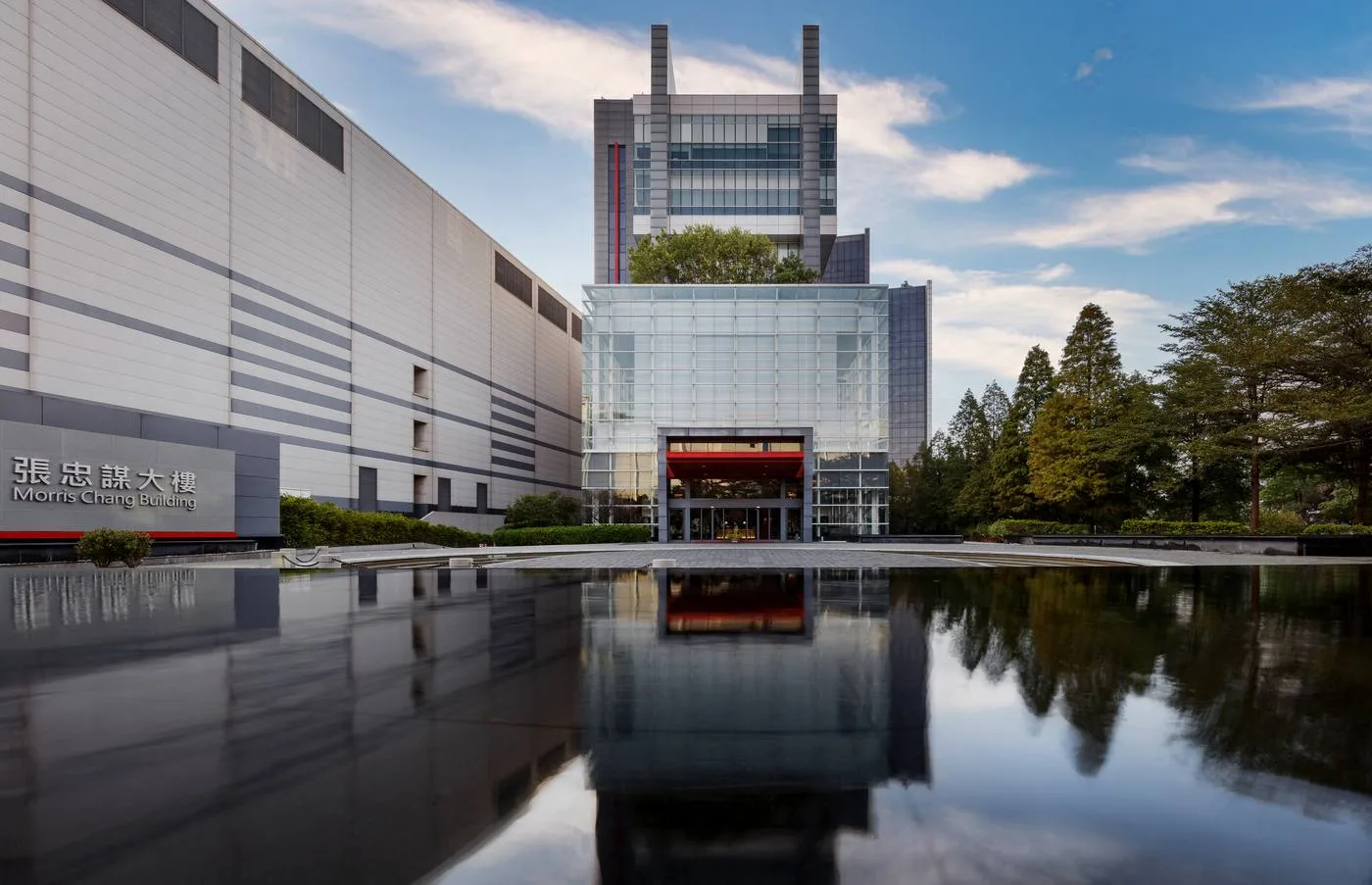
That relationship was built with money and personal credibility, not procurement contracts. In leading-edge manufacturing, capacity is not something money can buy on the spot. With advanced packaging sold out worldwide for two years, TSMC kept its first batches for Nvidia on the strength of decades of mutual backing.
Downstream, rack assembly depends on Huang's personal network too. Foxconn, Quanta Computer and Wistron have been his allies since the graphics-card era.
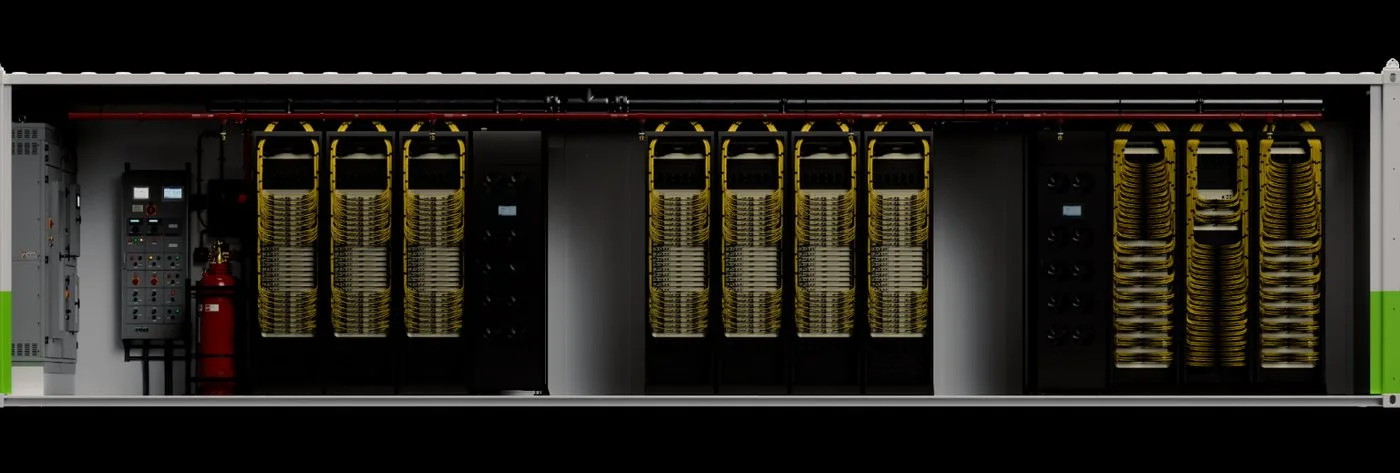
Liquid-cooled racks are complex, and to keep a yearly cadence the assemblers must spend hundreds of millions of dollars on trial production. Their bosses accept the risk of scrapping production lines because they are betting on Huang's reputation. An outside manager arriving with cold audits would dissolve that understanding within weeks. In a capacity crunch, a few weeks of wobbling quotas can mean delivery losses counted in the tens of billions of dollars.
Why the warning matters
Bezos's warning is not a courtesy. He has lived through several technology transitions and read Nvidia's unusual anatomy at a glance. Nvidia was never a multinational that runs on institutional gears. Every bus, compiler, frontier bet and trans-Pacific manufacturing alliance is customized to Huang's instruction set.
The sudden succession has pushed Nvidia to a fork it cannot avoid. If the board yields to compliance pressure and outside norms, installs a manager without full-stack hardware understanding and turns the flat wheel into a layered pyramid, Nvidia may produce a few steady, compliant quarters. It would also sand down the agility and wildness that won the AI era. There is no halftime in the compute race. When a giant becomes steady, the in-house chip programs chasing it finally get their overtaking lane.