JD.com profit jumps 43.7% as marketing spend drops 26%
JD.com's non-GAAP net profit rose 43.7% to 8.3 billion yuan in the third quarter as marketing spending fell 26.2%, with services revenue and logistics efficiency lifting margins.
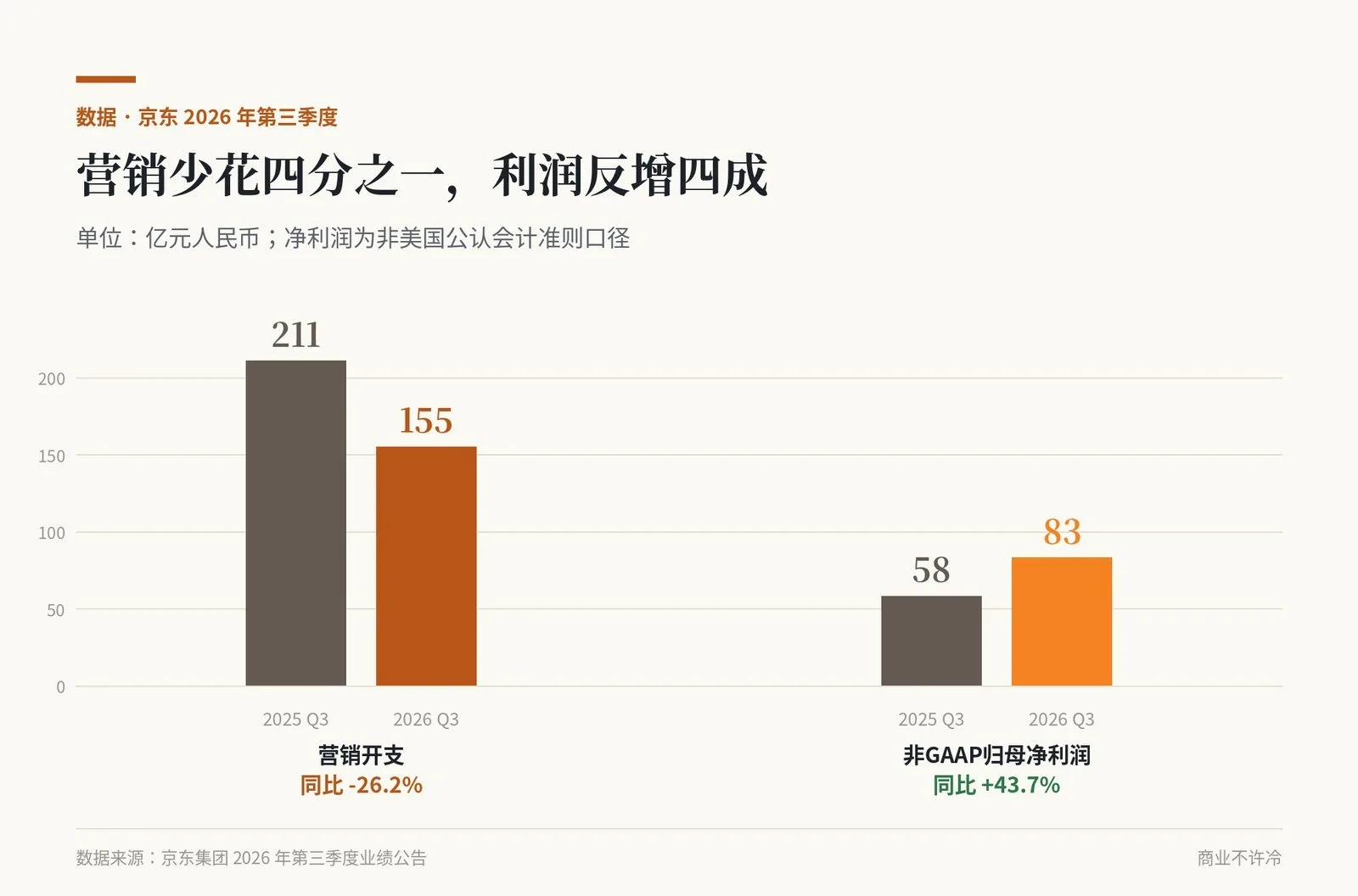
JD.com's third-quarter net profit rose 43.7% to 8.3 billion yuan (about $1.2 billion) after the Chinese e-commerce group cut marketing spending by more than a quarter, showing cost discipline can offset slowing growth.
The result challenges an assumption that has hardened across Chinese e-commerce: that scale has to be bought with paid traffic and subsidies. Revenue grew 3.5% to 309.6 billion yuan (about $43.6 billion), while the non-GAAP operating margin recovered to 2.4% from 0.1% a year earlier.
Non-GAAP net profit attributable to ordinary shareholders rose from 5.8 billion yuan a year earlier. Marketing expenses fell 26.2% to 15.5 billion yuan (about $2.2 billion), or 5.0% of revenue, from 7.0%. That is nearly 5.5 billion yuan (about $775 million) less than in the same quarter last year.
A quarter less spent on buying traffic
For years, Chinese platforms chased growth by paying for clicks, influencer commissions, search rankings and opening-screen ads. That model has run into a ceiling. Shoppers have tired of complicated discount rules, return rates are climbing, and brands and platforms alike are absorbing higher reverse-logistics costs.
JD.com cut spending on low-conversion orders and on inefficient promotion of new businesses. It redirected resources to core customers with a record of repeat purchases. JD Retail, the group's main division, posted operating profit of 15.1 billion yuan (about $2.1 billion) at a 5.8% margin.
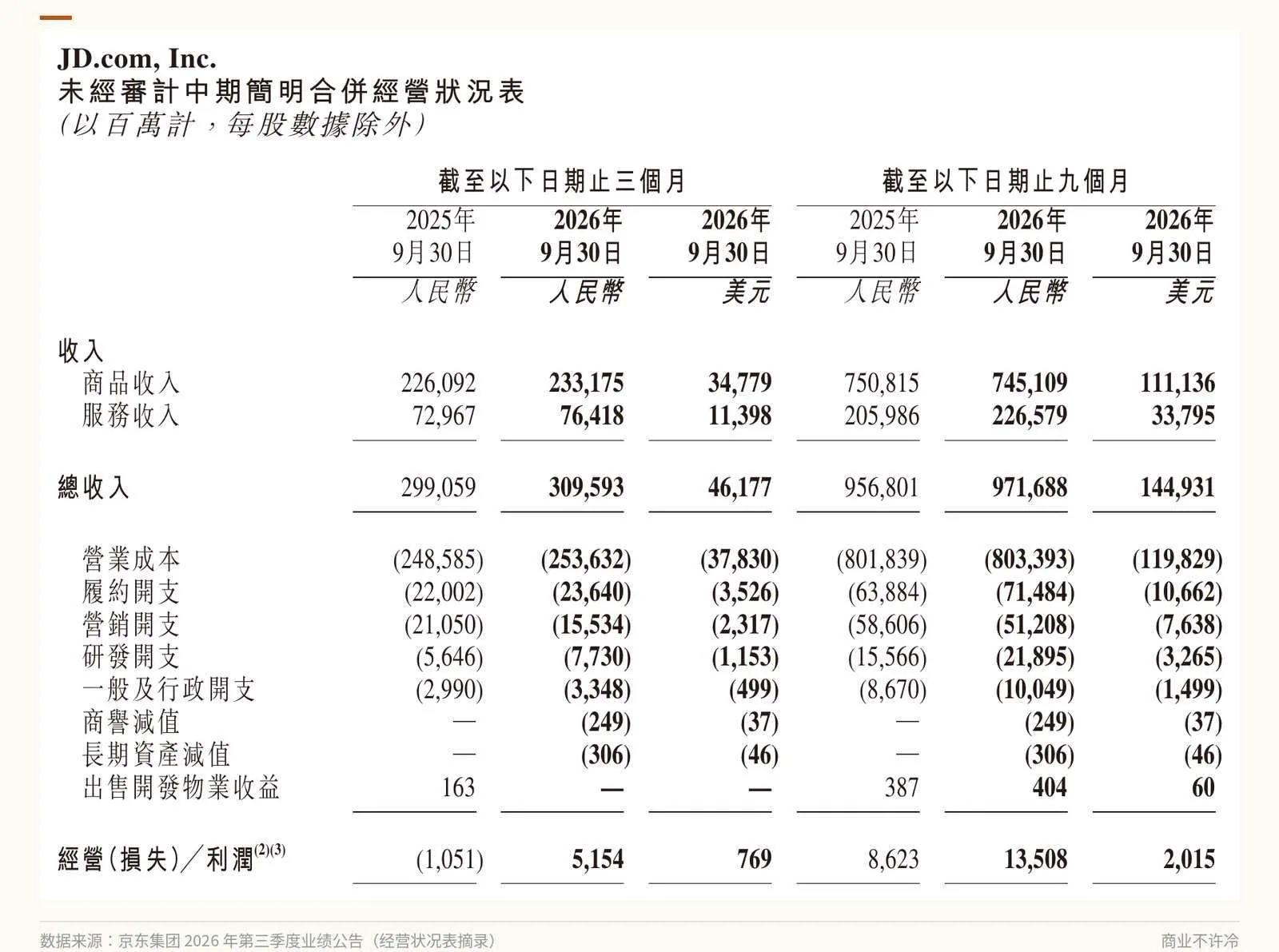
At group level, operating profit swung to 5.2 billion yuan (about $730 million) from a 1.1 billion yuan loss, lifting the margin to 1.7% from negative 0.4%.
The trade-off is visible. Revenue growth of 3.5% shows JD.com losing ground in electronics and fast-moving consumer goods as Pinduoduo and Douyin e-commerce compete on price, with the business nearing the limits of a mature market.
Services approach a quarter of revenue
Cost cuts alone rarely sustain profit growth. The second support is the rising share of service revenue, as JD.com moves beyond its image as a self-operated seller of computers, phones and refrigerators.
Service revenue reached 76.4 billion yuan (about $10.8 billion), up 4.7% and equal to 24.7% of group revenue.
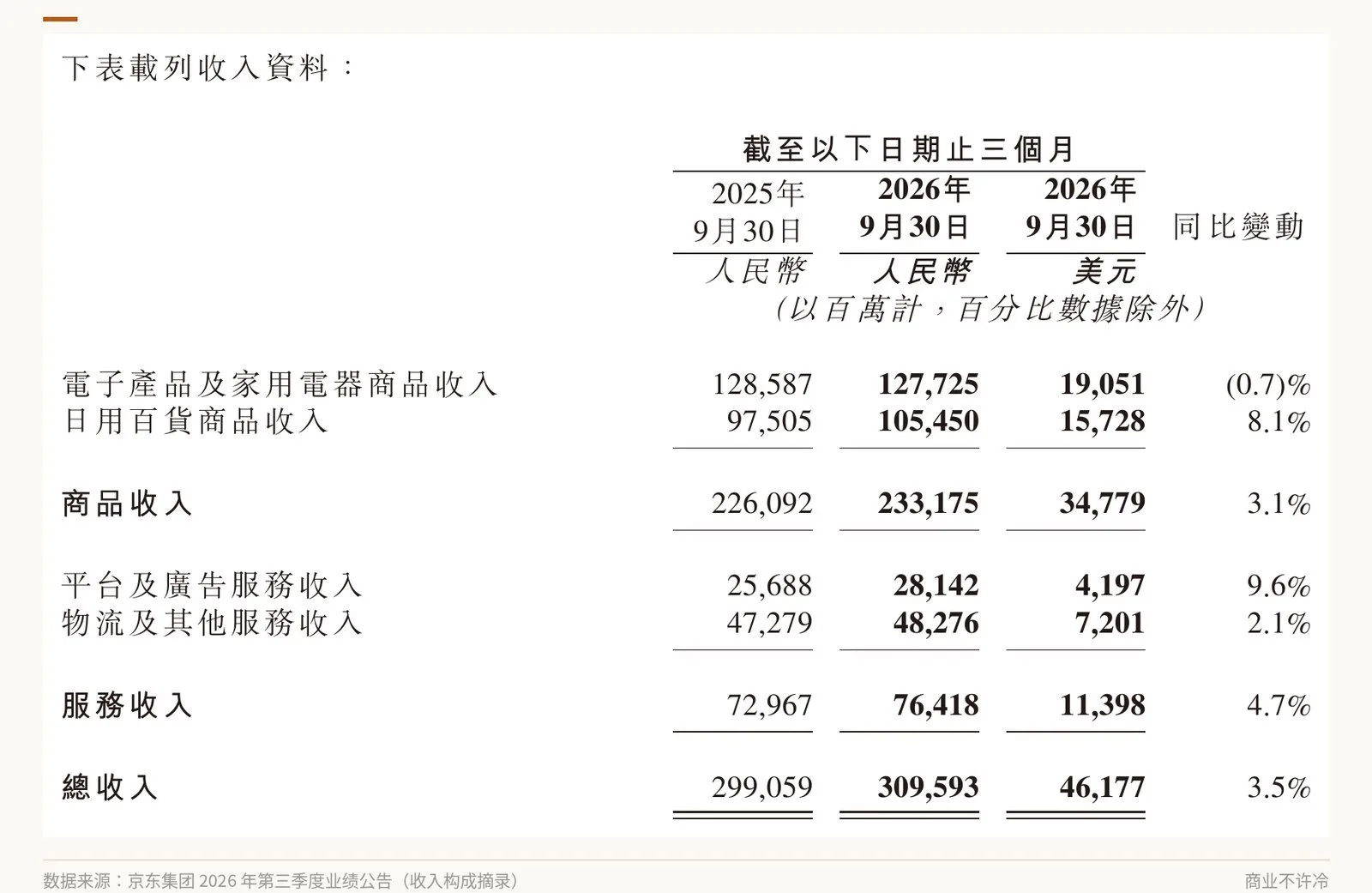
Growth came mainly from labour-intensive, physically demanding categories. Revenue from home renovation, housekeeping and offline medical services delivered to the home all grew at triple-digit rates year on year.
The shift reflects changing demand in durable goods. With appliance ownership near saturation, buyers of a large television or central air conditioner care less about a few dozen yuan in price. They ask who will remove the old unit, when the new one will be installed, and whether drilling will cost extra on site.
JD.com spent years building for exactly that. Trade-in collection and installation in one visit, delivery of large appliances upstairs and next-day service in major cities were once treated as unrewarding heavy work. In a replacement-driven market, they now lock in higher-spending users. Active customers and PLUS membership both grew at double-digit rates in the quarter.

Service margins are naturally higher than those on reselling goods, so the mix shift has lifted group profitability.
Warehouses enter payback phase as R&D jumps
R&D spending moved the other way. It rose 36.9% to 7.7 billion yuan (about $1.1 billion), taking its share of revenue to 2.5% from 1.9%.
Asset-light rivals outsource delivery to couriers. JD.com spent two decades sinking capital into logistics parks, automated warehouses and its own delivery stations. Depreciation weighed on results during the build-out. Past a certain scale in warehouse space and product range, the marginal cost of moving a single item starts to fall.
The company is connecting its algorithms to more than a thousand warehouses nationwide. Systems use regional purchase history to place bulky goods in hubs tens of kilometres from provincial capitals and county towns. That reduces long-haul handling, cutting transport and packaging damage.
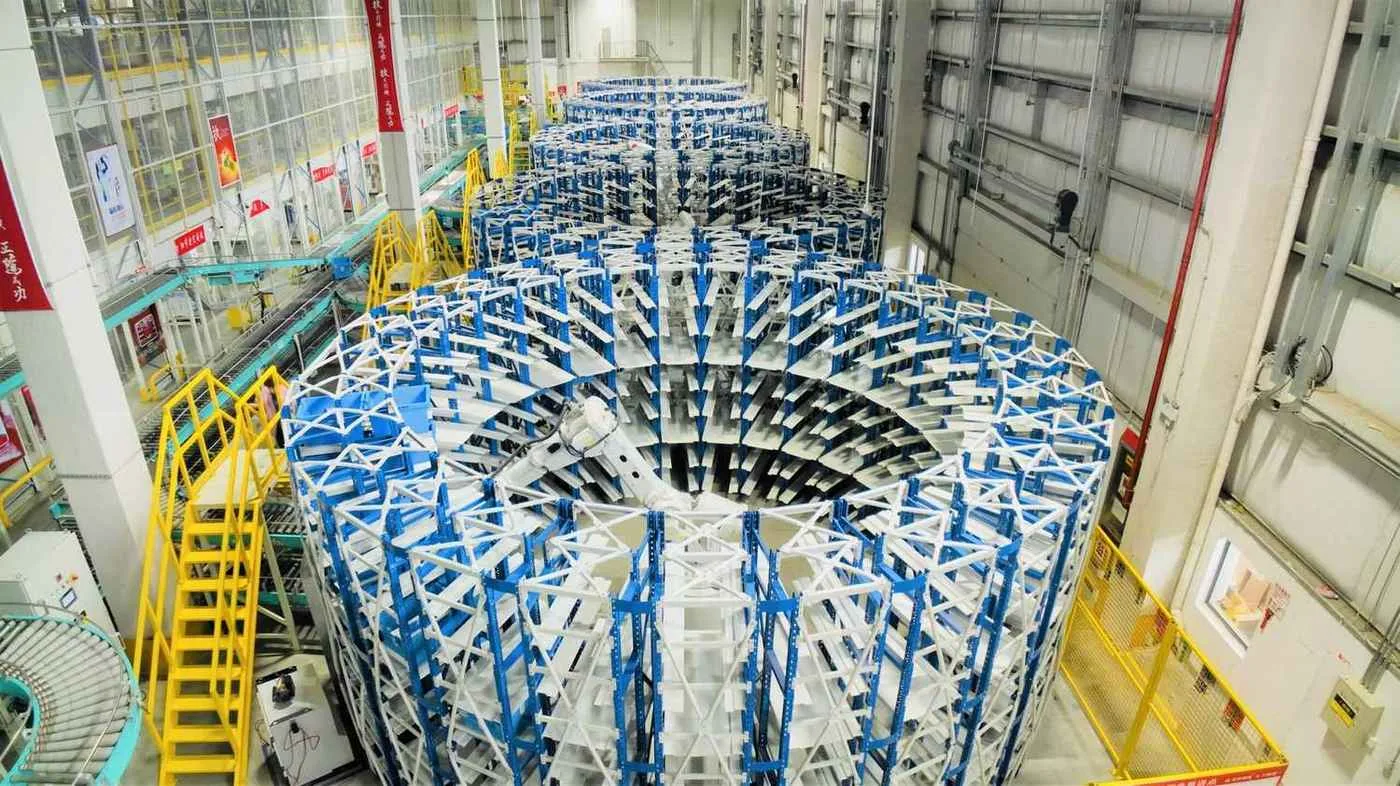
Narrower losses at new businesses also helped. Operating losses at JD food delivery and Jingxi shrank by nearly 40% year on year, easing the drag on group results.
Heavy assets cut both ways. To prepare for Double 11 and year-end promotions, JD.com held 116.1 billion yuan (about $16.4 billion) of inventory at the end of September, up 22% from the end of last year. That stock keeps pressure on shelf turnover and supply-chain liquidity.
A European retail takeover
Overseas, JD.com completed its largest deal. On Nov. 12, 2026, it said it had taken control of CECONOMY, a European consumer electronics retailer, buying 59.8% of shares and voting rights for 1.335 billion euros in total, or more than 10 billion yuan.
CECONOMY operates the MediaMarkt and Saturn chains, with more than 1,000 large stores across Germany, Austria and more than 10 other European countries, and leads the region's consumer electronics retail market.
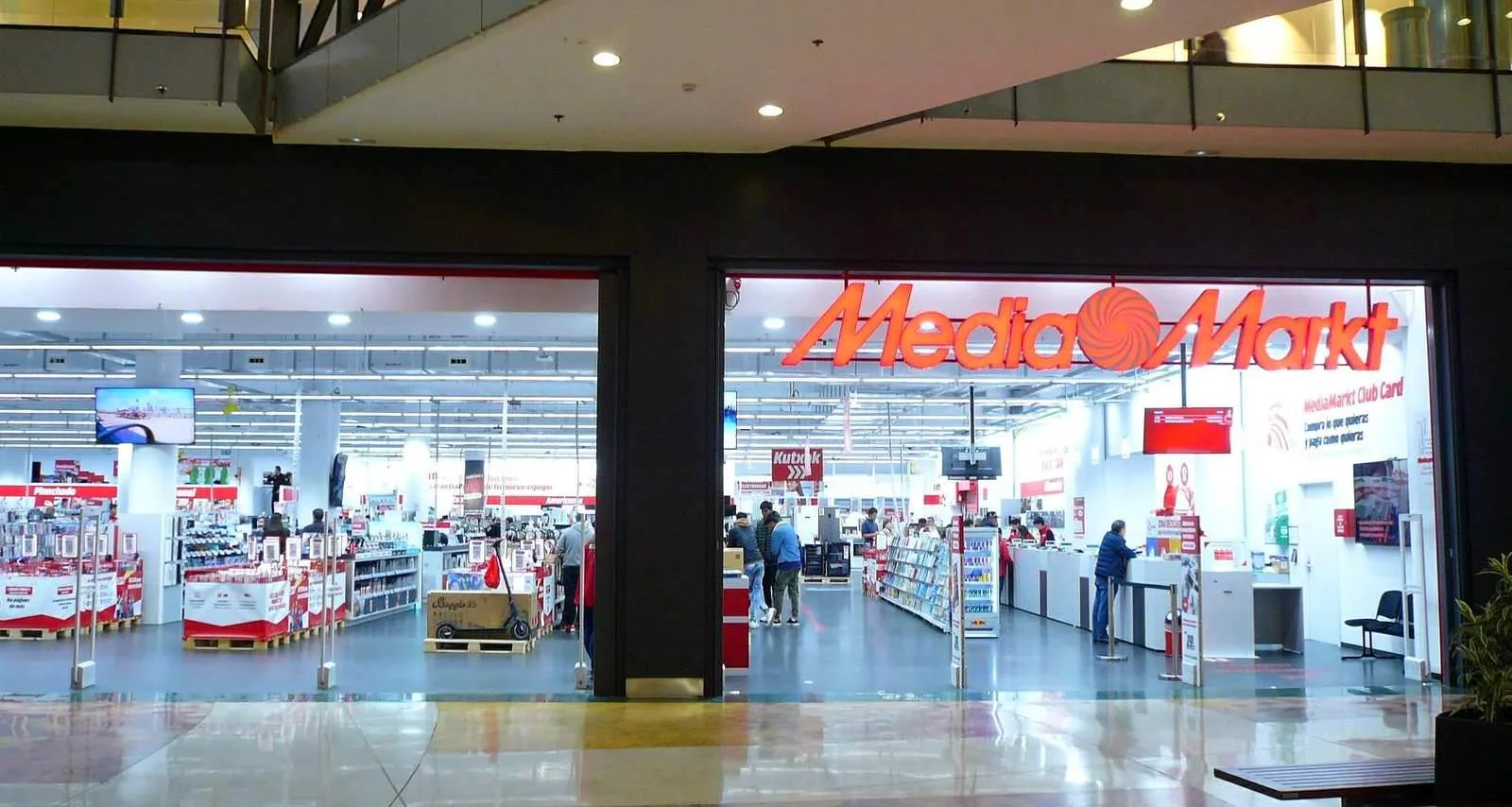
The approach differs from the small-parcel model Chinese platforms have used to expand abroad. That route faces tariff changes, the removal of duty exemptions for low-value packages and carbon-emissions scrutiny in the US and Europe. Buying an established local network gives JD.com store space, warehouses and commercial supply chains on the ground.
JD.com aims to plug its warehousing, sorting and algorithm tools into European logistics, testing whether it can shorten delivery times for appliances that currently take days.
The challenges are sharp. European labour protection rules, union negotiations and high local warehousing wages sit uneasily with the flexible, fast-turnaround model JD.com runs at home. Cross-border retail deals have often ended in writedowns after culture clashes and systems that could not be integrated.
The bottom line
In an era of abundant capital, Chinese e-commerce used heavy spending on traffic to paper over inefficiencies in fulfilment. With the traffic dividend gone and shoppers no longer paying for packaging alone, that model is flagging.
JD.com traded a quarter of its marketing budget for a profit rebound. That suggests earlier investment in own logistics, delivery-and-installation and after-sales service has defended its base in a mature market.
It is not a guarantee. Revenue growth of 3.5% shows how hard new customers are to find at home, and the multi-billion-yuan European deal still has to prove itself in local operation. The contest is no longer over online transaction value, but over whether a large base of physical assets can run efficiently at global cost levels.