China Merchants Shekou sets up 1 billion yuan Shenyang unit
China Merchants Shekou has registered a wholly owned Shenyang subsidiary with 1 billion yuan (about $141 million) in capital, betting on core-district redevelopment as private developers retreat.
China Merchants Shekou has registered a wholly owned unit in Shenyang with 1 billion yuan (about $140 million) in registered capital, betting on redevelopment in the northeastern city's core districts while most private developers pull back.
The move is a counter-cyclical position by a state-owned developer. Land auctions in second-tier cities have thinned out, and prime plots are increasingly sold at reserve prices. A well-capitalised subsidiary gives China Merchants Shekou a low-cost entry into urban renewal and upgrade demand in Shenyang's central districts.
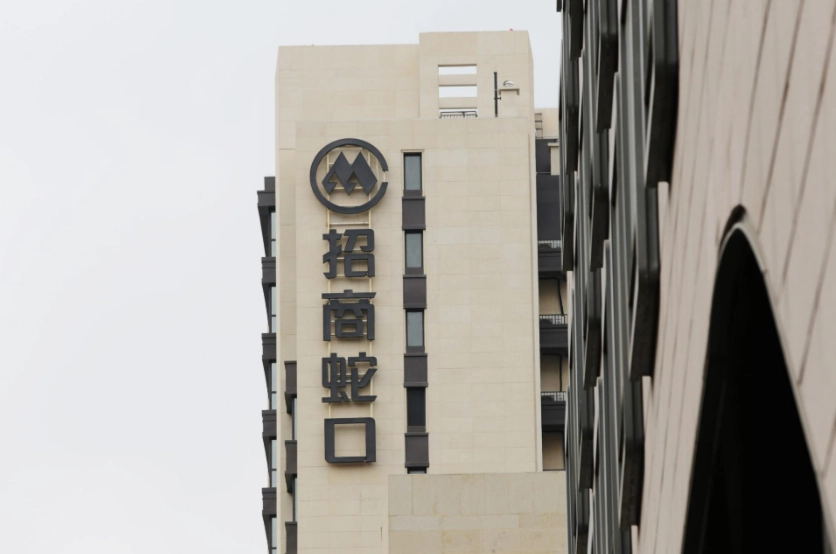
A 1 billion yuan subsidiary on the corporate register
Shenyang Zhaoying Real Estate Development Co Ltd has completed business registration, according to the corporate records database Tianyancha. Its legal representative is Zhao Mingzhu and its registered address is in Dadong district, Shenyang.
The approved business scope covers real estate development and operation, housing leasing and parking services. Ownership records show the company is 100% held by China Merchants Property (Beijing) Co Ltd, with the capital contribution date set for December 31, 2026.
Setting up a vehicle of this size in a second-tier provincial capital in the northeast is not a routine filing, the company's actions suggest. It positions the developer to bid for land and lead district-level projects when competition for plots is weak.
Zhao Mingzhu takes the helm
Zhao's appointment as legal representative signals the unit is built to operate, not to sit idle. She is one of China Merchants Shekou's senior executives overseeing investment and project development in northern China and the northeast.
Her name on the registration points to a regional command centre with authority over large funding allocations, bidding for core plots and coordinated development across a district, rather than a shell entity.
Three forces behind the Shenyang bet
A supply-demand window in core districts
Shenyang's property market has been through several rounds of destocking and price adjustment. Many local and outside developers with weak balance sheets have exited, leaving gaps in new supply in some central areas.
Dadong district, a main urban area with a deep industrial base, has a dense population of established workers and strong demand for urban renewal.
As Shenyang builds up carmaking and advanced equipment manufacturing, demand has revived for high-quality, low-density homes and modern long-term rental apartments in the central city.
By setting up in Dadong, China Merchants Shekou can enter contiguous redevelopment of old factory sites or urban villages at lower land cost, aligning cheap land acquisition with future sales at higher prices.
Counter-cyclical bargains and cheap funding
The deeper motive is the advantage state-owned developers hold through solid credit ratings and low-cost bond issuance, which lets them pick up assets cheaply in core second-tier cities.
Competition among developers has shifted from scale to survival. Private firms have largely withdrawn from public land auctions, pushing premiums to very low levels, with many plots selling at the reserve price.
China Merchants Shekou's backing by China Merchants Group, a state conglomerate with a century of history, keeps its funding costs near the bottom of the industry. It has large bank credit lines and access to low-interest corporate bonds.
A subsidiary with 1 billion yuan in registered capital shows local government a serious commitment, which can help in land auctions, planning approvals and supporting infrastructure. It also creates a well-capitalised project base for applying for large, low-cost development loans.
From selling homes to operating assets
The inclusion of housing leasing and parking services in the business scope fits China Merchants Shekou's shift from a build-and-sell model to a mix of heavy-asset development and light-asset operations.
As the boom in mass development fades, reviving existing assets and earning long-term rent have become core sources of stable cash flow in major cities. In Dadong, that could mean affordable rental housing for young technicians in advanced manufacturing, alongside digitally managed district parking.
Such businesses offer thin but steady returns over long periods, in line with the role of a state developer as a comprehensive city services provider.
The tests ahead
A long resale overhang
Shenyang still faces a long destocking cycle in second-hand homes. Upgraded projects in core areas have held their value, but the broader new-home market has traded price for volume over the past two years.
Buyers in Dadong, including long-time residents and industrial workers, have a lower ceiling on what they can pay for mid-to-high-end upgrade housing than buyers in the Yangtze River Delta or Pearl River Delta.
If product positioning misses the market and sales fall short of expectations, the large upfront capital and interest costs would weigh on the regional arm's margins.
The 2026 capital deadline
The contribution date at the end of 2026 also constrains the development timetable. The capital is fully subscribed, but under the new Company Law, paid-in capital must be delivered within five years.
The company must convert registered capital into land purchases, construction starts and tax payments within that countdown. If land supply slows, or clearing title and demolition on target plots drags on, the large registered capital could create friction between paid-in funds and actual investment.
Conclusion
The 1 billion yuan of registered capital, the wholly owned chain and Zhao's role, all visible in Tianyancha records, show a major Chinese state developer moving against the tide during a deep property downturn. China Merchants Property has used real money to defy expectations of retrenchment and pushed competition for core second-tier districts toward finer operational management.
Still, with the market turning rational and buyers counting every yuan, the question is whether this flagship project in Dadong can turn a counter-cyclical land cost advantage into solid cash flow and profit.