A kindergarten used a cooking wok to mop floors and concealed 50 children's vomiting, exposing cost-cutting for profit and regulatory blindness.
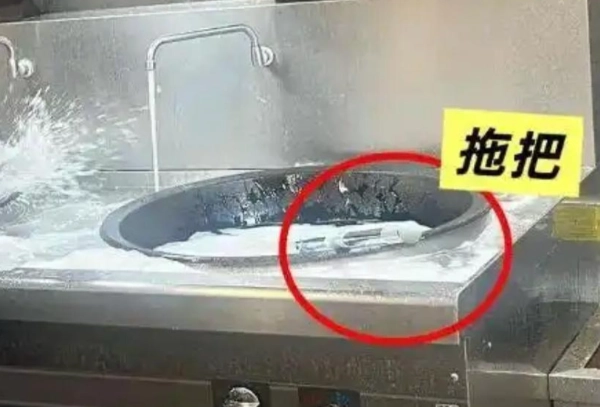
When the back-kitchen scandal at the kindergarten affiliated with Nanjing University of Information Science and Technology was torn open by an internal employee through a WeChat Moments post, what the public saw was not only nauseating sanitation chaos, but also a management collapse that breached the bottom line.Using a wok to wash mops, scrubbing shoes and soaking mosquito nets in the vegetable-washing sink, and suppressing for a full two and a half months a severe food safety incident in which fifty young children vomited en masse. This early childhood education institution, shielded by the halo of being affiliated with a university, used an extremely crude, makeshift operation to completely shatter middle-class families' safety filter regarding public or affiliated high-fee kindergartens.
An Absurd Reality Beneath a Cloak of Compliance
Examining this institution's cloak of compliance along its commercial foundations, the absurdity becomes even stronger. Through Tianyancha's business registration records, the kindergarten has registered capital of 1.3 million yuan, its legal representative is Zou Mou, and it clearly possesses the core qualifications for early childhood care and education services. Even more ironic is thatthe issuance date of its food business license is March 2024, and it remains absolutely valid at present.
A business license that appears flawless on paper, juxtaposed with the extreme breakdown of washing mops in a wok, precisely exposes the systemic blindness in back-kitchen supervision at current early childhood education institutions. Between static approval ledgers and dynamic day-to-day operations lies a bottomless chasm of opacity.
Extreme Cost Cutting: The Deep Driver Behind Back-Kitchen Chaos
The deep driver behind this collapse of the bottom line points directly to the kindergarten's extreme cost cutting in back-kitchen operations and the complete failure of its management mechanism. Back-kitchen cleaning and food processing should have extremely strict physical separation and workflow management. Sharing one pot for washing mops and cooking is by no means the laziness of a single temporary worker, but rather the long-term skimping by the entire campus management on investment in basic sanitation facilities. In order to compress labor and material expenses in the back kitchen, institutions often hire cheap labor lacking professional health training and do not equip enough dedicated cleaning sinks and washing and disinfection equipment.
When operators extend their calculations of pursuing profit and compressing costs to kitchen depreciation and basic sanitation tools, the stomachs of fifty young children become the most direct victims of this cost reduction and efficiency enhancement.
Two and a Half Months of Concealment: Commercial Interests Above Life and Health
Even more chilling than cross-contamination is the concealment mechanism that lasted two and a half months. Fifty young children vomiting after collective lunch should have been enough to trigger a red alert for a local public health incident, yet the kindergarten was able to dissolve it into nothing. This powerful ability to cover things up stems from the extremely asymmetric information monopoly within a closed campus.
Through internal pressure, unified talking points, and an isolation strategy of individually placating parents, the kindergarten tried to downgrade a mass food safety incident into occasional seasonal gastrointestinal discomfort. Because once reported, it would face suspension for rectification, astronomically high fines, and even revocation of its operating qualifications.Between preserving its enrollment招牌 and covering up evidence of guilt, management did not hesitate to choose the latter, placing commercial interests above life and health.
A Constant Warning: Breaking the Information Monopoly Is Key
This belated exposure sounds the heaviest alarm bell for the entire preschool education industry: hanging up a university-affiliated sign and obtaining compliant food approval documents does not mean one has stepped into a safe box for food safety.When the back kitchen of an educational institution becomes a hidden lawless zone for cost compression, routine spot checks and cursory inspections are clearly no longer able to penetrate the dark pursuit of profit in human nature. How to break the kindergarten's information monopoly and let external supervision probes truly pierce every drain in the back kitchen is the key to preventing the next wok from becoming a mopping tool.