Wahaha plant renamed Hongsheng as Zong Fuli consolidates assets
A 27-year-old Wahaha plant in Guangyuan has been renamed Guangyuan Hongsheng Beverage, with Zong Fuli's Hongsheng group taking full control as she restructures the family's drinks assets.
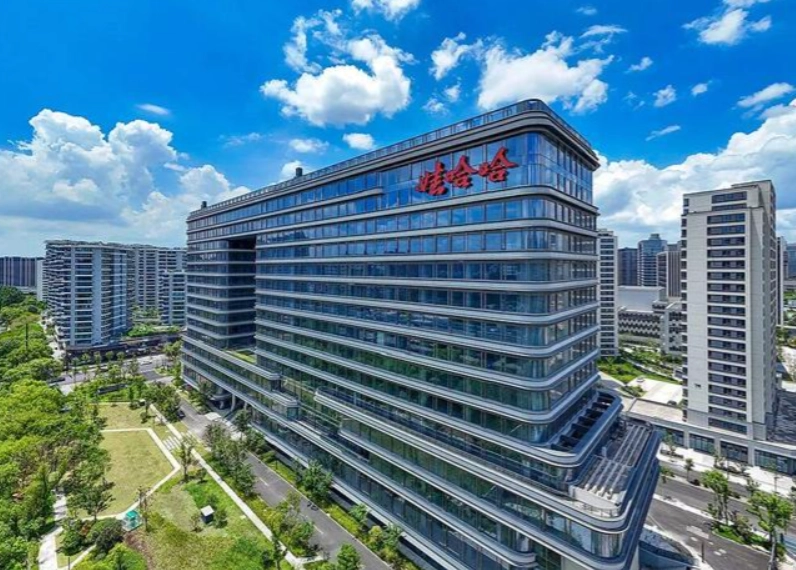
A 27-year-old Wahaha-branded plant in southwest China has been renamed Guangyuan Hongsheng Beverage Co Ltd and given a new legal representative, as Zong Fuli folds production assets into the family's Hongsheng group.
The change at the former Guangyuan Wahaha Guangfa Beverage Co Ltd removes the Wahaha name from a factory that has always been controlled by Zong family holding companies, not by the group's state shareholders or its employee shareholding union. It is the latest step in Zong Fuli's drive to clarify who owns what inside the drinks empire she inherited from her father, Zong Qinghou.
Ownership: offshore vehicles plus a family sole proprietorship
Tianyancha, a corporate records database, shows the entity was set up in April 1999 with registered capital of 5 million yuan (about $700,000). Its business scope covers food production and sales, plus the manufacture of plastic packaging containers and tools.
Junjie Investment Co Ltd holds 70% and Zhejiang Zhenzong Investment Co Ltd holds 30%. Zhenzong is wholly owned by Zong Fuli. Junjie is one of the offshore vehicles the Zong family set up early on to hold beverage supply-chain assets.
Neither Hangzhou's Shangcheng district state capital nor the Wahaha employee shareholding union appears directly in the shareholder register.
Dropping the old label
The Guangyuan site was built as a family-controlled contract manufacturing and heavy-asset production node. It carried the Wahaha name because, in Zong Qinghou's era, that kept brand output consistent and helped with local government relations.
Stripping Wahaha from the registered name and replacing it with Hongsheng is a legal restatement of who actually controls the plant.
Hongsheng moves from behind the scenes to the front
Hongsheng Beverage Group, which Zong Fuli built, is no longer an assembly shop living off Wahaha orders. It spans flavours and fragrances research, mould making, PET preform blowing, aseptic cold filling, printing and packaging, and logistics.
Since taking charge of Wahaha's management, Zong Fuli has made it a priority to end friction between overlapping teams and close the grey areas in procurement and tolling settlements between the state-invested Wahaha entity and the family-owned Hongsheng companies.
Renaming family-controlled plants nationwide that carry the Wahaha sign to the Hongsheng banner strengthens Hongsheng's value and brand assets as a standalone beverage manufacturer. It also tidies up the audit trail for related-party transactions between the parent and its contract manufacturers.
A legal firewall around names and trademarks
The deeper motive is to guard against disputes over name and trademark licensing. Questions about Wahaha's long-term trademark licensing and the authority of the employee shareholding union drew close market and media attention during the handover.
A factory that uses the Wahaha name at no cost or low cost while being owned by an outside investment company is exposed to legal challenges over the validity of that authorisation in governance or tax reviews.
By dropping the name, Hongsheng removes that compliance risk and can sign commercial contracts with the Wahaha brand owner as an independent third-party processor under market-rate OEM and ODM agreements. Putting Yan Xuefeng in place of Ke Mingjun also points to a preference for younger executives with more experience running modern production lines.
Two tests for the Hongsheng manufacturing empire
Consumer recognition and channel expectations
The first test is managing how the market and local distributors read the change. For distributors and shoppers in lower-tier cities and rural markets across the southwest, Wahaha is a brand built up over decades; Hongsheng is a little-known industrial name.
The plant still fills Wahaha purified water, Nutri-Express and other flagship products. But during a sensitive period of governance change at a long-established company, any move that removes the Wahaha name can trigger over-interpretation among channel partners about output being diverted, resources being shifted or the brand being moved.
Balancing contract work and in-house brands
The second is capacity balance between contract manufacturing and building Hongsheng's own brands. Despite top-tier aseptic cold-filling lines, KellyOne, the tea-drink brand Zong Fuli has pushed in recent years, has not matched the mass scale of AD Calcium Milk in a crowded consumer market.
The new team must keep large-scale contract output of established Wahaha products running at Guangyuan and other sites while absorbing higher commodity costs and swings in capacity utilisation, and while coordinating production with regional warehousing and logistics.
A clear property line, with results still to prove
The name change and handover recorded on Tianyancha are a snapshot of how a Chinese beverage giant is clarifying ownership and tightening its organisation after its founder's death. Zong Fuli has used a clean break on naming to defend Hongsheng's separate industrial footprint and to draw a clear property line for the wider Wahaha business.
Whether this supply chain, now pushed fully into the open, can keep driving both the main brand and new businesses is the question the market and the industry will now expect it to answer.