Tianyancha launches campaign to help jobseekers check employers
Tianyancha, a Chinese corporate records database, has launched a campaign to help jobseekers check who hires, contracts and pays them before accepting an offer.
Tianyancha, a Chinese corporate records platform, has launched a campaign to help jobseekers verify who is really hiring them, as recruitment increasingly runs through agencies, dispatch firms and brand owners.
A job offer is no longer the end of the search. Applicants still have to work out who made the offer, which company will sign the contract, who pays the wages, and whether the terms agreed at interview will ever appear in writing.
The market behind those questions keeps growing. By the end of 2025, China had 81,000 human resources service agencies employing 1.115 million people, with more than 60,000 offline recruitment venues and over 20,000 online platforms, according to China Employment Network. They serve more than 300 million worker visits a year.
Regulators tighten recruitment information
In September, human resources authorities in Jiangsu published a reference template for recruitment information, offering guidance to more than 7,700 HR service agencies and over 17,000 labor dispatch units in the province. The template sets out basic job details, identifies which party bears employment liability and lists prohibited practices. The aim is to curb fake postings, illegal fees and hiring discrimination at the source.
Who recruits, who signs, who pays
More choice has made the decision harder. One hiring process can involve a brand owner, a job platform, an HR contractor, a dispatch agency and the company that actually uses the labor. The name on the job page rarely shows who is responsible for what.
A mismatch between the recruiting, contracting and paying entities is a common risk for jobseekers. Tianyancha's campaign, billed as "use Tianyancha to avoid job-hunting pitfalls", includes a "check before you join" section. It groups the platform's lookups on company registration, equity ties and public records around job-hunting scenarios, with guidance on how to use them.
A 2025 labor dispute case published by the Supreme People's Court showed how multi-party hiring can go wrong. A technology company posted a vacancy; the worker then worked at the office of a separate digital company, using its logo. Neither company signed a labor contract or paid social insurance, and wages came through personal accounts. When the dispute arose, the worker had to spend considerable effort proving which company was the employer.
Courts weigh working hours, job content, wage payments and social insurance contributions when determining an employment relationship. Assembling that evidence after a dispute is costly, so checking the employer once an offer arrives can clarify the arrangement early.
Jobseekers should compare the full company name on the job page, the offer and the draft contract, and confirm the name of the wage payer. Tianyancha can be used to check registration status, the unified social credit code, founding date and equity links. If the recruiter says several companies belong to one group, applicants can verify branch, parent-subsidiary and investment relationships.
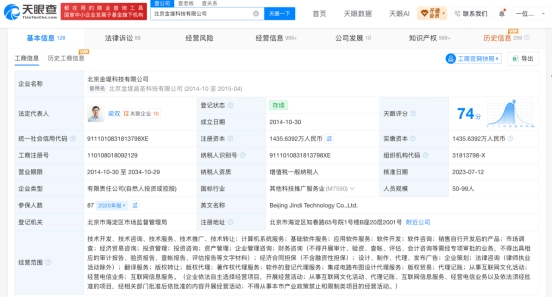
Different names do not by themselves mean risk. Applicants should ask the recruiter to explain the employment relationship and have the contracting, social insurance and payroll arrangements written into the contract.
Check the business: does the role match?
Vague job descriptions cause many disputes. A posting may advertise a technical, operations or management role that turns into training or sales after the interview, or even into an agency arrangement. Some ads highlight high pay but bury base salary, commission rules, probation terms and work location in the fine print.
In May, the Ministry of Human Resources and Social Security and four other departments issued a job-hunting risk alert focused on "recruit-then-train" and "training loan" traps. These use high-paying roles to attract applicants, then sell paid courses on the grounds that they lack skills or need a certificate, pushing them into training loans. The departments urged applicants to check an employer's qualifications, operating condition and credit record before applying.
To test a role, compare the company's registered business scope, website and public product information with the job description and what was said at interview. Tianyancha's company profiles, business scope, licences and product listings can serve as leads.
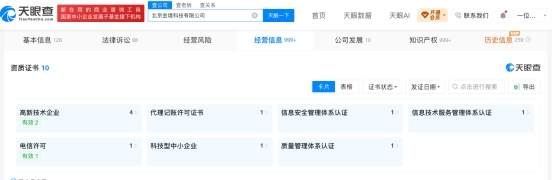
If the public business and the vacancy match, that adds context. If they clearly diverge, or if the interview suddenly turns to paid training, franchising, car purchase or loans, applicants should ask for details and pause any payment until the company's credentials are verified.
Look at recent history: read the record, and the date
A company's condition changes. An early founding date and large registered capital do not guarantee a stable job. Jobseekers should look at whether the company has frequently changed its name, legal representative, registered address or business scope; whether recruitment scale is consistent with its social insurance headcount; and whether its licences remain valid.
Judicial cases, enforcement records, business abnormality listings and administrative penalties are also useful, but the number of records alone does not show whether a company is good or bad. In labor disputes a company may appear in different roles, and records may reflect withdrawn suits, mediation or completed payment.
The key signal is a cluster of similar wage, social insurance or contract disputes in a short period. Applicants should ask the recruiter about the cause and how it was handled.
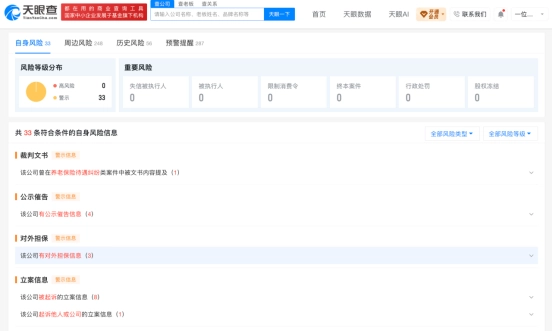
Tianyancha's company database covers judicial cases, enforcement information, business abnormalities and administrative penalties. Users should confirm the full company name, then check when a case occurred, the party's role and the outcome. No results from a public search do not prove a company is free of risk.
Confirm the terms: get key benefits in writing
Pay and arrangements agreed at interview should be written into the labor contract. China's Labor Contract Law requires the contract to state the employer's name, address and legal representative, along with job content, workplace, hours, pay and social insurance. Applicants should also confirm probation pay, bonus calculation, payday, overtime rules and the scope of any non-compete clause.
Charging fees before onboarding is a clear red line. The Ministry of Human Resources and Social Security, the Cyberspace Administration of China and the Ministry of Public Security have warned that deposits, security money, certificate fees, uniform fees, training fees and training loans are common illegal charges. Even when a well-known brand's name is used, any request for upfront payment should prompt a check of who is charging, on what legal basis, and whether the agency itself is licensed.
A "reverse background check" is meant to surface questions, not to deliver a verdict. Its value lies in putting company identity, equity links and public risk records in one place, so applicants do not decide on a job title and a salary figure alone.

Tianyancha's campaign, under the theme "next job: see the opportunity, see the company", targets that information gap. Users can look for opportunities by industry, funding, innovation and affiliated-company signals, or enter a full company name to see registration, operating updates and public risk records in one view. One more check before accepting an offer, the company says, supports a more careful career decision.