2026 Robot Conference Exhibition: Three Keys to Understanding Companion Robots Entering the Home
WRC 2026 focuses on companion robots, shifting from booth concepts to home scenarios, emphasizing deep experience and emotional connection, as the industry uses 'companionship' to convince consumers.
On August 19, WRC 2026 opened successfully at the Beijing Etrong International Exhibition & Convention Center. More than 300 companies and over 2,000 exhibits gathered at this event themed "Human-Machine Coexistence, Production-Demand Integration."
If you plan to visit, I suggest adjusting your exhibition-walking approach first—this year, the robotics zone is not for viewing; it's for "interacting."
Particularly worth mentioning is the companion robot zone. In previous years, the most common format at companion robot exhibitions was: fenced-off areas, robots on display, looping promotional videos, with visitors taking photos from behind the barriers and leaving. Ask "
Can I try it?" and the typical response was "Not right now."
This year is different. The booth map now features living rooms, bedrooms, and kids' rooms; lines have formed at booths for scheduled evaluation sessions;
at fixed times, dance performances draw seated crowds. Companion robots are moving from "booth concepts"
to "home-scenario deployment," and WRC 2026 is the most concentrated showcase at this watershed moment.

First, let's look at what you can see on site.
First, booths have become "homes."
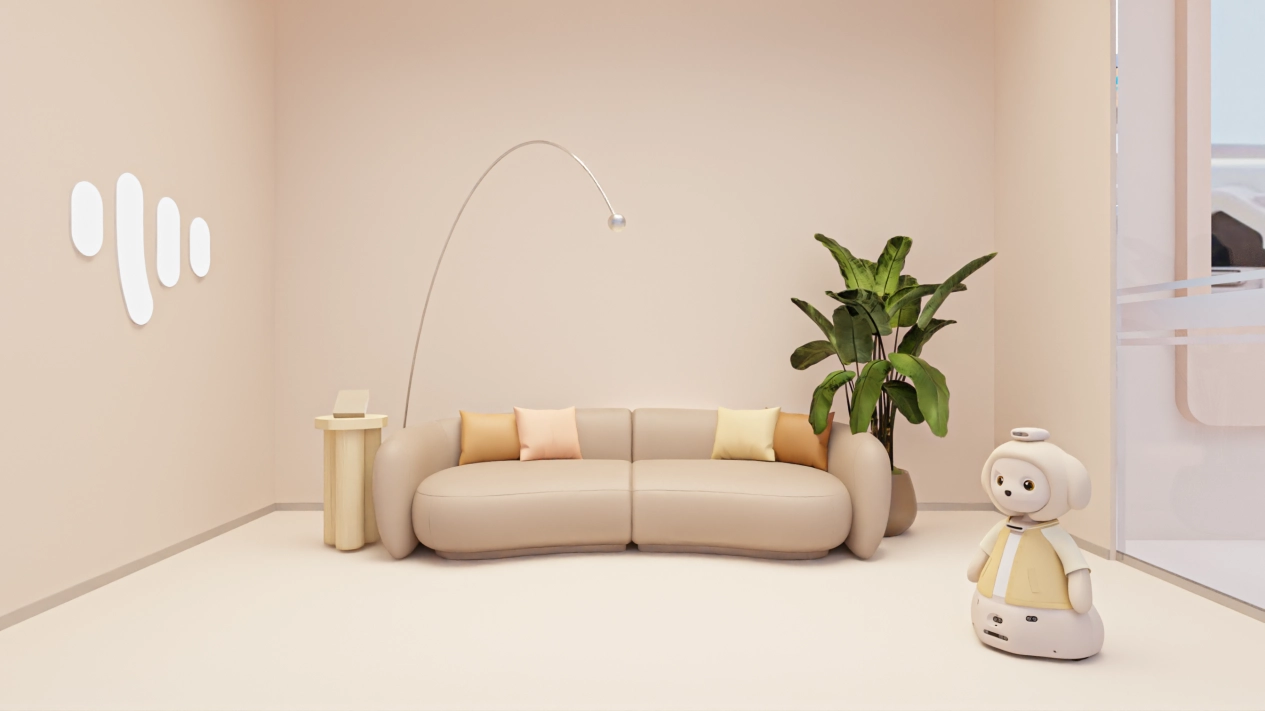
More and more manufacturers are no longer placing robots on display racks, but putting them where they belong—living rooms, kids' rooms, real home settings. Visitors can walk in, sit down, and stay. The core of the booth is no longer the "
product," but "the scenario of you and the product living together."
Second, visitors have become "slower."
In the past, visitors spent an average of two to three minutes at companion robot booths, filmed a video, and left; this year, visitors are sitting for ten minutes or more, some repeatedly entering and exiting the experience zone, with questions shifting from "What can it do?"
to "Will it fit in with my family?"
Third, interactions have become "deeper."
The exhibition is now featuring formats previously only seen in flagship stores: limited-capacity evaluations—one-on-one experiences in quiet spaces; performance-style content—robots take the stage at scheduled times, using a mini performance instead of spec presentations.
These three things point to the same signal: companion robots are not "seen" into being—they are "
experienced" into being. And for consumers to be willing to engage, three links—product, scenario, and experience journey—must all mature first.
Product maturity has reached the "ready for daily life" stage
The prerequisite for "deep experience" is that the product truly stands up to the experience.
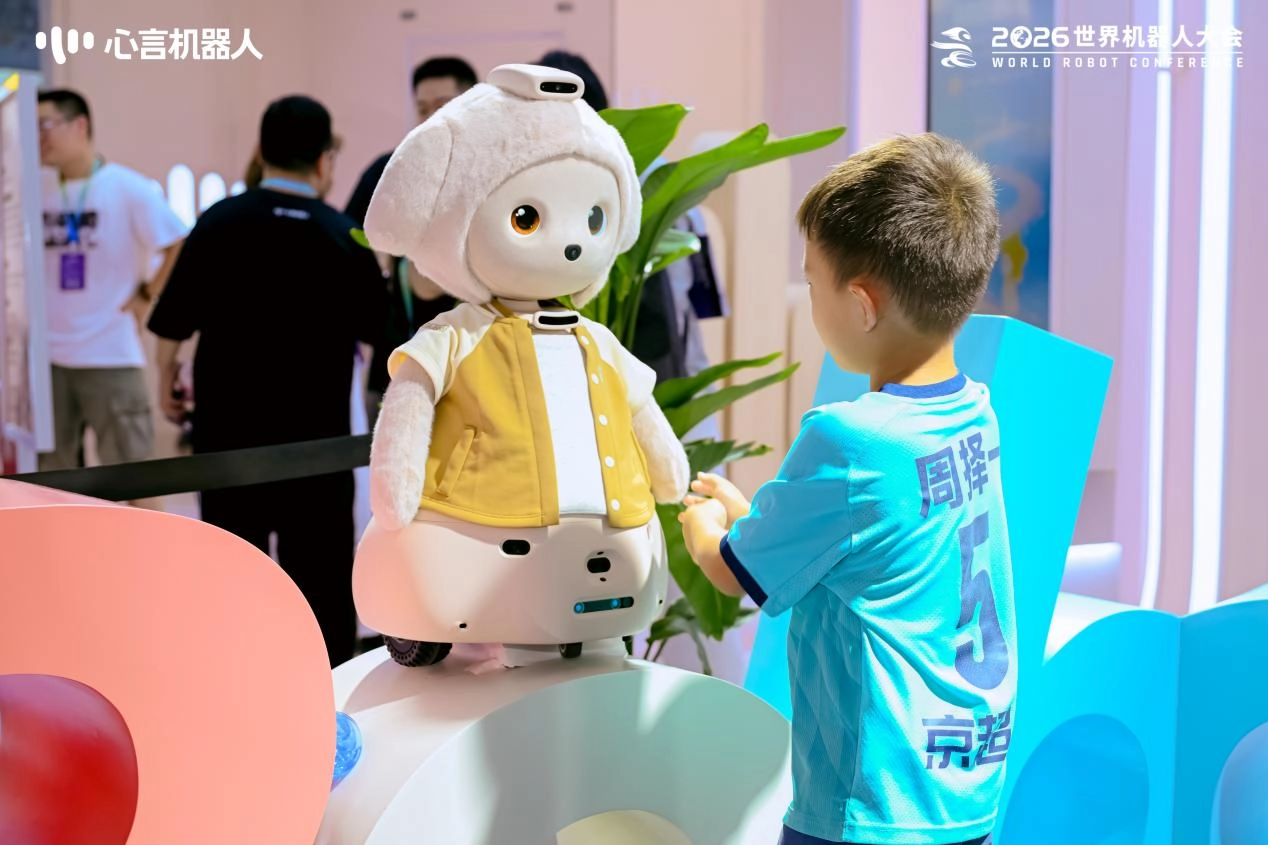
The Xinyan Robot booth (Hall D, ZhiQu Hall) stands out as one of the representative "deep experience" zones at this conference. Xinyan Robot Babu is the first proactive intelligent companion robot for the home launched by Xinyan Group. Its key features include personalized personality development, AI family photography, companion-style foreign language conversation, and more customizable scenarios. Its "sense of propriety" in proactive intelligent interaction won it affection from many visitors on site at WAIC 2026, and earned praise from media including CCTV Finance and People's Daily.
At this WRC conference, the Xinyan Robot booth achieved a perfect combination of deep experience and engaging liveliness. Scheduled dance performances drew many passersby to stop and watch, and after the dances, visitors found Babu proactively starting conversations: "Hi there, I'm Babu—you look like you're in a great mood today!" "Let me take a photo of your family!"
…In just a short time, forming an emotional connection with visitors is exactly what sets Babu apart.
A senior product expert from Xinyan Robot's business unit told reporters: "What we want to create is not a toy, but a new generation of AI robot with proactive intelligence—a family companion that truly understands its family members and knows how to relate to them."
Refined scenario design—bringing "home" into the exhibition hall
To give "deep experience" real conditions, this year's WRC companion zone clearly focused on "building scenarios." The Xinyan Robot booth literally brought "home" into the exhibition hall.
The static display photo area combines the robot's "looks" with the booth traffic flow, making it a backdrop for visitor photos and a starting point for conversation;
the touchscreen interface translates complex "how to interact with the robot" into "
tap to understand"; the interactive zone is set up like a family living room, divided by daily activity flow, letting visitors engage with the product the way they would "at home,"
experiencing its interaction rhythm without interruption.
The subtlety of this design lies in this: it guides visitors to experience, not "how capable this robot is," but "
what it feels like to be with it." Xinyan Robot defines Babu as "companionship with a sense of propriety"—
knowing when to stay silent, respecting interaction boundaries, proactively approaching when needed, and not disturbing when you want solitude. Backed by the decade of emotional interaction data from the Cece app, Babu packages capabilities like "emotion recognition, proactive conversation, and photo documentation"
into a "companionship experiment" that visitors can experience firsthand.
From watching and photographing from a distance, to sitting quietly beside it for ten minutes—this experience journey hits precisely the collective direction this year's WRC companion robots are turning toward: let people feel it first, then let them choose.

Being experienced is the first step into the home
What signal does WRC 2026 ultimately send? The most direct one is that companion robots have reached the stage where they "can be seriously experienced."
Product maturity makes experience possible, scenario design makes experience natural, and the experience journey makes experience persuasive—when all three links are in place simultaneously, "deep experience" turns from a slogan into reality.
On a deeper level, the signal is this: the industry has finally stopped trying to convince consumers with spec sheets, and instead chosen to convince them through "companionship."
For ordinary visitors, this year's WRC carries an added layer of meaning: it's not just a place to "see the future," but a place to "
experience the future." When you step into that living room, sit down beside a plush robot, and find that it knows to stay quiet when you're silent—in that moment, you'll likely understand that this category is truly ready to step into the home.