Xibei Exits Fast-Food Noodle Unit as Veteran Executive Takes 100% Stake
Xibei has sold its entire 60% stake in a six-month-old noodle venture to veteran executive Qin Yongjun, cutting losses and shielding its planned IPO from the unit's risks.
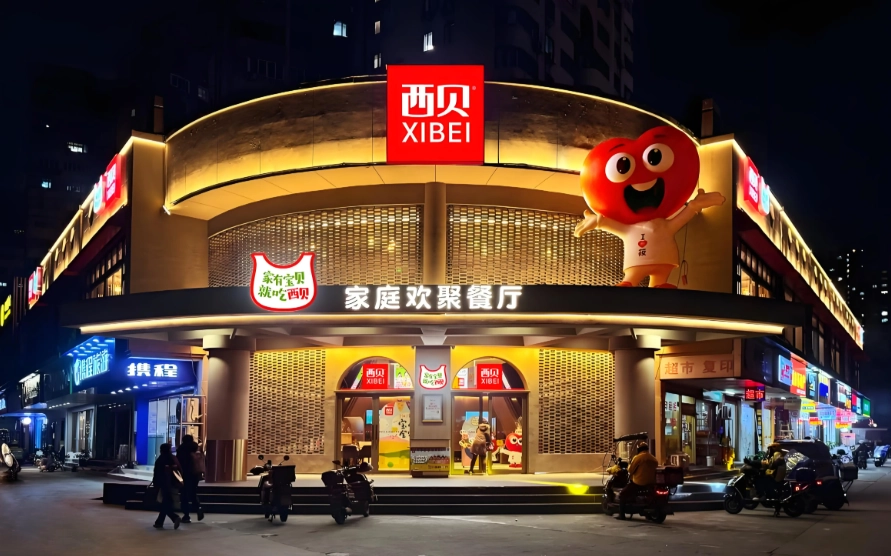
Xibei has handed its 60% stake in a six-month-old fast-food noodle venture to veteran executive Qin Yongjun, leaving him sole owner as the restaurant chain sheds side projects ahead of a planned listing.
The transfer removes Inner Mongolia Tianbian Menmian Catering Co Ltd from Xibei's consolidated accounts and puts a legal wall between the parent and a business whose economics have yet to be proven. It also marks another retreat for a company that has spent a decade trying, and largely failing, to build a fast-food chain.
Control passes to a company veteran
Tianbian Brand Management (Beijing) Co Ltd, the Xibei unit that incubated the project, has exited the shareholder register, corporate records database Tianyancha shows. It previously held a controlling 60%. Qin, the venture's legal representative, has taken the entire stake.
The company was set up in April with registered capital of 1 million yuan (about $140,000). Its business scope covers catering services, food business management and liquor sales, according to Tianyancha.
Qin is no outside investor. He is a longtime Xibei executive tied to Shanghai Xibei Human Resources Technology Co Ltd and Inner Mongolia Xibei Vocational Skills Training School Co Ltd, the group's staffing and training arms.
The original 60-40 split followed Xibei's standard template for internal ventures: a group incubation platform takes the majority, while a senior operating executive holds a minority and runs the business. Qin's move from partner to sole owner severs the direct equity link with the parent.
A format Xibei has struggled to crack
Xibei's fast-food push dates back years. It has launched Xibei Oat Noodles, Maixiangcun, Super Roujiamo, Xibei Yogurt House, Jia Guolong Kungfu Dishes and Jia Guolong Chinese Burger. Tianbian Menmian is the latest attempt.
Founder Jia Guolong has never given up on the goal of reaching 100,000 stores through small-format outlets. But Xibei's core northwestern-Chinese restaurant business rests on mid-to-high average checks, heavy table service, open kitchens and central-kitchen cold-chain supply.
Fast food runs on strict labour and floor-space efficiency, simplified cooking lines and mass-market prices of 20 to 35 yuan ($3 to $5). Grafting restaurant-grade management costs onto a snack format tends to produce the same squeeze: prices that cannot come down and table turnover that cannot go up.
The controlling shareholder's exit after six months suggests the noodle concept ran into a ceiling on per-store returns while still testing whether its unit economics work and can be replicated across regions.
Trimming the books before an IPO
Jia has said publicly that Xibei is re-evaluating and actively planning a listing. That puts the group's consolidated statements and governance under audit-level scrutiny.
New ventures that have not found a working model, and that may need rent subsidies or absorb losses, weigh on net profit and gross margins if they stay on the books. Fast-food expansion also brings franchise fees, labour compliance across multiple locations and local food-safety inspections — all potential triggers for regulator questions during an offering review.
By transferring the full stake to Qin, Xibei takes the business off its consolidated statements and builds a legal buffer. Any commercial litigation over store expansion or supply contracts would not reach the parent's listing compliance base.
A soft landing for a veteran
Handing the business to the executive who runs Xibei's human resources and vocational school — the axis of its front-line staffing — also serves as a pragmatic unwind. It compensates a founding-generation manager for taking a risk, and keeps the project alive as a regional single-store format or test bed.
Cut loose from group-wide standardisation costs and management-fee allocations, the standalone stores can push fixed costs down sharply. Local knowledge and flexible staffing in Inner Mongolia could let a small cluster of outlets break even on its own.
The sub-brand question remains
The 1 million yuan of registered capital and the departed controlling shareholder, both visible on Tianyancha, record a cool-headed retreat by one of China's largest full-service chains as consumers trade down.
Xibei has shed the short-term burden of a fast-food experiment and kept its dignity and flexibility through an internal handover. The harder task is unchanged: finding a mass-market sub-brand that can stand without a single signature dish, while the core northwestern restaurants face fresh scrutiny on price and visit frequency.