Xibei Bets Again on 'Sky Lamb' in Single-Product Pivot and Supply Chain Calculus
Xibei's new brand 'Sky Lamb' tests the waters with a low cost of 500,000 yuan, leveraging supply chain strengths to explore single-product self-rescue and lower-tier markets.
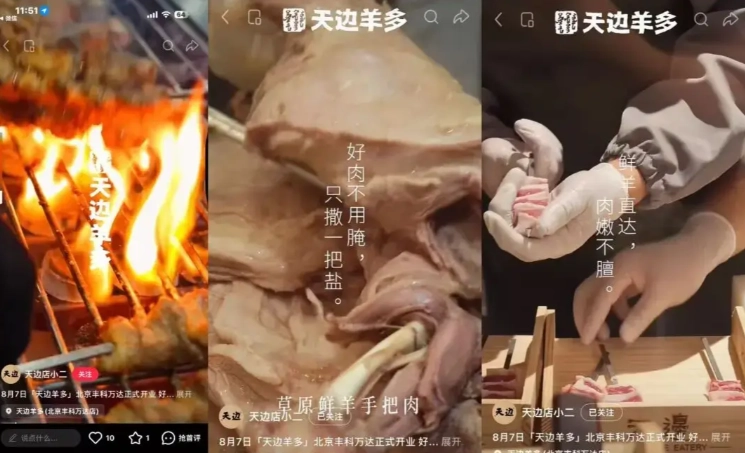
Jia Guolong has never hidden his obsession with building fast-food sub-brands and signature single items. When Xibei's brand-new sub-brand "Tianbian Yangduo" quietly opened its doors in Beijing's Fengtai district, the outside world's attention should by no means focus solely on the novelty of a bowl of lamb soup or a few skewers of grilled meat. This is not at all a casual menu expansion by a catering giant, but rather a nimble trial-and-error and downward self-rescue launched by Xibei into a segmented track, leveraging its heaviest asset—the Northwest China ingredient supply chain—after the main brand hit a ceiling on average customer spending and faced declining foot traffic in commercial districts.
Turning a large ship around often requires a lightweight lifeboat to test the waters. Examining the corporate registration records captured by Tianyancha to reconstruct the structure of this "lifeboat" reveals the business calculus of low-cost exploration with striking clarity. The affiliated entity, Beijing Fanmeimei Catering Management Co., Ltd., was established as early as the beginning of last year, yet its registered capital is a mere 500,000 RMB, and its currently active branch offices number only in the single digits.
Using an extremely small capital base and a low-profile shell company to incubate new projects is precisely the coldest risk-isolation lesson that traditional catering giants have learned after repeated failures with sub-brands. Once the new model proves viable, substantial proprietary capital can be poured in later; if it unfortunately fails to adapt, the trial-and-error cost of a few hundred thousand yuan is utterly painless against the group's core business.
Xibei's repeated attempts and failures in sub-brand ventures over the past few years have become a brutally instructive real-world case study for researching second growth curves in the domestic restaurant industry. From oat noodles and roujiamo to yogurt houses, and then to the highly touted yet lukewarm "Kung Fu" ready-to-cook dishes, Jia Guolong has tried nearly every fast-food model that can be highly standardized. But these cross-category products, which departed from Xibei's traditional Northwest cuisine DNA, were often battered by price wars waged by local grassroots competitors in extremely competitive niche categories.
The current rollout of "Tianbian Yangduo" is, in essence, a compromise and full-circle return to Xibei's core supply chain foundation after the pain of cross-category trial and error. Lamb is the deep moat Xibei has spent the past three decades building with heavy investment. Whether it is direct sourcing from Inner Mongolia pastures or refined acid-removal and portioning in central kitchens, the operational efficiency of this asset-heavy chain has few rivals in the domestic restaurant industry.
Peeling off lamb—a category with high consumer recognition and high value—into standalone stores points directly at maximizing supply chain capacity utilization and cost reduction with efficiency gains. In the current macroeconomic climate of tightened consumer spending, consumers have developed strong defensive psychology toward full-service restaurants with average per-capita spending easily exceeding 100 yuan. With the main brand's ability to raise prices blocked and table turnover rates hitting ceilings, the group must immediately find a new outlet that can be rapidly replicated and can maximally offload upstream lamb production capacity.
"Tianbian Yangduo" plays precisely this role as a pressure-relief valve. It attempts to use a lightweight fast-food or casual-dining store model to absorb the supply chain capacity spilling over from the main brand, brutally breaking down the lofty Northwest dishes into single-item snacks that consumers are willing to buy at high frequency.
But a single-item strategy has never been an easy business to pull off. Selling lamb well, and growing a lamb-centric fast-food chain brand into a major operation, are separated by an extremely complex store operations model and a daunting test of consumer mindshare. The new brand's debut certainly carries the halo of a giant, but in Beijing's brutally competitive dining jungle, consumers vote with their feet by standards that are exacting in the extreme.
For Xibei, whether this new lamb venture leveraged by 500,000 yuan in capital can become the blade that breaks the growth curse, or repeat the pattern of previous sub-brands starting high and fizzling out, depends entirely on whether it can truly find the equilibrium point between the depth of its asset-heavy supply chain and front-end affordable pricing—the point where the market is willing to open its wallet without hesitation.