$30M Bet on Foshan: Tianyin Electromechanical Positions Itself Through Independent Testing Entity Ahead of LEO Satellite Ramp-Up
Tianyin Electromechanical sets up a Foshan testing company with $30 million, positioning itself ahead of the LEO satellite ramp-up and extending its service chain.
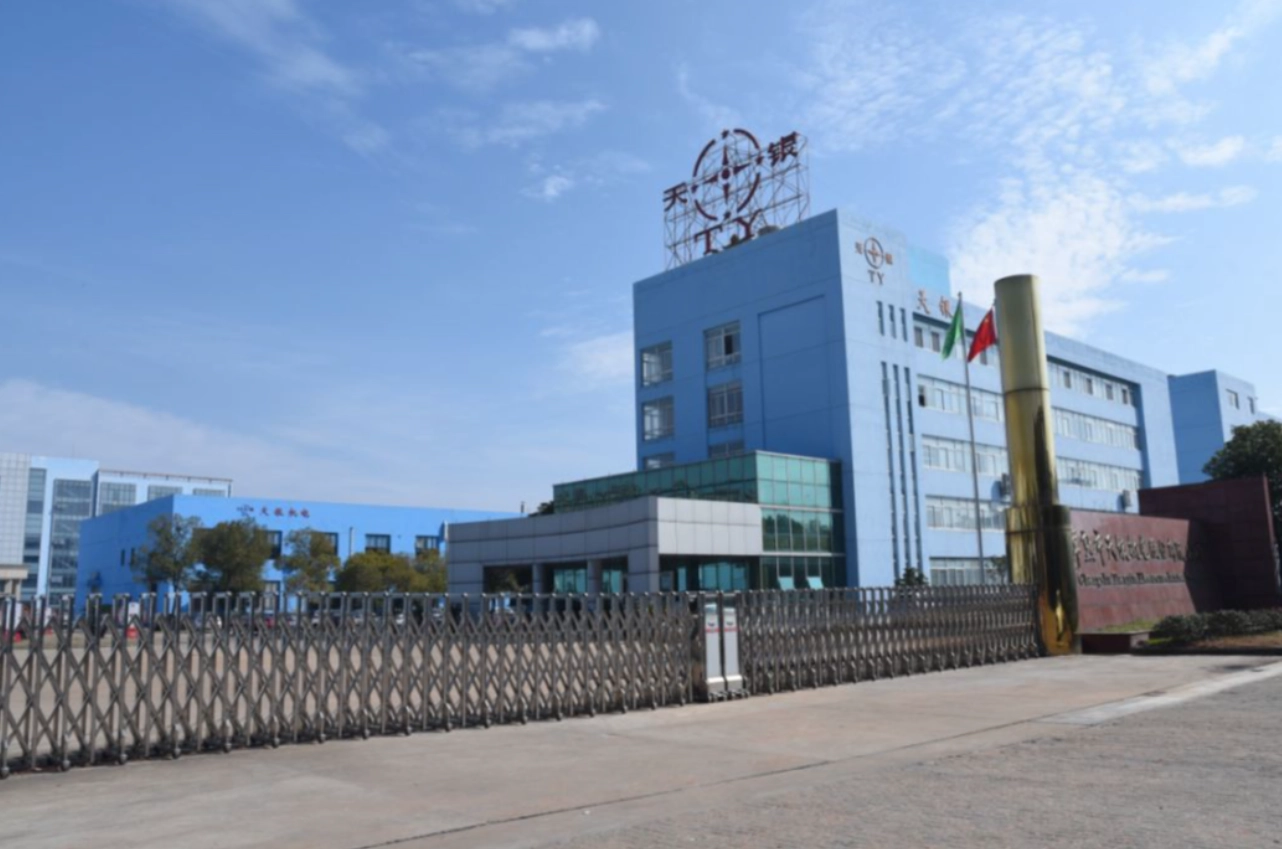
At a critical window when China's domestic low-orbit satellite internet (the Guowang constellation and the Qianfan constellation) is intensively entering a phase of high-density launch and networking, Tianyin Electromechanical—a company that started out making refrigerator compressor parts and later achieved a breakthrough in military and aerospace through the acquisitions of Huaqing Ruida and Tianyin Xingji—has placed a highly strategically significant industrial piece in Foshan, a major city in South China.
A registered capital of 30 million yuan is by no means a small sum, but when listed company Changshu Tianyin Electromechanical Co., Ltd. directly installed the new entity as a wholly owned subsidiary in the heartland of the Pearl River Delta's advanced manufacturing sector and prominently established it for inspection and testing services and satellite communications services, this southward expansion is by no means a routine establishment of a regional office. Rather, at the key turning point when low-orbit satellites move from laboratory research and trial production to industrialized assembly lines producing ten thousand satellites per year, this core star sensor supplier is making a precise early move to escape the gross margin erosion of pure hardware manufacturing and extend downstream into the high-barrier professional technical service chain.
Equity Penetration: A Wholly Owned 30 Million Yuan Subsidiary Lands in Foshan
Looking through the equity penetration at the commercial registration level to examine the asset framework of this testing base, Tianyin Electromechanical's strategic resolve is clearly preserved in Tianyancha records. According to the Tianyancha App, Foshan Tianyin Satellite Testing Services Co., Ltd. was officially established recently, with a registered capital of 30 million yuan and Fang Cheng as the legal representative.Equity penetration shows that the company is 100% wholly owned by the ChiNext-listed company Tianyin Electromechanical.
A clue worth digging into lies in the specifically approved items within its business scope: in addition to conventional satellite navigation and communications services and information system integration, inspection and testing services and mechanical equipment leasing have been prominently placed at the forefront of the sequence.
The implementation of this business combination directly makes clear that this entity was born to enter the hardcore business of undertaking asset-heavy, high-precision space environment simulation and in-orbit compliance testing.
Hardware Gross Margins Under Pressure, Testing Services Become the Breakthrough Direction
In the traditional division of labor in commercial aerospace, the crown jewel for which Tianyin Electromechanical is most celebrated by the capital market is the absolute monopoly position of its controlled subsidiary Tianyin Xingji in the field of star sensors. As the eyes of a satellite's in-orbit attitude measurement and attitude control system, its star sensors have been deeply supplied to numerous domestic and international microsatellites and mega-constellations. However, the model of simply selling hardware components is encountering an unprecedented industrialization-driven cost-reduction squeeze in the second half of commercial aerospace.
As low-orbit satellite constellations fully enter the stage of mass production, entire-satellite manufacturing costs are being pushed down layer by layer, and upstream component suppliers are forced into fierce price wars. More fatally, high-value core components such as star sensors and microwave RF modules must undergo extremely lengthy and harsh mechanical vibration tests, thermal vacuum cycling tests, electromagnetic compatibility (EMC) tests, and optical calibration before delivery to assembly plants.
Previously, a large number of commercial satellite startups and private entire-satellite assembly plants, constrained by limited capital, could not afford to build their own space environment simulation laboratories costing tens of millions of yuan, and often had to wait in line for months to borrow testing slots from research institutes within the system. This not only consumed huge testing rents but also severely delayed launch schedules.
Establishing an independent testing entity in Foshan is precisely Tianyin Electromechanical's targeted move to extract profits from the pain points of industrialized aerospace.
From In-House Inspection Channel to Public Testing Platform
A capital base at the level of 30 million yuan in paid-in capital is sufficient to rapidly equip the Pearl River Delta with high-precision multi-degree-of-freedom vibration tables, large high-low temperature vacuum chambers, and optical simulation darkrooms. By converting testing equipment originally dispersed across various manufacturing stages into machinery and testing services that can be leased externally and billed by time, the new entity can not only provide an around-the-clock in-house pre-delivery inspection channel for sensors and RF modules within Tianyin Electromechanical's own system, but can also serve as a public testing platform locally in the Guangdong-Hong Kong-Macao Greater Bay Area.
In recent years, the Greater Bay Area has gathered a large number of commercial rocket developers, satellite payload developers, and ground terminal manufacturers in Guangzhou, Shenzhen, and Zhuhai, but there has long been a significant capacity gap in nearby third-party professional aerospace-grade reliability testing systems.Tianyin Electromechanical thereby transforms what were originally heavy R&D depreciation assets into a cash cow capable of frequently charging external testing service fees.
Foshan as a Fulcrum: A Cost Depression and a Springboard for Going Global
A deeper strategic consideration points to the springboard effect of the broader going-global wave in the space-air information industry and coordination with local industrial ecosystems.
As a major base for China's precision manufacturing and industrial supporting facilities, Foshan possesses extremely low basic manufacturing and supply chain supporting costs in high-end aluminum alloy processing, precision mechanical parts, and electronic information integration.Placing satellite testing services and system integration in Foshan can not only absorb the substantial depreciation of testing computer rooms at extremely low localized operation and maintenance costs, but can also use Foshan as a fulcrum to radiate to nearby national-level commercial aerospace assembly bases such as Guangzhou Nansha, and even use the Hong Kong and Macao windows to participate in compliance testing and cross-border certification for international commercial low-orbit constellation payloads.
This 30 million yuan industrial and commercial layout in early autumn sends a clear signal to the entire commercial aerospace industry chain: competition in the satellite internet track has escalated from the early stage of telling stories and competing on technical parameters to an all-out industrialized battle over engineering delivery yields and comprehensive service support. As Tianyin Electromechanical uses real money to build an independent testing barrier, it is not only strengthening the quality control defense line for its own hardware products, but also seeking to seize the role of the water seller holding the ticket to space on the eve of the constellation explosion.