$1 Million and a China Chief Land in Pazhou: Riot Games' R&D Power Play Cuts Straight into Tencent's Self-Developed Turf
Riot Games sets up its own development company in Pazhou, Guangzhou, led by its China chief, planting local R&D operations directly in Tencent's backyard.
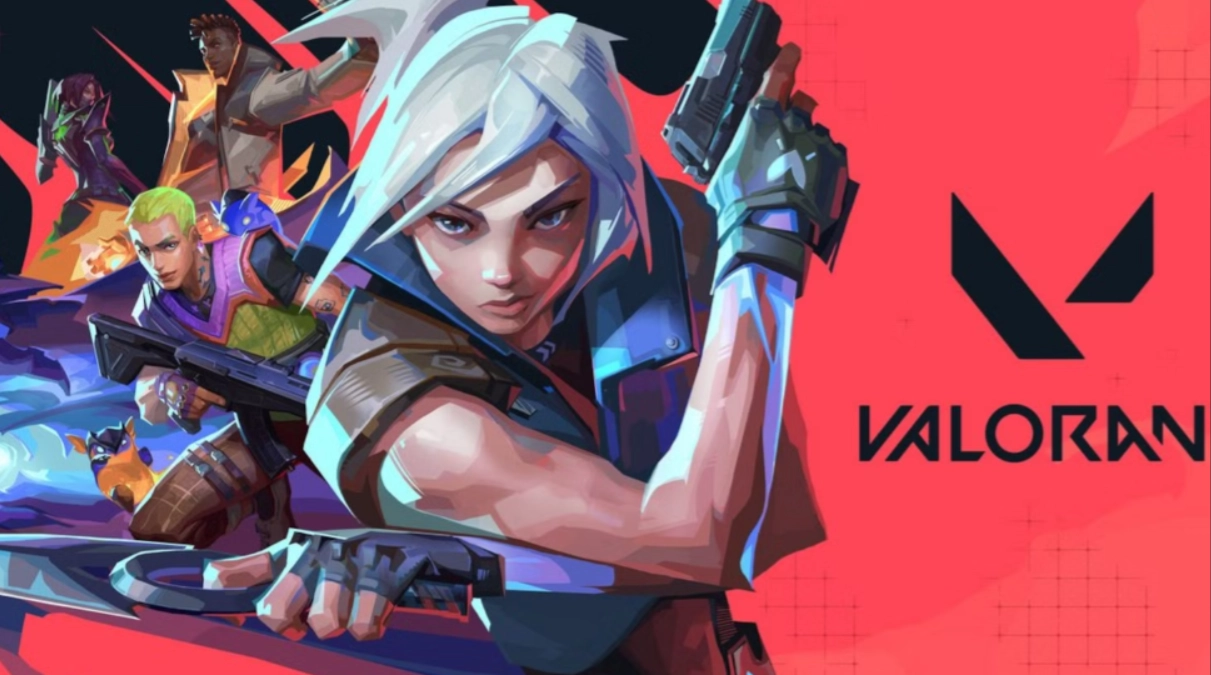
When Riot Games, holding two global super-aces in League of Legends and VALORANT, quietly planted a new company called Aoquan Network Technology in Guangzhou's Pazhou—a major gaming hub in South China—it seemed like just a routine business registration with a mere 1 million yuan in registered capital. In reality, it dropped a depth charge beneath the calm surface of the global digital entertainment landscape.
This is by no means a routine move to set up a regional office. It is a strategic breakthrough by this foreign-funded R&D giant—long hidden behind the publishing curtain of its parent company Tencent—to, under the cover of its top China commander personally taking the field, materialize its R&D reach for the first time and deeply embed itself in the Greater Bay Area's R&D talent pool.
Tracing the business registration records to penetrate the power-and-responsibility foundation of this new entity, the highest will behind it is clearly documented in Tianyancha archives. According to the Tianyancha App, Aoquan (Guangzhou) Network Technology Co., Ltd. was officially established on September 21, with a registered capital of 1 million yuan, wholly owned by Riot Games' core foreign-invested entity in China, Liaote (Shanghai) Business Consulting Co., Ltd.
The most telling signal is locked onto the legal representative, Lin Song (Leo Lin).
As Riot Games' Global President of Mobile Business Development and Head of China, Lin Song is the core operator of Riot's commercial operations in China and its global mobile strategy. Having the number-one person in charge of the global mobile portfolio directly serve as the legal representative of a startup-level subsidiary breaks the industry convention of multinational gaming giants having legal or administrative executives serve as figureheads when establishing peripheral branches.
The more critical clue lies in its business scope: animation and game development and digital cultural creative software development are placed at the very front, combined with copyright agency and brand management, completely tearing off the fig leaf of previous China entities engaging only in peripheral supporting roles such as "business consulting" and "technical support."
The implementation of this corporate structure makes clear that Riot Games' China strategy is undergoing a qualitative shift—from pure IP licensing and esports operations to striding into the deep waters of local self-development and deep content production.
Looking back over the past decade and more, although Riot Games was wholly acquired by Tencent at the equity level as early as years ago, in actual business operations the two always maintained a delicate "West Factory R&D, East Factory Publishing" co-opetition balance. Whether it's League of Legends, which has dominated PC for over a decade, or VALORANT, which has swept the shooter category in recent years, product R&D decision-making power has always been firmly held by the Los Angeles headquarters, while domestic license applications, localization operations, and channel distribution were entirely handled by Tencent Interactive Entertainment (IEG).
While this division of labor delivered extremely high publishing efficiency, it also kept Riot behind an impenetrable publishing-agency filter when it came to the local user demands and high-turnaround industrialized R&D rhythms of the world's largest mobile gaming market.
Choosing Guangzhou, and especially placing the entity in Pazhou, reflects extremely shrewd geopolitical talent considerations.
Shanghai excels in anime-style and industrialized 3C technology, while Guangzhou is the birthplace with the highest density of SLG (strategy), heavy numerical RPG, and mid-to-heavy commercialization mobile game talent in all of China. NetEase Interactive Entertainment's headquarters, 37 Interactive Entertainment, Alibaba Lingxi Interactive Entertainment, and a large number of top user-acquisition-driven and numerical game teams have long been entrenched here, accumulating the world's most mature numerical framework construction, long-term monetization models, and refined operations legions.
The new Aoquan Network entity disclosed by Tianyancha echoes the recent intensive release of R&D positions in South China involving gameplay dimensions such as city building and resource management. This move by Riot is essentially skipping the inefficiency of cross-Pacific collaboration by setting up a dedicated R&D outpost right at Tencent's doorstep, seizing the local hardcore talent who best understand mobile commercialization monetization and the integration of heavy gameplay.
A deeper strategic motivation points to Riot's anxious self-rescue against the peaking lifecycle of its flagship IPs.
The demographic dividend of PC MOBA has long been an undeniable fact, and the highly anticipated League of Legends: Wild Rift, after its initial burst, is also facing a plateau in monetization momentum in both overseas and domestic markets. Facing the global mobile gaming market's high receptivity to heavy 4X strategy, open world, and derivative gameplay, Riot urgently needs to break out of the PC-game mindset ingrained in its Los Angeles R&D hub, leveraging China's top-tier mobile industrialization capacity to disassemble and repackage the vast Runeterra universe worldview into SLG or hybrid category molds with greater long-term monetization capability.
Establishing a wholly-owned self-developed entity ensures both the authenticity of core IP narrative and art assets, while also achieving thorough localization adaptation in gameplay mechanics and commercialization monetization.
This million-yuan business registration in early autumn sends an extremely thought-provoking signal to the entire Chinese gaming industry chain: the relationship between global top IP giants and local publishing carriers is quietly being reshaped. Riot Games, which once sat back and collected dividends on its parent company's channel network, is now personally breaking down the ivory tower of pure foreign-funded R&D, plunging into Guangzhou's gaming arena with an extremely down-to-earth posture.
The listing of Aoquan Network is merely a pathfinding stone, but when international IP holders begin personally getting their hands on R&D screws, the next round of stock-market bloodletting in China's gaming market is destined to unfold in the deeper reaches of self-developed categories.