7-Day Blitz and 30% Weak Control: New Journey's "Out-of-Body Incubation" Card for Entering Brain-Computer Interfaces
New Journey set up a brain-computer interface company in a 7-day blitz, holding only a 30% stake to isolate risk, leveraging university technology plus clinical resources for its transformation.
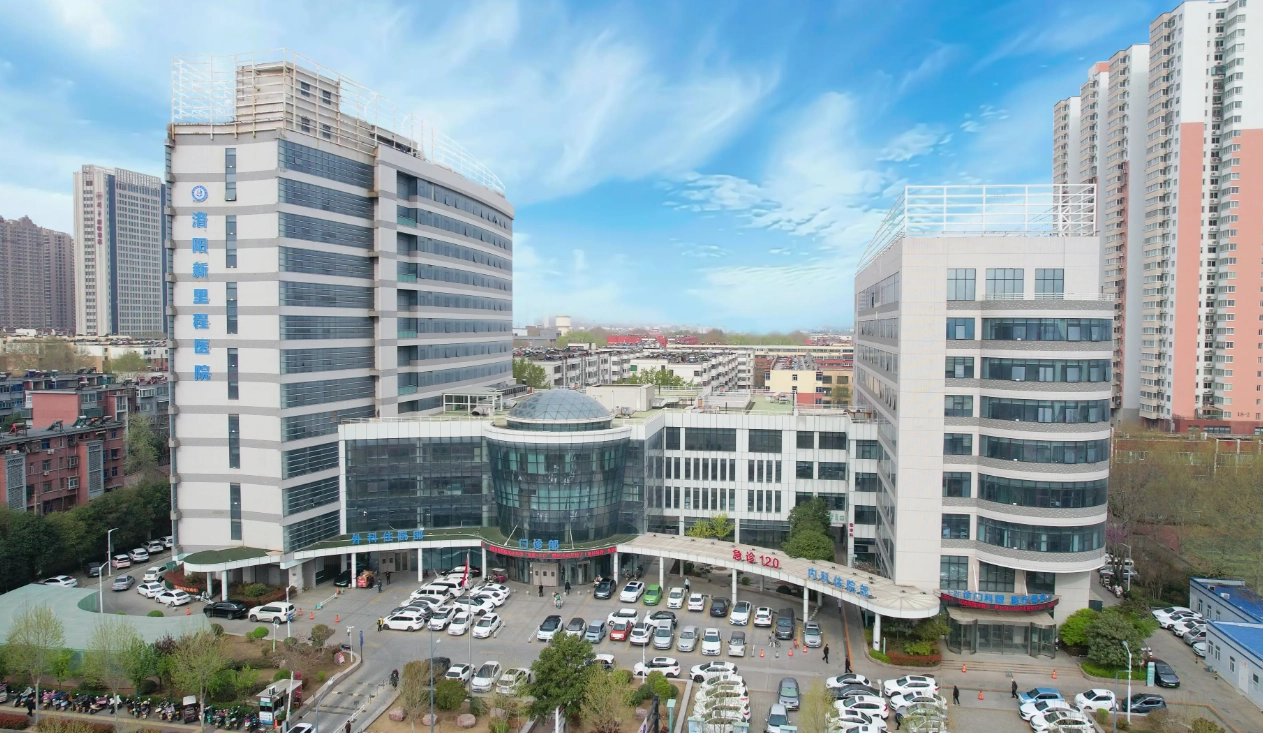
From signing the joint investment agreement on September 15 to completing business registration approval on September 22, it took only 7 days for Beijing Wujie Naoyu Technology Co., Ltd. to complete an astonishing leap from a paper agreement to a commercial entity. At a time when China's brain-computer interface (BCI) sector continues to heat up due to Elon Musk's Neuralink progress and strong top-level national policy support, the private medical group "New Journey," which has tens of thousands of beds under its umbrella, has stamped its official seal with such rare acceleration, appearing to be an aggressive bet on cutting-edge hard technology.
However, by tracing the underlying business registration records to penetrate this lightweight entity with registered capital of only 5 million yuan, one discovers that in this technological feast claimed to inherit cutting-edge achievements from a Peking University joint laboratory, the listed company has actually deployed a sophisticated set of capital techniques combining "market value concept defense" and "financial risk isolation."
A 5 Million Yuan Plate and 30% Shareholding: A Textbook-Level Risk Firewall
Tracing back through the equity penetration at the commercial registration level, the capital structure of the new entity is clearly recorded in Tianyancha archives. According to Tianyancha App, Beijing Wujie Naoyu Technology Co., Ltd. has registered capital of 5 million RMB, with its business scope covering cutting-edge fields including artificial intelligence application and basic software development, medical research, and experimental development.
In the shareholder register, the equity is exquisitely dismantled into five puzzle pieces:
New Journey Health Technology Group Co., Ltd.: subscribed 1.5 million yuan, holding 30%, ranking as the largest shareholder;
Beijing Xincheng Naoyu Enterprise Management Center (Limited Partnership): holding 20%;
Lin Yanglin (Chairman of New Journey): directly holding 15%;
Beijing Zhixinghe Technology Co., Ltd.: holding 15%;
Beijing Maishi Naoyu Enterprise Management Center (Limited Partnership): holding 15%.
The most exquisite aspect of this equity structure is that New Journey, as a listed company, has pinned its shareholding ratio firmly at the 30% non-absolute controlling line.
Brain-computer interface is recognized as an ultra-frontier, high-risk, long-return-cycle disruptive hard technology. Whether it is the biocompatibility of invasive electrodes or the algorithm decoding and noise reduction of non-invasive signals, moving from laboratory principle prototypes to obtaining Class II and Class III medical device registration certificates typically requires burning hundreds of millions in R&D funds and enduring five to eight years of lengthy clinical approval.
If the listed company were to directly wholly own or lead consolidation, the sustained high R&D expenses and bottomless losses would directly erode New Journey's financial report net profit center, which already relies on general hospital operations to maintain. By establishing an off-balance-sheet entity with a 30% equity stake, New Journey can account for it merely as an associate enterprise under the equity method—leveraging a mere 1.5 million yuan to capitalize on frontier concepts while building a solid financial firewall: losses not consolidated, explosions not dragging down the group, yet once technology commercialization is proven, it can enjoy investment premiums or initiate priority acquisitions at any time.
At the same time, Chairman Lin Yanglin personally entered the field directly holding 15%, combined with two "Naoyu" partnership platforms with equity incentive characteristics (totaling 35%) and external technology party Zhixinghe (15%), forming a closed loop of deep binding between management and the scientist team. This "listed company endorsement + core executive binding + technology team lead investment" off-balance-sheet incubation approach is extremely typical in pharmaceutical hard-tech entrepreneurship, maximizing the entrepreneurial drive of researchers while avoiding the constraints of lengthy compliance approvals of listed companies in decision-making mechanisms.
From "Selling Drugs and Treating Patients" to "Frontier Neuroscience": Valuation Anxiety of Traditional Hospital Assets
The deeper driver behind this 7-day lightning-fast battle is the long-term valuation suppression facing New Journey's main medical business.
As a leading domestic medical health group, New Journey's core foundation consists of basic general hospitals, tumor treatment centers, and rehabilitation and elderly care beds distributed in second- and third-tier cities. However, under the current comprehensive deepening of medical insurance cost control and DRG/DIP payment method reform, the profit boundaries of traditional medical services are continuously compressed. An expansion model relying solely on stacking beds, drug and device price differentials, and ordinary outpatient services can only receive valuation treatment of traditional public utilities or low-valuation service industries in the secondary market (price-earnings ratios often suppressed to the teens).
What the medical capital market currently craves most is a hardcore story combining high technical barriers and high premium licensing rights.
Brain-computer interface is precisely this perfect stimulant. Since New Journey announced in July the co-construction of a joint laboratory with Peking University, the outside world has closely watched how it would escape the strange cycle of "industry-academia-research spinning in vain." The core mission of Wujie Naoyu Technology with 5 million yuan in capital is not to start from scratch burning chips and hardware, but to serve as a "technology translator" and "clinical data entry point":
Peking University is responsible for outputting the most cutting-edge neural encoding and decoding algorithms and brain-computer electrical signal processing patents;
New Journey Group offers its greatest killer weapon—a vast database of real inpatient cases and clinical rehabilitation trial beds for neurology, stroke rehabilitation, spinal cord injury, and Alzheimer's disease;
The newly established Wujie Naoyu Technology sits precisely at the throat where the two combine, rapidly transplanting university algorithm models into New Journey's rehabilitation hospital system for data training and clinical trials.
Letting cutting-edge AI software algorithms run directly at real hospital bedsides—this closed loop of "clinical scenarios + research incubation" is a core resource that purely academic entrepreneurial teams could not buy even with tens of millions.
Hidden Reefs After Concept Landing: The Great Trial of Clinical Translation and Ethical Qualifications
However, shifting attention away from the lightning-fast commercial efficiency, this startup platform with less than ten million in capital wants to truly shoulder the pillar of industrialization, and the road ahead is full of insurmountable regulatory and commercial hidden reefs.
First is the constraint of registered capital volume and subsequent financing hunger. The 5 million yuan subscribed capital can sustain initial team operations at the software development level, but if brain-computer interface truly wants to move toward serious medicine—entering animal experiments, human ethics review, clinical trials, and even applying for the National Medical Products Administration (NMPA) innovative medical device special approval procedure—each stage is a giant beast devouring cash flow.
After passing the initial prototype demonstration period, this new platform will inevitably need to rapidly open external market-oriented equity financing; and in an era when external VC institutions are extremely picky about hard-tech investment, whether early-stage backing solely from a joint laboratory can support the next round of financing at a valuation of hundreds of millions still holds enormous uncertainty.
Second is the cycle curse of serious medical device approval. Currently, the vast majority of approved brain-computer interface related devices in China are limited to low-technical-threshold consumer-grade or peripheral assistive tools such as EEG sleep monitoring and mental health assessment. Serious medical products truly capable of deep brain stimulation, neural remodeling, and paralyzed function replacement have extremely high clinical approval red lines and extremely long cycles. Whether New Journey's hospitals can smoothly pass national Good Clinical Practice (GCP) certification for drugs and medical devices, and whether R&D achievements can cross the valley of death from "impressive laboratory data" to "clinically statistically significant," is far from something that establishing a company in 7 days can solve.
This 7-day lightning commercial registration move in early autumn sends a clear signal to the entire medical health capital market: the era of traditional medical assets relying on heavy-asset bed expansion is ending, and breaking through toward hard-tech foundations such as AI software and neuroscience has become a mandatory choice. Through the exquisite 30% position, New Journey has obtained a ticket to the new continent of brain-computer interface at minimal financial cost.
But when the joy of establishment fades, how far this highly anticipated Wujie Naoyu Technology can walk through the heavy maze of serious medicine and technology commercialization is the ultimate touchstone for testing whether this capital layout is "frontier self-rescue" or "concept passerby."