Kunlun Wanwei Bets ¥10 Million on Yizhuang as CEO Takes Personal Command: Tiangong Model Gets a B2B Payment Code
Kunlun Wanwei sets up Tiangong Zhishu with ¥10 million, with CEO Fang Han personally serving as legal representative, pivoting toward B2B government and enterprise integration to crack the large model monetization dilemma.
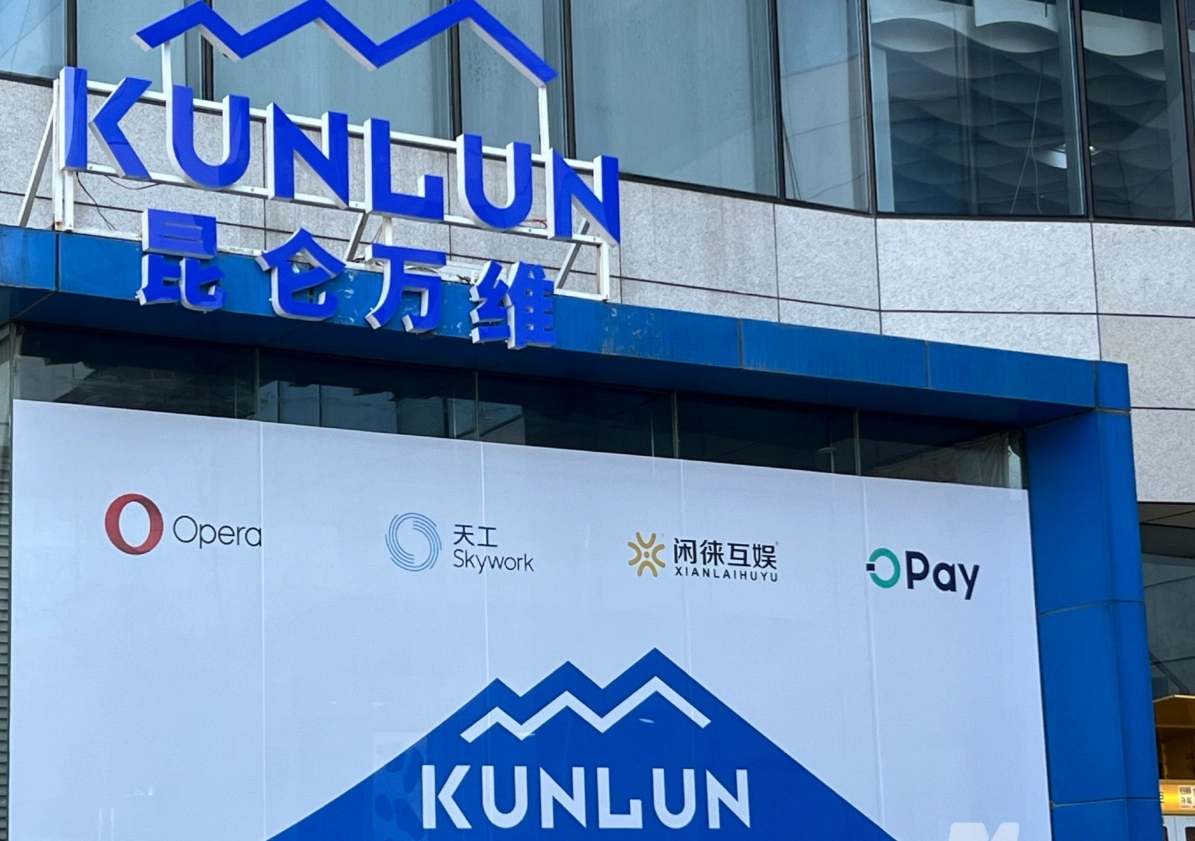
At a tense juncture when general-purpose large models are sliding from a paramilitary arms race into the deep waters of commercial monetization, Kunlun Wanwei, which has raised the banner of "All in AGI and AIGC," has placed another key piece on the board in the Yizhuang Economic and Technological Development Area. A registered capital of 10 million yuan may seem modest in scale, but when Kunlun Wanwei Chairman and CEO Fang Han personally serves as the legal representative and binds the core IPs "Tiangong" and "Zhishu" together to form an independent entity, this move to establish a new subsidiary is by no means a routine administrative registration, but rather a strategic pivot by this pan-entertainment technology giant—which has aggressively captured traffic overseas with AI music and AI video—as it attempts to break through the closed loop of system integration and large-model implementation in the domestic B-end government and enterprise market.
Following the traces left in the industrial and commercial registration to penetrate the operational skeleton of this new entity, the business shift it carries is clearly preserved in the Tianyancha archives. The Tianyancha App shows that Beijing Tiangong Zhishu Technology Co., Ltd. was recently established, with a registered capital of 10 million yuan, wholly owned by the listed company Kunlun Wanwei Technology Co., Ltd., and with Fang Han as the legal representative. Among the approved business scope, in addition to conventional software development and computer system services, software outsourcing services, information system integration services, technology import and export, and second-category value-added telecommunications services are prominently listed.
Within a major internet company, having the group's highest technical voice and top leader directly serve as the legal representative of a subsidiary with registered capital in the tens of millions means that the entity enjoys an extremely high level of scheduling authority and penetrating power within the organizational hierarchy. Previously, Kunlun Wanwei's presence in the domestic large-model market mainly relied on the "Tiangong AI" app and API interfaces for developers, leaning toward light-asset C-end tool attributes;
whereas writing "outsourcing services" and "system integration" in black and white into Tiangong Zhishu's license directly makes clear that this entity was born to go into the field and do the dirty work of heavy-asset, long-cycle enterprise-level customization and software-hardware delivery.
The Stark Contrast Between Warm and Cold Realities on the Commercialization Path
The fundamental driver behind the implementation of this tactic is the stark contrast between warm and cold realities on the large-model commercialization path.
In overseas markets, Kunlun Wanwei relies on the Opera browser foundation, AI short dramas, and AI audio tools, reaping rich global subscription and advertising dividends, with overseas revenue once accounting for more than 90 percent. However, looking back at the domestic market, C-end users' willingness to pay for large-model tools is extremely weak, and DAU obtained through subsidies and burning computing power often faces the dilemma that the more you sell, the worse you lose.
Relying solely on API call billing, in the price war in which major cloud vendors have driven token prices to the floor, gross margin space has been completely compressed to nothing.
The only deterministic scenarios in which domestic large models can truly generate real cash flow are private deployment and intelligent transformation for government and enterprise clients, state-owned and central enterprises, and large financial and industrial customers. However, what establishments and traditional large B-end customers want has never been an ethereal cloud-based large-model interface, but a turnkey project that includes data desensitization, computer room software and hardware adaptation, localized deployment, customized workflow development, and even on-site operations and maintenance.
This is precisely the essence of system integration and outsourcing services. Establishing Tiangong Zhishu is essentially using a professional integrator license to enter government and enterprise bidding, turning the Tiangong large model into a mature commodity that can be settled on a project basis and for which value-added telecommunications and integration invoices can be issued.
Yizhuang Highland Dividends and Computing Power Ecosystem Positioning
A deeper consideration lies in the highland dividends of the Yizhuang Economic and Technological Development Area and the positioning within the computing power industry ecosystem.
Beijing Yizhuang is a core cluster for national-level artificial intelligence high-precision and advanced industries, gathering a complete ecological chain from computing power infrastructure, vertical industry large models, to industrial automation robots. Stationing Tiangong Zhishu here not only allows it to directly enjoy the policy preferences of the development area in computing power subsidies, enterprise R&D additional deductions, and first-set procurement, but also, by virtue of its second-category value-added telecommunications business qualification, to build in Yizhuang a compliant channel connecting to dedicated networks for major government and enterprise clients.
Facing the encirclement by traditional B-end integration giants such as Kingsoft Office, SenseTime, Huawei, and Baidu, Kunlun Wanwei's use of an independent entity for operations can both isolate the high-delivery-cost B-end outsourcing from the group parent's light-asset software R&D in financial statement accounting, and reserve ammunition for subsequently undertaking specially licensed projects.
A Stark Signal for Large-Model Commercialization
This industrial and commercial move with registered capital in the tens of millions that occurred in early autumn releases the starkest signal to the entire AIGC track: the era of peddling computing power fantasies and leaderboard scores on PPT has completely ended. When the CEO of a major internet company begins to personally lead a system integration entity, everyone must admit that if large models want to survive domestically, they must bend down to earn the hard-earned money of enterprise digital transformation.
The establishment of Tiangong Zhishu has given the technology a pocket for taking orders, but in the red ocean of B-end integration, where giants stand in great numbers and customer relationships and advance funding capabilities are highly emphasized, whether an internet player known for gaming and traffic going overseas can truly gnaw through the hard bones in the deep-water zone is a test that Fang Han must confront head-on after the license is hung.