JD.com starts selling 15,000 custom-raised Yanchi tan sheep
JD.com has begun selling 15,000 Yanchi tan sheep raised under its new custom-farming model as the e-commerce giant pushes quality control back to the source.
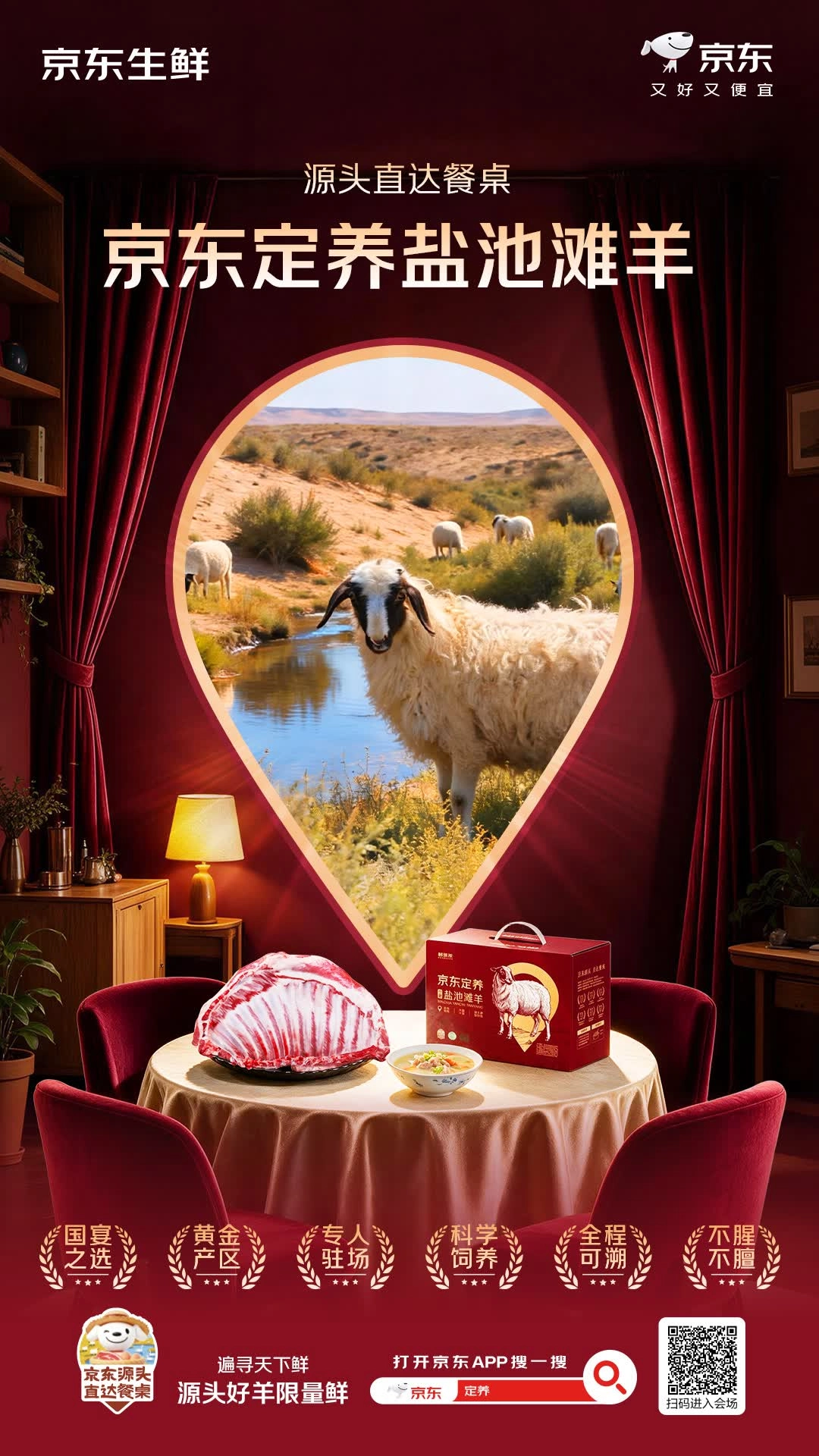
JD.com has put 15,000 Yanchi tan sheep raised under its custom farming programme on sale for 11.11, extending the retailer's control over fresh food all the way back to the farm.
The sheep come from Yanchi county in Ningxia, home to a protected geographical-indication breed that is widely counterfeited. JD.com calls the model an industry first. It sets production standards at the source and commits to buying the output, aiming to give shoppers verifiable provenance and farmers a steadier income.
Rebuilding standards at the source
Fresh produce has long carried uncertainty on both ends of the chain. Shoppers cannot easily tell quality or authenticity, and farmers who depend on the weather often struggle to get a good price for good produce.
"The purpose of JD.com custom farming is to bring consumers geographical-indication produce that is genuinely safe and traceable," a JD Fresh official said. The company says the model is not simple purchasing from the origin. JD.com sets the standards, then oversees site selection, farming and traceability, with its own requirements guiding production.
Yanchi's climate and alkaline soil produce the grass and herbs that feed the local tan sheep, which graze on varied vegetation and drink alkaline water. The breed is prized for tender, juicy meat without a strong smell, and takes well to plain boiling. But ewes typically bear one lamb a year, and annual output is under 1% of China's total mutton production. Counterfeits are common, and some sellers have even trucked sheep in from elsewhere to pass them off as local.
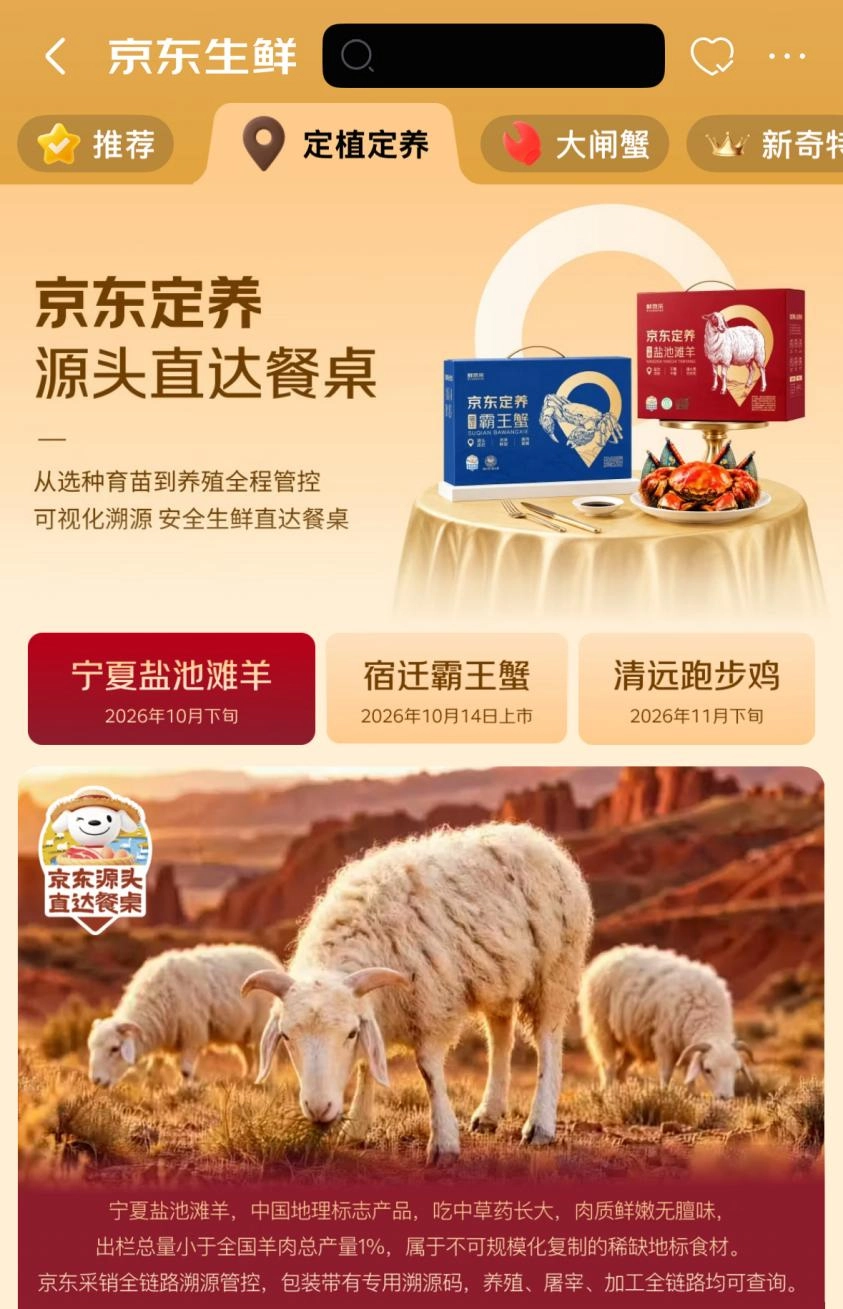
To protect the brand, JD.com launched a brand-building pilot with the Yanchi county government this year. Under the county's leadership, it is testing custom farming with local state-owned and leading companies. For breeding stock, township governments, animal husbandry and veterinary stations, the tan sheep industry association and farmers all sign off, so every animal is certified Yanchi stock.
On farming, JD Fresh drew up standards covering eight areas, including site layout and pen management, and requires full records for purchases, entry into pens and feed, so the chain can be traced end to end. JD.com quality staff arrive at farms months in advance and record daily details from lamb to sale. Teams also conduct spot checks, combining digital monitoring with back-end inspection. Each product carries a traceability code that shows farming and processing information.
The model spreads to crabs and chicken
The same approach — resident inspectors, written standards and traceability — is being applied elsewhere. In Suqian, Jiangsu province, JD.com contracted 100 acres of crab ponds this year to raise 100,000 Bawang crabs, overseeing pond siting, seed selection and daily feeding. In Qingyuan, Guangdong province, it has taken over more than a dozen hillsides to raise running chicken, with five layers of quality control intended to keep each bird purebred and moving at least 1 million steps.
Order guarantees and shared profit
"In the past, the hardest part of raising sheep was not the long days," one farmer in the programme said. "It was putting in the work and still not getting a good price." Farming to JD.com's standards means the company stands behind sales, the farmer said, which is far more reassuring.
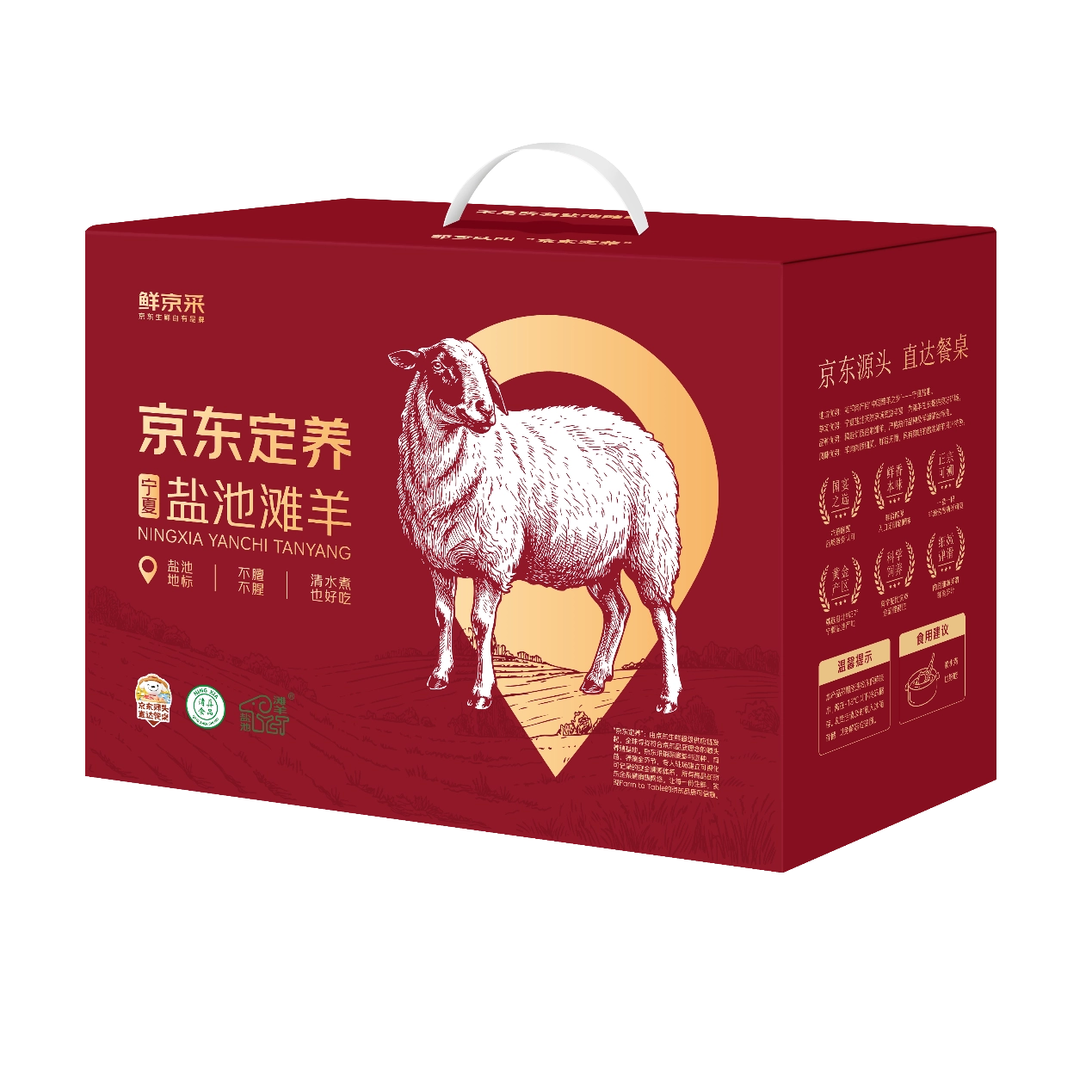
JD Fresh sets the standards and takes responsibility for selling the output. Farmers follow the standards without worrying about demand or price swings. Minimum purchase prices and profit sharing are meant to stabilise income and let good produce fetch a good price, creating a cycle in which quality earns a premium, farmers earn more and standards rise.
The Yanchi tan sheep are now listed on JD.com and can reach shoppers in as little as 24 hours through the company's cold-chain network. Customers can search "JD.com custom farming" in the app. JD.com said it plans to take the model to more specialty producing regions, using its supply chain to move local products nationwide under a framework of standards at the origin, branded products and assured sales.