Chicecream's bankrupt shell sold brand assets for 21.1 million yuan
Chicecream's old entity is bankrupt with zero social-insurance enrollees, while a new owner bought its IP for 21.1 million yuan and cut prices to 6.9 yuan, testing a brand reboot.
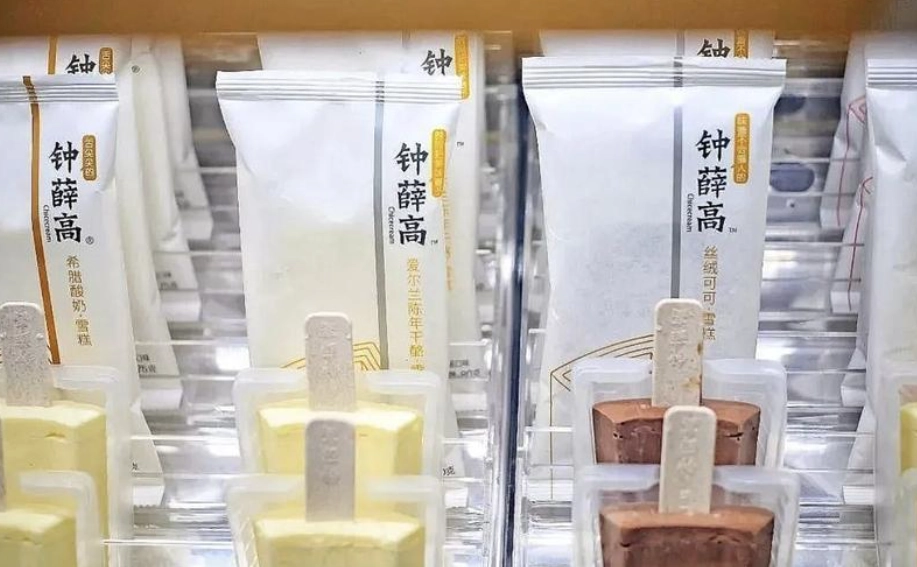
Chicecream's bankrupt operating company has been listed as an abnormal taxpayer, with insured staff at zero, while a new company that paid 21.1 million yuan (about $3 million) for its intangible assets relaunches the brand at 6.9 yuan a stick.
The split is a court-supervised carve-up: liabilities and unpaid wages stay in the old shell, while the trademarks and designs move to a clean new vehicle backed by the supply chain group behind frozen-food brand Royal Little Tiger. It is the closing chapter for the brand that once defined China's premium ice cream boom.
One brand, two corporate bodies
The old operator, Chicecream Food (Shanghai) Co., was placed in bankruptcy liquidation by the Shanghai No. 3 Intermediate People's Court in July 2025, according to corporate records database Tianyancha. The platform lists multiple bankruptcy filings and records of Chicecream failing to comply with court orders.
Its insured employee count fell from 274 at its 2020 peak to zero, and the company could not even pay a 62,700 yuan labour dispute award.
The Shanghai Jiading district tax bureau has now designated it an "abnormal taxpayer." Founder Lin Sheng already faces multiple restrictions on high-value spending.
The new owner, Zhongxuegao Brand Management (Shanghai) Co., was registered in June 2026, Tianyancha shows. Its legal representative is Zhang Luoli. Shareholders include individual Wang Yaqing and Changsha Hujia Food Technology Co., the parent of Royal Little Tiger.
Through the judicial auction, the new entity legally acquired 492 trademarks, the core design patent for the tile-shaped product and related copyrights, free of the old company's debts. For the buyer, that structure walls off supplier arrears, unpaid salaries and tax penalties.
Why the deal made sense
The revival rests on a trade: Chicecream still owns a highly recognisable brand, and Royal Little Tiger knows how to run a low-cost supply chain.
Chicecream was battered by its "overpriced ice cream" reputation and a viral controversy over a stick that would not melt when burned. But it spent hundreds of millions of yuan building a Chinese-style tile ice cream that consumers instantly recognise. In a crowded market, building comparable awareness from scratch would cost far more than 21.1 million yuan.
Royal Little Tiger built its business on cheap frozen sausages and egg tarts, and has the supply chain management and low-cost cold-chain warehousing to dominate lower-tier e-commerce and community group buying. What it lacks is a brand that can reach white-collar shoppers in major cities and mid-tier channels.
The relaunch cuts prices from 18–66 yuan to 6.9–7.9 yuan, applying Royal Little Tiger's cost discipline to what remains of Chicecream's brand traffic. The bet is that a premium symbol can be converted into a mass-market product.
Two hard tests ahead
Winning back the freezer
Ice cream depends on millions of freezers in corner shops and convenience stores. Chicecream's high wholesale prices and its habit of hogging freezer space left many store owners with unsold stock and returns once public opinion turned.
Distributors and regional wholesalers were also burned by the old company's unpaid bills. Even with clean trademarks, the new team must pay far more in listing fees and rebuild credit terms to reclaim freezer space now filled by Yili, Mengniu and cheaper brands.
The price-cut trap
Chicecream's old premium rested on a story about top-grade red grapes, natural milk and hand-made production. At 6.9 yuan, and after distributor margins and cold-chain costs, the recipe must move toward industrial standards.
If loyal buyers find the taste has thinned while younger, price-sensitive shoppers still remember the "overpriced ice cream" label, the brand risks losing both ends: too plain for premium buyers, still suspect for everyone else.
An accounting still owed
The abnormal-taxpayer listing and the zeroed headcount close the legal file on one of the defining brands of China's new consumer era. Lin Sheng's Chicecream is winding down in liquidation, while the new Zhongxuegao, carrying Royal Little Tiger's supply chain, is trying to bring it back.
Consumers now scrutinise every yuan of value. Whether a court-auction licence and halved prices can win repeat purchases in the freezer is the question the new team must answer.