Huawei's Huizhi sets up 50m yuan Anpu hotel in Beijing's Haidian
Huawei's Shenzhen Huizhi Business has set up a 50 million yuan hotel unit in Haidian, a base for internal meetings and a showcase for its smart-building systems.
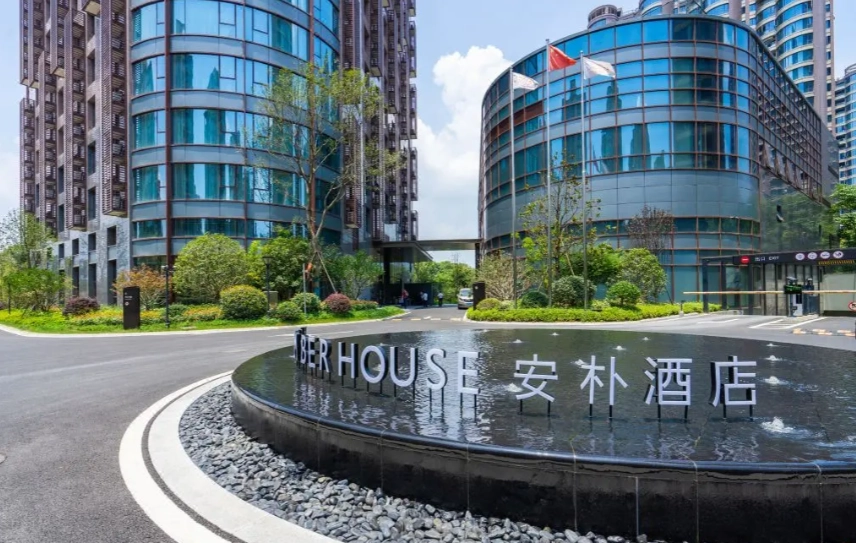
Huawei's back-office and retail arm has put 50 million yuan (about $7 million) into a new hotel company in Beijing's Haidian district, planting its own hospitality brand deep in the capital.
Shenzhen Huizhi Business Co Ltd, wholly owned by Huawei Investment Holding Co Ltd, holds 100% of Beijing Anpu Hotel Co Ltd, according to corporate records database Tianyancha. The new company was registered recently with 50 million yuan in capital, legal representative Lu Yao, and business scope covering hotel management, non-residential property leasing and laundry services.
The filing shows Huawei's in-house hospitality brand, Anpu, is moving into Beijing as a standalone company after establishing itself at the group's research hubs in Bantian and Songshan Lake in Guangdong, Xi'an and Nanjing. Huizhi Business oversees Huawei's executive services, travel management and company-run stores.
Staff demand and information security
The first driver of the investment is demand from Huawei's own Beijing research operations and its strict information-security rules.
The Zhongguancun hot spring tech park in Wenquan township, Haidian district, sits next to Huawei Beijing Environmental Park and other core research sites. Tens of thousands of Huawei engineers, senior algorithm specialists, overseas supply-chain representatives and decision-makers from finance, energy and government clients pass through the area.
For Huawei, outside five-star or chain business hotels fall short on more than cost and peak-season room shortages. They cannot fully meet its rules for confidential meetings, closed-door seminars and dedicated intranet setups. Placing Anpu Manzhu hotels next to the research base cuts travel time and offers a sealed, secure environment that keeps sensitive hosting in-house.
A showroom for smart buildings
The deeper motive is to turn Anpu hotels into a showcase for Huawei's whole-home smart systems and digital campus solutions.
Unlike traditional hotel groups that earn mainly on room rates and dining, Anpu carries the role of a technology test bed. Its rooms run on the HarmonyOS ecosystem, smart space-sensing algorithms, anti-surveillance network access points, smart climate control and digital operations systems. Anpu is a ready-made reference site for Huawei's enterprise solutions in large commercial spaces.
Corporate and government clients who stay there experience a building run entirely on Huawei hardware and software, rather than a slide presentation in a showroom. That "scene as marketing, experience as delivery" approach is a customer-acquisition tool no product launch can match, the company's thinking goes.
From cost centre to profit centre
The addition of non-residential property leasing and laundry to the business scope, backed by the 50 million yuan in capital, points to a shift in how Huawei runs its property: from an internal cost centre to a business expected to cover its own costs.
Big companies have long treated back-office operations as a heavy expense. Running Anpu as a separate company under Huizhi lets the new entity absorb Huawei's large meetings and travel budget as its own revenue, and also open its doors to outside guests and tech firms around Zhongguancun.
With steady business traffic from the tech park, Beijing Anpu could generate its own cash flow and eventually sell hotel management and digital systems to other operators as a lighter-asset business.
The 50 million yuan registration sends a clear signal to the corporate travel and services industry: in-house back offices at big tech firms are no longer back-office procurement units. They are becoming strategic assets that combine security, a technology showcase and property value. Yet Beijing's high-end hotel market is dominated by international brands, and business demand from surrounding parks can swing. How deeply Anpu can integrate with Huawei's own operations, and how far it can win outside guests, is the test facing Lu Yao and his team now that the doors are open.